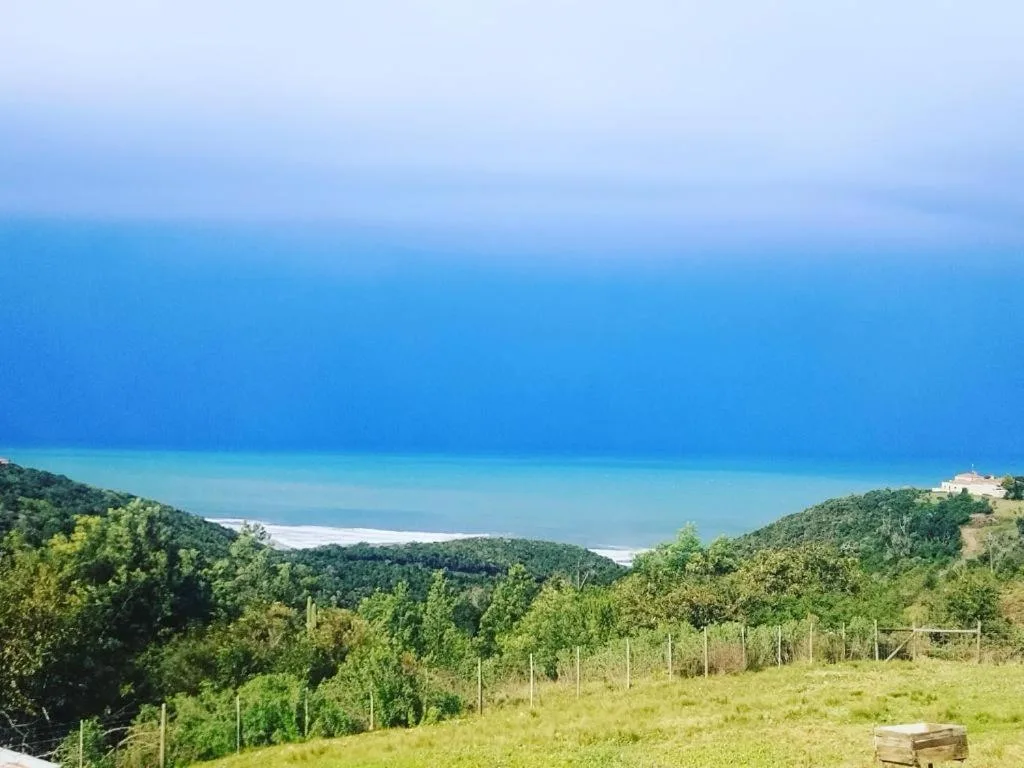
Wilderness National Park, South Africa's stretch of lakes and forest between George and Knysna, is the least understood of the three sections that make up the Garden Route National Park. Most people drive straight past it on the N2, over the Kaaimans bridge and down the hill towards Knysna. Few realise the water on their right is a protected wetland system that runs almost all the way to Sedgefield.
It doesn't announce itself. There's no big entrance arch, no Big Five, no queue of safari vehicles. What there is: five lakes, two rivers, a pontoon you pull yourself across by hand, and a forest with an 810-year-old yellowwood standing in it. This is the detail guide to that section: where it starts and stops, which of the four Kingfisher trails is actually worth your morning, and where to sleep. For the wider town, including restaurants, beaches and paragliding, start with our Wilderness travel guide.
What Wilderness National Park actually is
The naming trips people up, so let's clear it first. There is no standalone "Wilderness National Park" any more. In 2009 SANParks folded three separate protected areas into one park, and Wilderness became a section of it. People still call it by the old name, and so does Google, which is why you're probably here.
| Section | What it protects | Anchor town |
|---|---|---|
| Wilderness | Five lakes, the Touw and Duiwe rivers, estuary, dune forest | Wilderness |
| Knysna | Indigenous forest, the lagoon and the Heads | Knysna |
| Tsitsikamma | Rocky coastline, Storms River mouth, marine reserve | Storms River |
The full Garden Route National Park was proclaimed on 6 March 2009 and covers 1,210 km². The Wilderness section runs from the Touw River mouth east to the Swartvlei estuary and beyond, where it links up with the Goukamma Nature Reserve. It's a wetland system first and a forest second. The lakes are the point, and it carries Ramsar status as a wetland of international importance.
The Touw River and the Wilderness lakes
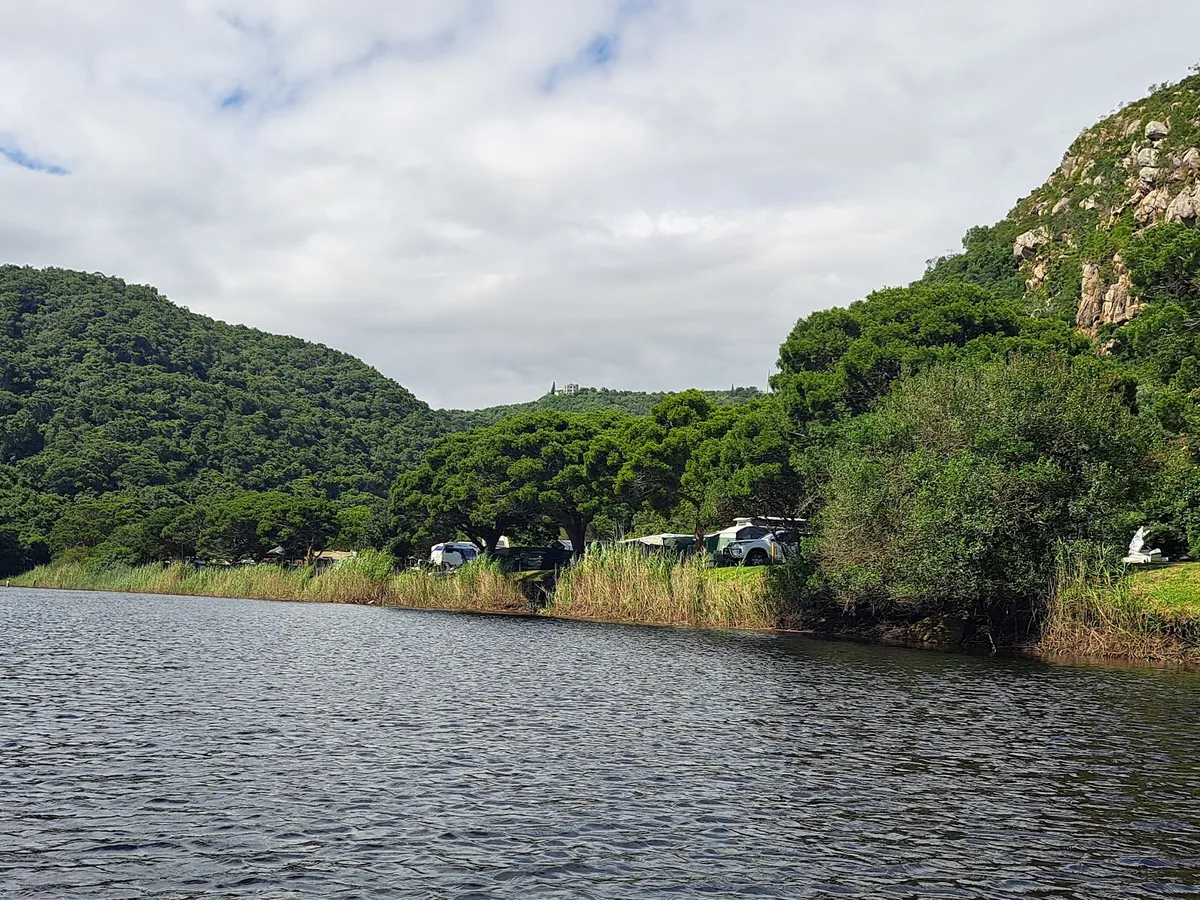
Five lakes sit behind the dunes here: Eilandvlei (Island Lake), Langvlei, Rondevlei, plus Swartvlei further east. They're strung together by the Serpentine, a narrow winding channel that joins Island Lake to the Touw River. The Touw is the one you'll actually spend time on. It runs down through indigenous forest to the estuary at Wilderness village, and both the rest camp and the two best trails sit on its banks.
This is canoe country more than swimming country. The lakes are shallow, tannin-dark from the fynbos, and full of birds: five species of kingfisher alone, plus grey heron, little egret and the Knysna turaco. If you only do one thing in the park, paddle the Touw upstream in the early morning before the wind comes up.
The Kingfisher trails: which one to walk
Four trails, all named after kingfishers, all starting from the same corner of the park near the Touw River bridge. They get conflated constantly. Here's the honest split:
| Trail | Distance | What you get |
|---|---|---|
| Half-Collared Kingfisher | ~4 km each way (about 8 km return, 2–3 h) | West bank of the Touw, forest, a hand-pulled pontoon crossing, boardwalk, waterfall and rock pool at the end |
| Giant Kingfisher | 7 km | East bank of the Touw through forest to the same waterfall, where there's a swimming pool |
| Brown-hooded Kingfisher | 5 km | Follows the Duiwe River to a second, quieter waterfall |
| Pied Kingfisher | 10 km (about 4 h) | Circular and flat — across the Serpentine floodplain, along the boardwalk, out to the beach |
Walk the Half-Collared. It's the one people mean when they say "the Kingfisher trail", it's graded light, and the pontoon is genuinely fun. You haul yourself and whoever's with you across the river on a cable. It starts at Ebb & Flow North on Waterside Road. Published distances vary a little between sources (3.8 km to 4 km each way), so budget three hours and don't treat it as a quick stroll.
One caution that matters more than the distance: don't walk these in wet weather. The Touw floods fast and hard, and the trail has closed after storms before. It reopened in July 2026 after exactly that.
Woodville Big Tree and the forest
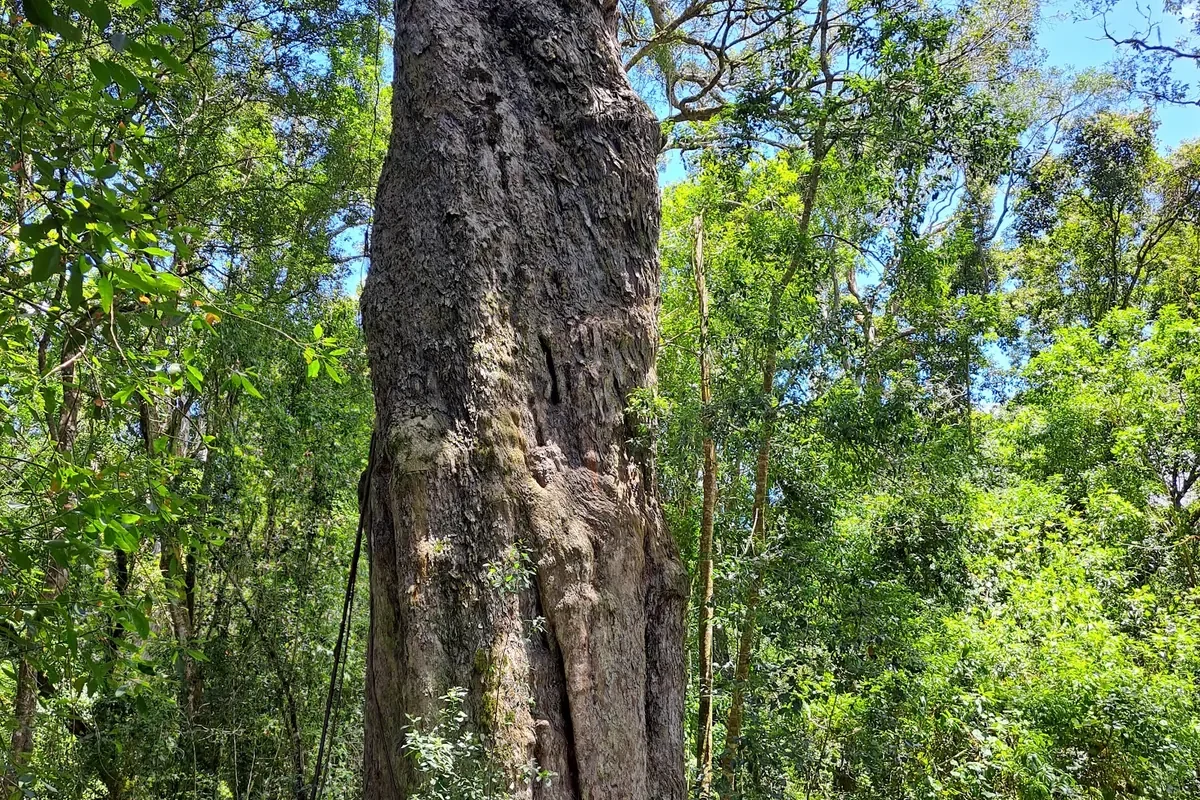
Inland from the lakes, up the Hoekwil road, the forest changes character completely: taller, darker, wetter. The Woodville Big Tree is the headline: an Outeniqua yellowwood put at 810 years old, with a short forested walk looping around it. It's free, it takes twenty minutes, and it's the easiest way to understand what the Garden Route looked like before the timber industry got to it.
Go on a weekday morning if you can. It's a small clearing and a single tour bus fills it.
Map of Africa and the view over the gorge
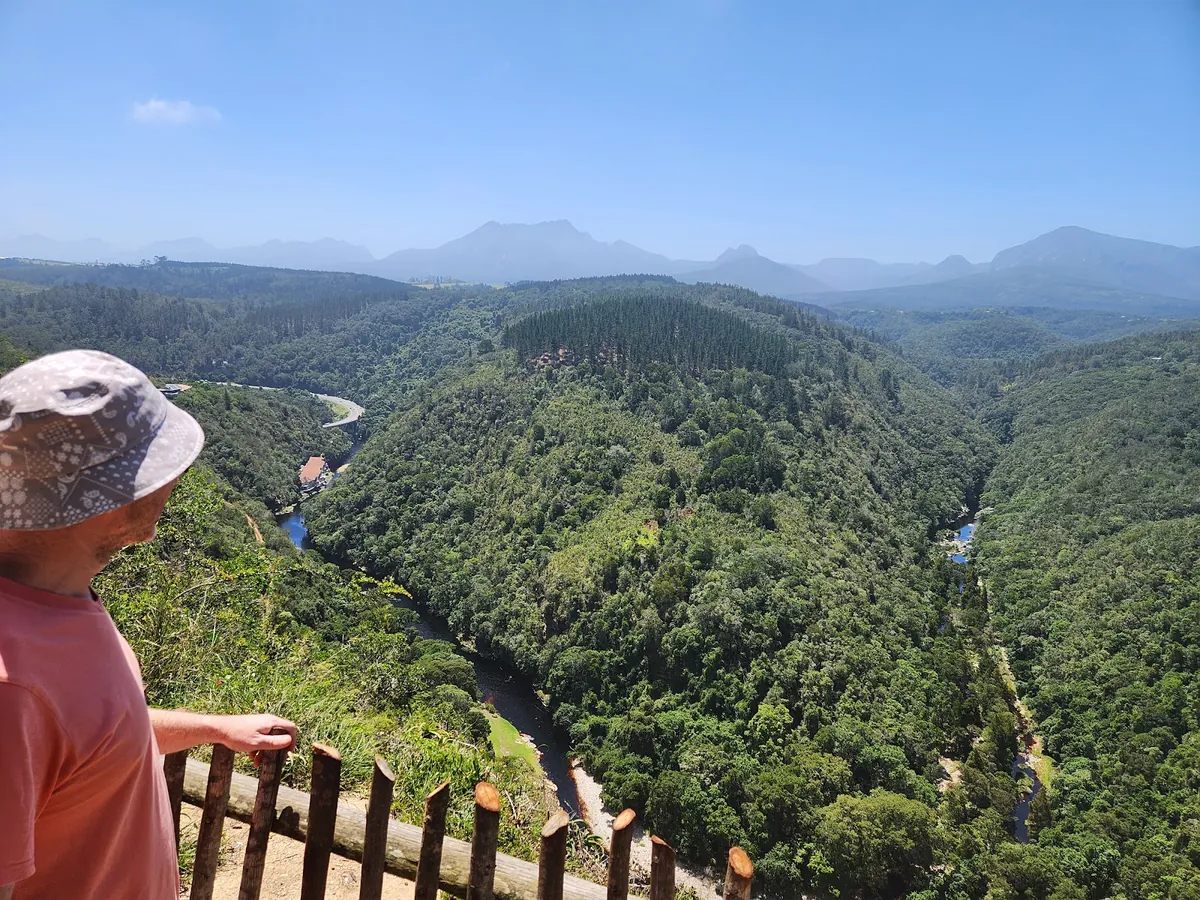
Map of Africa isn't inside the park boundary, but it's five minutes from it and it's the view that explains the landscape. A loop of the Kaaimans River has carved a peninsula that, from the right angle, reads as the shape of the African continent. The viewpoint sits on the ridge above Wilderness at Hoekwil, and it's rated 4.5 from more than 2,700 Google reviews, which tells you it delivers.
The same road carries on to the paragliding launch site. If you see canopies over the valley in the afternoon, that's where they left from.
Wilderness beach
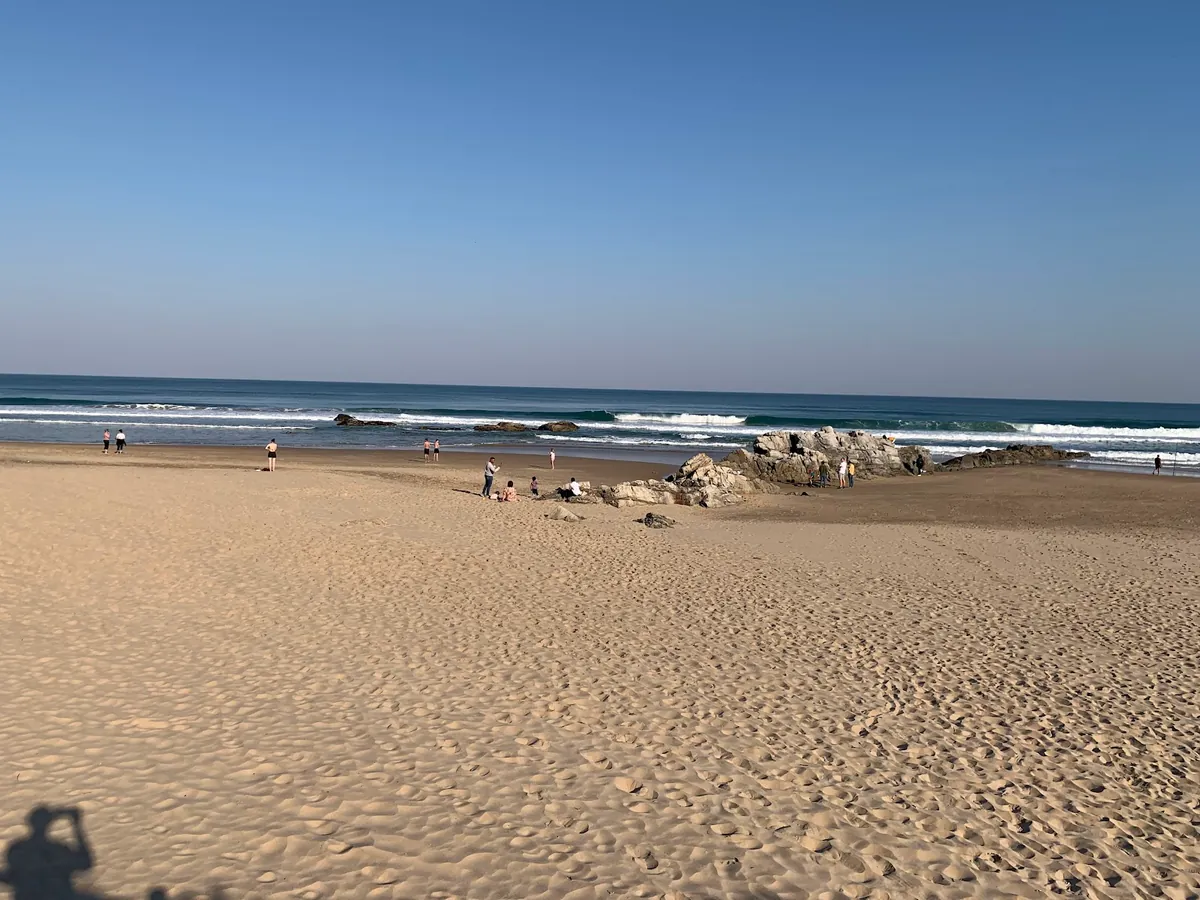
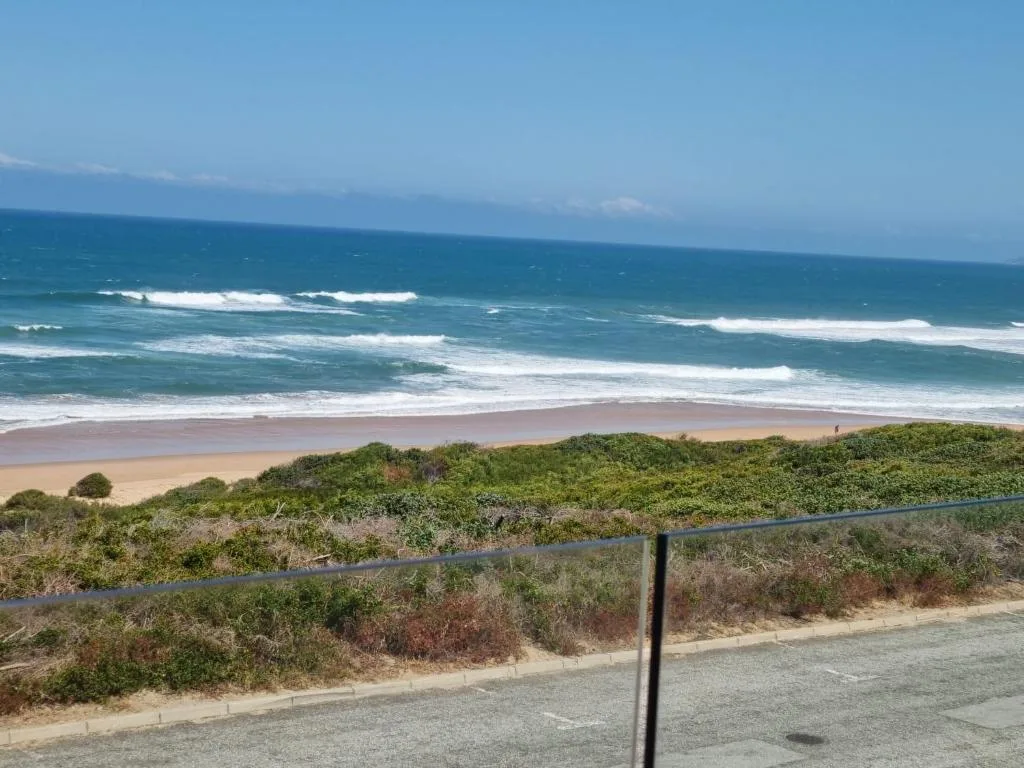
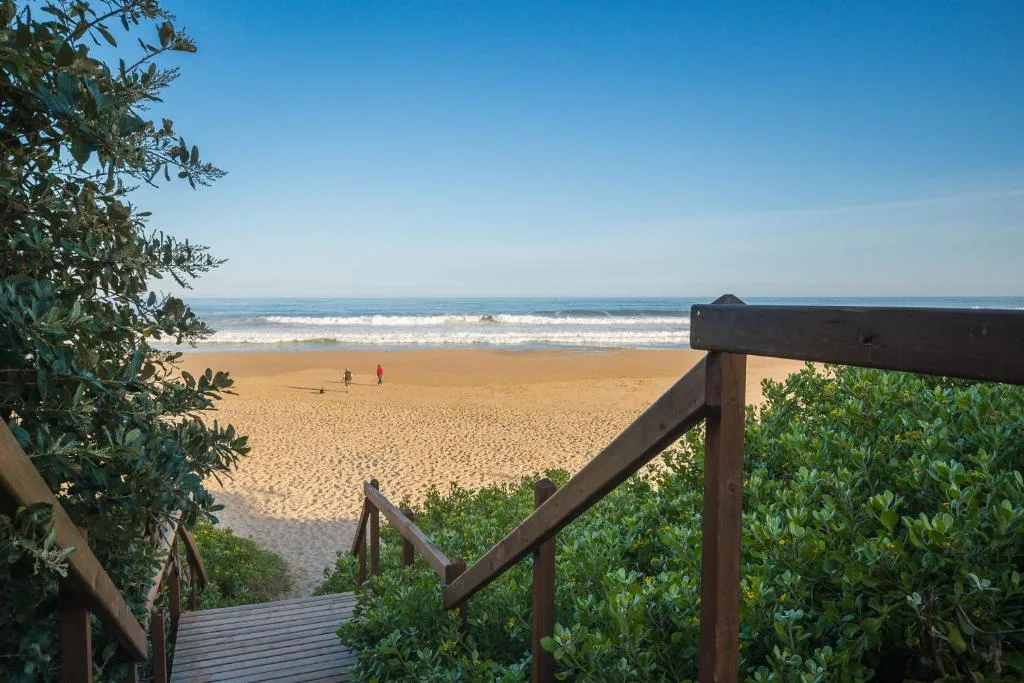
The beach runs for kilometres, rates 4.7 on Google from over 500 reviews, and is frequently almost empty. It is also not a swimming beach in the way Plett's Central Beach is. There's a strong backline, no lifeguard cover for most of the year, and rip currents near the river mouth. Walk it, run it, fly a kite on it. Swim with real caution, and stay near other people if you do.
Staying inside Wilderness National Park: Ebb-and-Flow
SANParks runs the only accommodation inside the section: Ebb-and-Flow, split into a North and a South camp on the Touw River. It's rondavels, forest cabins and campsites: no-frills, some with kitchenettes, cleaned daily. It books out over South African school holidays months ahead.
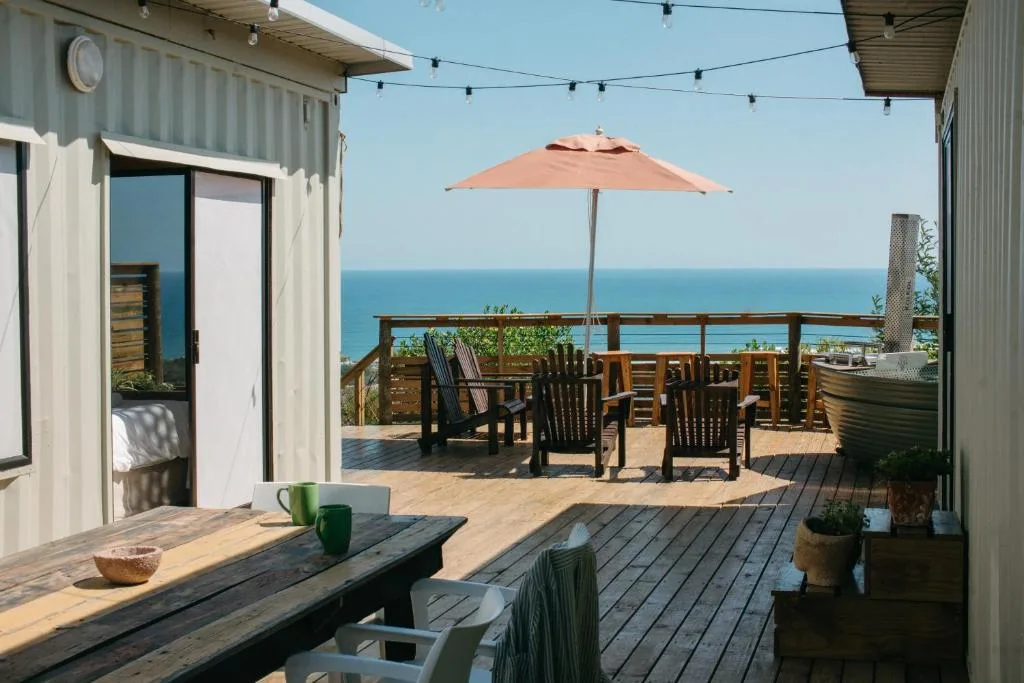
Stay here if waking up on the riverbank and starting a trail from your doorstep is the point. Stay outside the park if you want a kitchen, a deck and space to spread out.
Where to stay near Wilderness National Park
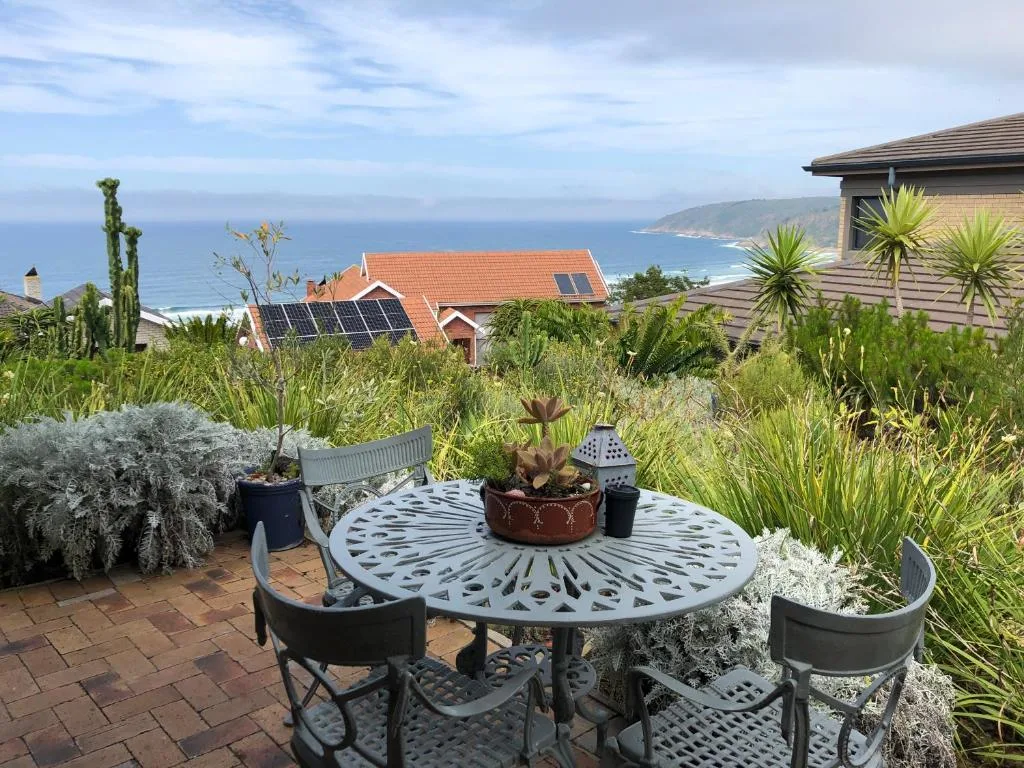
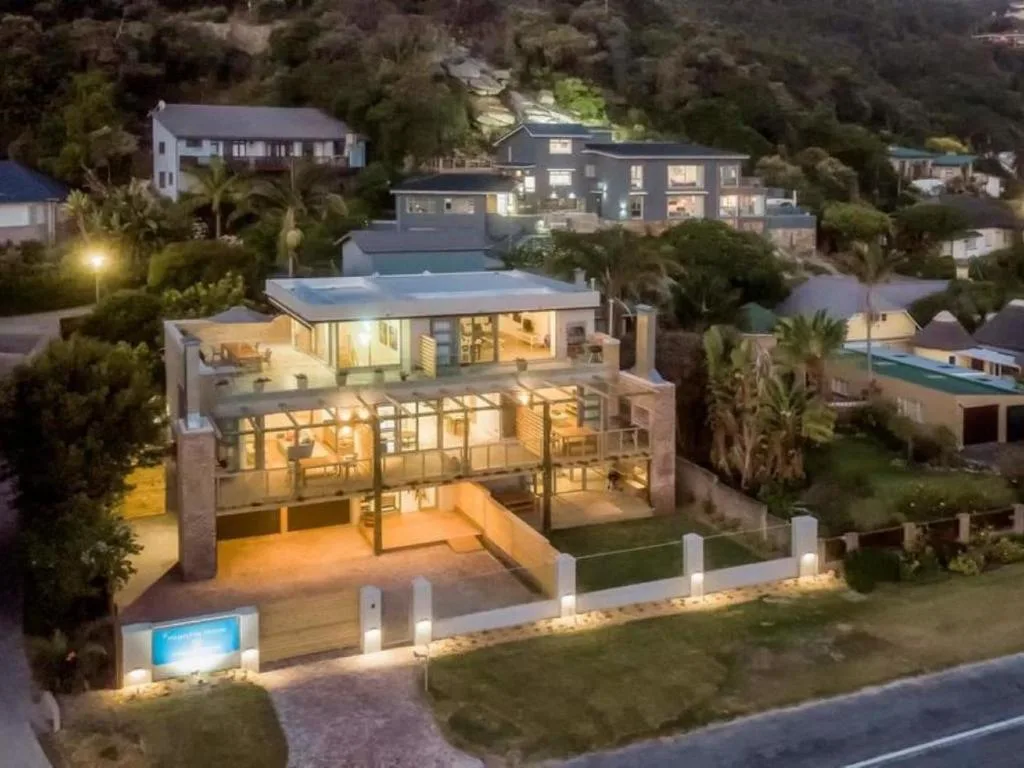
Wilderness village wraps around the park's western edge, so "outside" still means minutes from the gate. These three are all within about a kilometre of the rest camp.
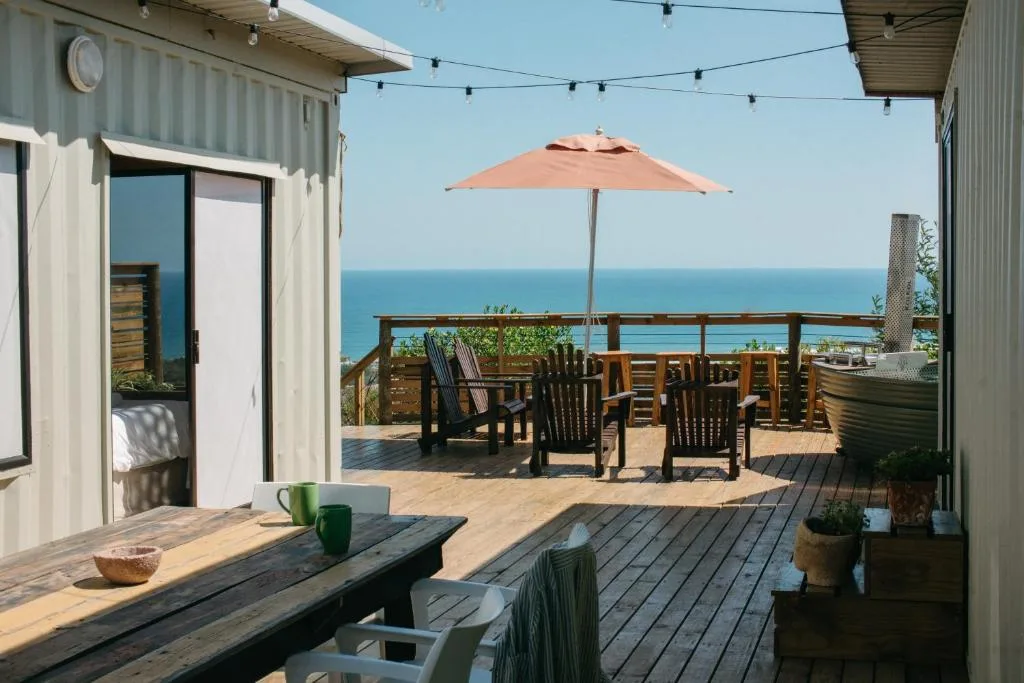
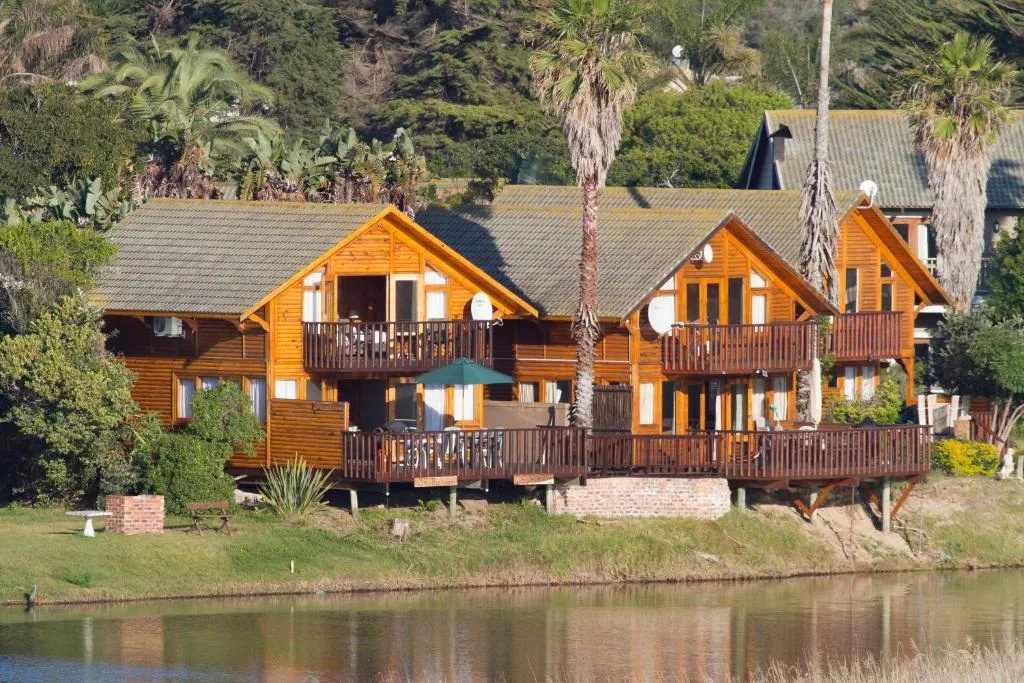
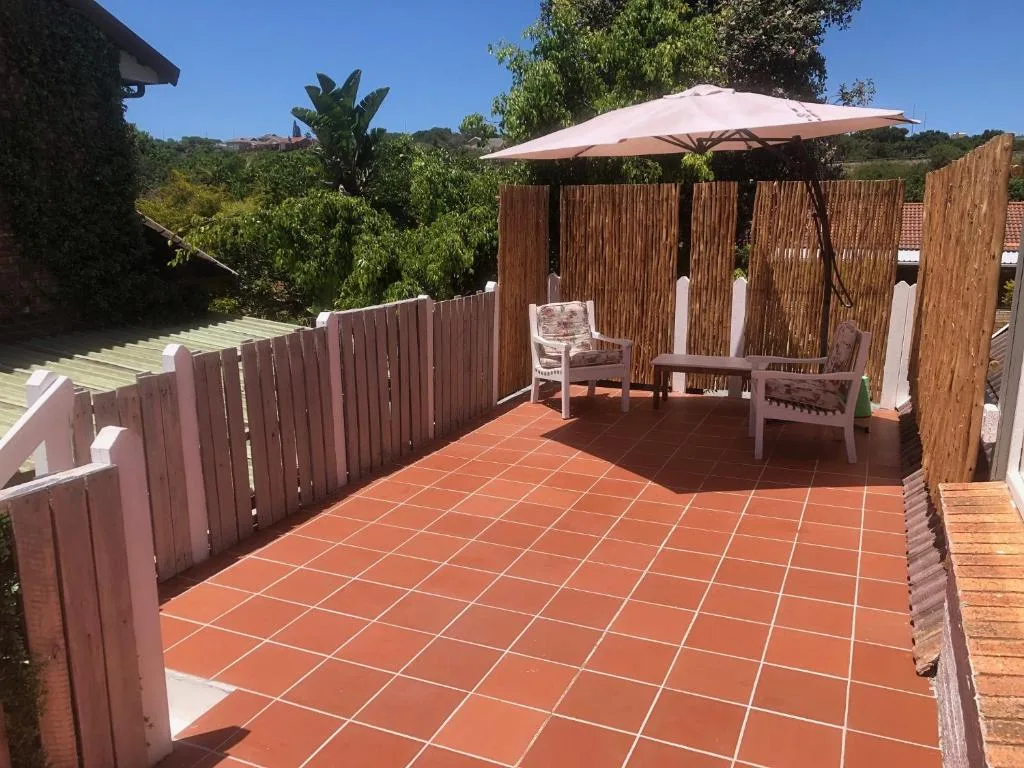
There's more in the village and up the valley. The full set is on our Wilderness self-catering page.
Getting to Wilderness National Park
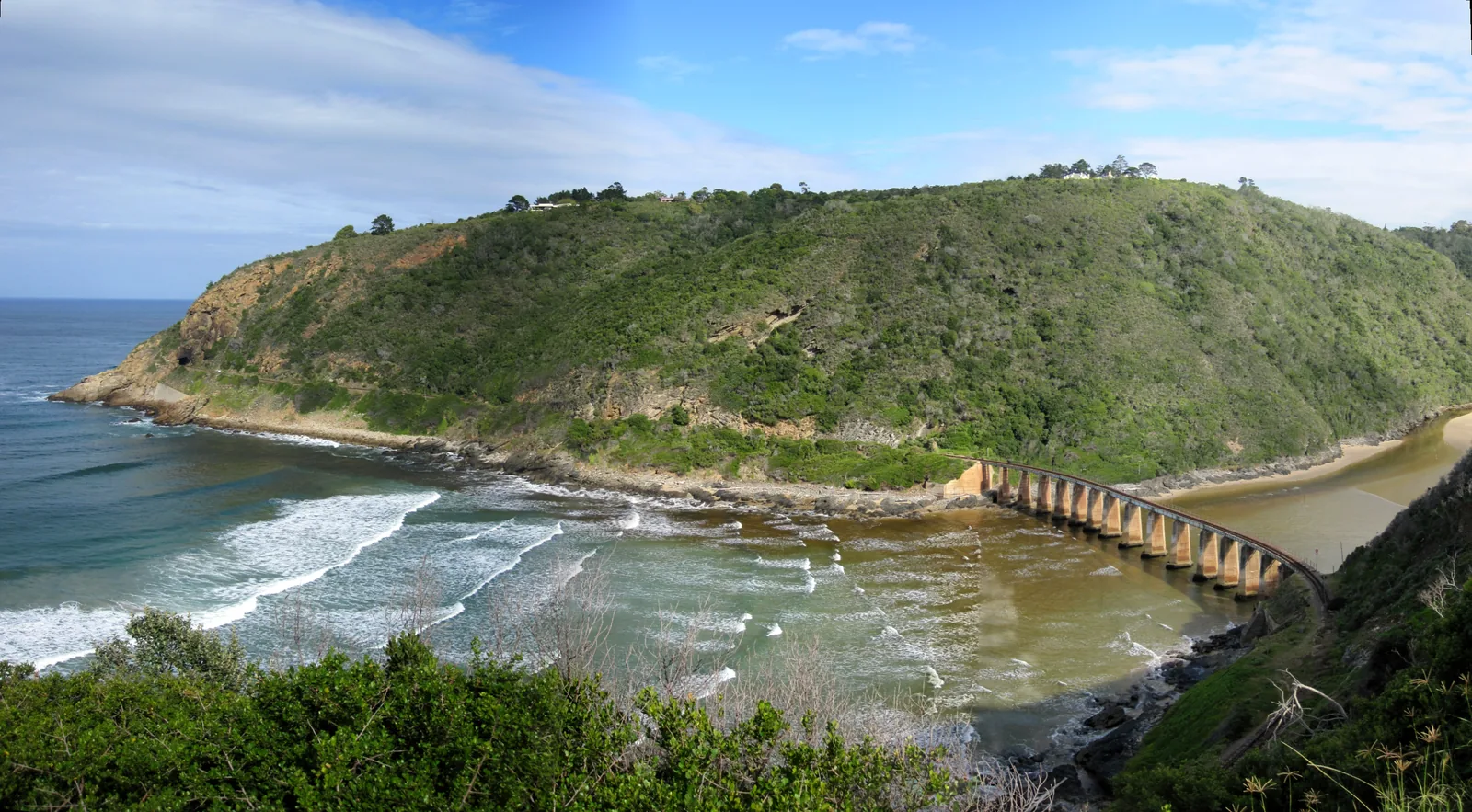
Wilderness sits on the N2 about 15 minutes east of George and its airport, and roughly 45 minutes west of Knysna. Coming from George you drop down Dolphin Point and over the Kaaimans. If you're planning the wider drive, our guide to driving the Garden Route covers the N2 stretch either side.
A daily conservation fee applies to the park, payable at the Ebb-and-Flow office, and SANParks Wild Card holders enter free. Rates are revised every 1 November, so check the current tariff on the SANParks site rather than trusting a number in a blog post, including this one.
Best months are February to May: the summer crowds have gone, the water's still warm and the forest is at its greenest. June to August is green and wet, which is fine for forest walks and poor for the beach.
Sources
- SANParks — Garden Route National Park (current conservation tariffs and camp bookings)
- Garden Route National Park — Wikipedia (proclamation date, park area, section boundaries)
- SANParks — Garden Route hikes, walks and trails (official trail listing)
- SA-Venues — Kingfisher Trails, Wilderness (trail distances)
- George Trails — Half Collared Kingfisher Trail (start point, pontoon, timing)
- Visit George — Woodville Big Tree (tree age)
Ratings and review counts for Ebb-and-Flow, Map of Africa and Wilderness beach are from Google Maps, correct at 17 August 2026.
Where Wilderness stays sit
Every listing plotted, with attractions dotted around it. Tap a navy pill to see the stays in that cluster.
Frequently asked questions
Where is Wilderness National Park located?
It's the western section of the Garden Route National Park, on South Africa's N2 between George and Knysna, about 15 minutes east of George Airport. It runs from the Touw River mouth east to the Swartvlei estuary.
How long is the Kingfisher Trail in the wilderness?
There are four. The Half-Collared Kingfisher is about 4 km each way (roughly 8 km return, 2–3 hours). The Giant Kingfisher is 7 km, the Brown-hooded 5 km, and the Pied Kingfisher is a 10 km circular walk of about four hours.
How much does it cost to hike the Half Collared Kingfisher Trail?
There's no separate trail fee. You pay the park's daily conservation fee at the Ebb-and-Flow office, and SANParks Wild Card holders enter free. Rates change every 1 November, so check the current SANParks tariff before you go.
How to pay park entrance fee?
Pay at the Ebb-and-Flow reception on Dumbelton Road when you arrive. Card and cash are accepted. If you hold a valid Wild Card, present it there instead and entry is included.
Can you swim at wilderness Beach?
You can, but treat it carefully. Wilderness beach has a strong backline, rip currents near the river mouth and no lifeguard cover for most of the year. The lagoon and the Touw River are the safer swim, especially with children.
Is wilderness South Africa worth visiting?
Yes, if you want lakes, forest and quiet rather than nightlife and shops. It's the Garden Route's calmest base — good for paddling, hiking and birding, and a 45-minute drive from Knysna if you want a busier day out.