There are more things to do in Wilderness than the village's size suggests. It's a thin strip of houses between the Outeniqua Mountains and the sea, about 15 minutes east of George on the N2. You can drive through it in four minutes and assume you've seen it. You haven't. Behind that first row of roofs sits a national park section with a river, five lakes and a waterfall walk, and above it a mountain spine that people jump off with a parachute for fun.
This is our pick of what's actually worth your time, with what each one costs and what condition it's in right now. For the wider picture (where to eat, how to get here, where the village begins and ends), start with our Wilderness travel guide.
1. Wilderness Beach — long, wild and mostly empty
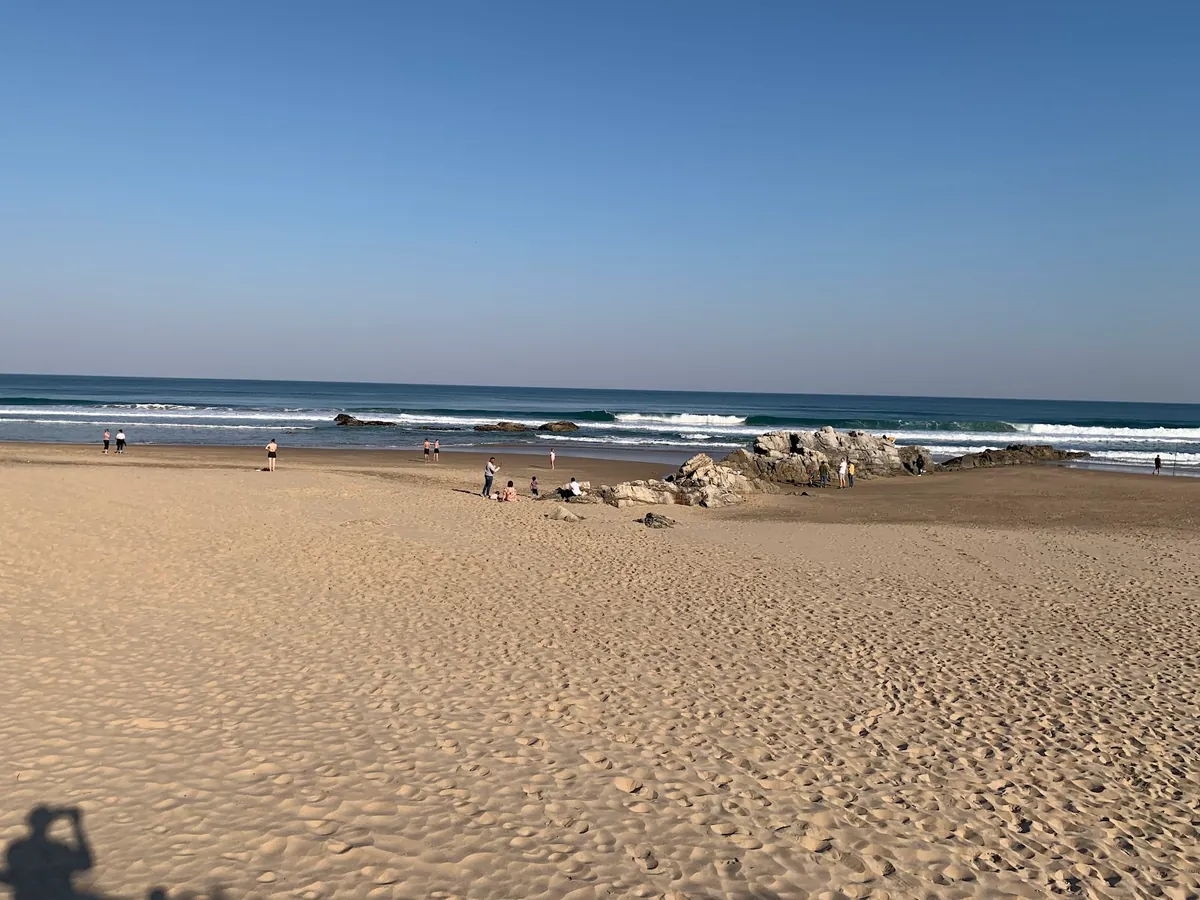
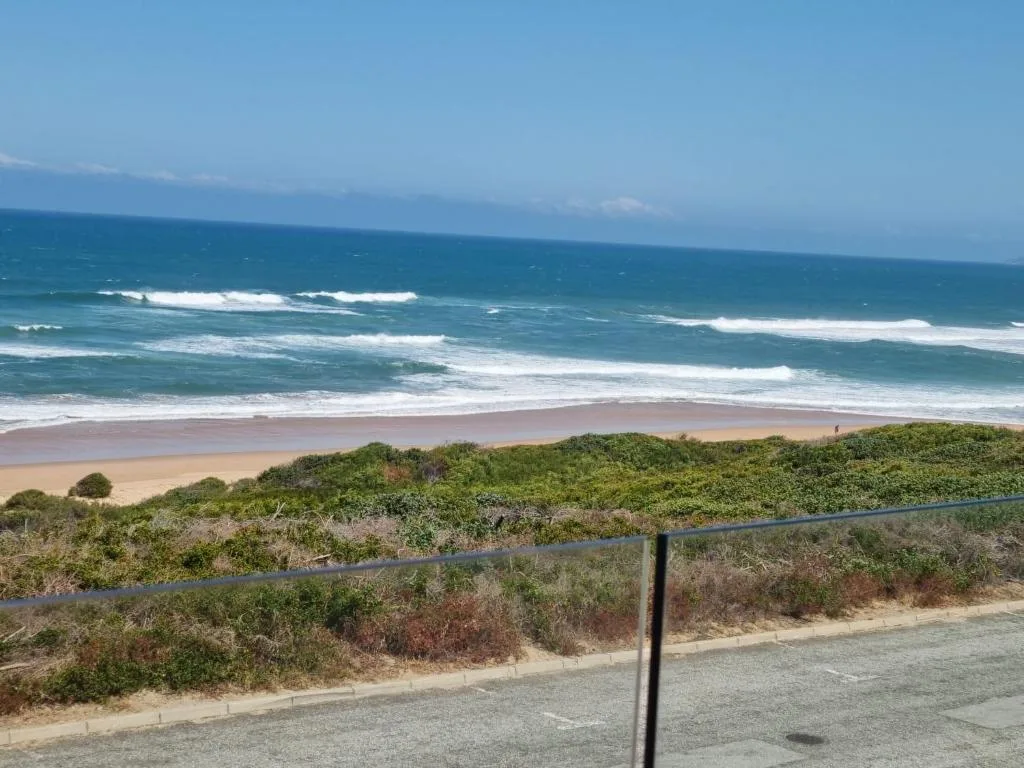
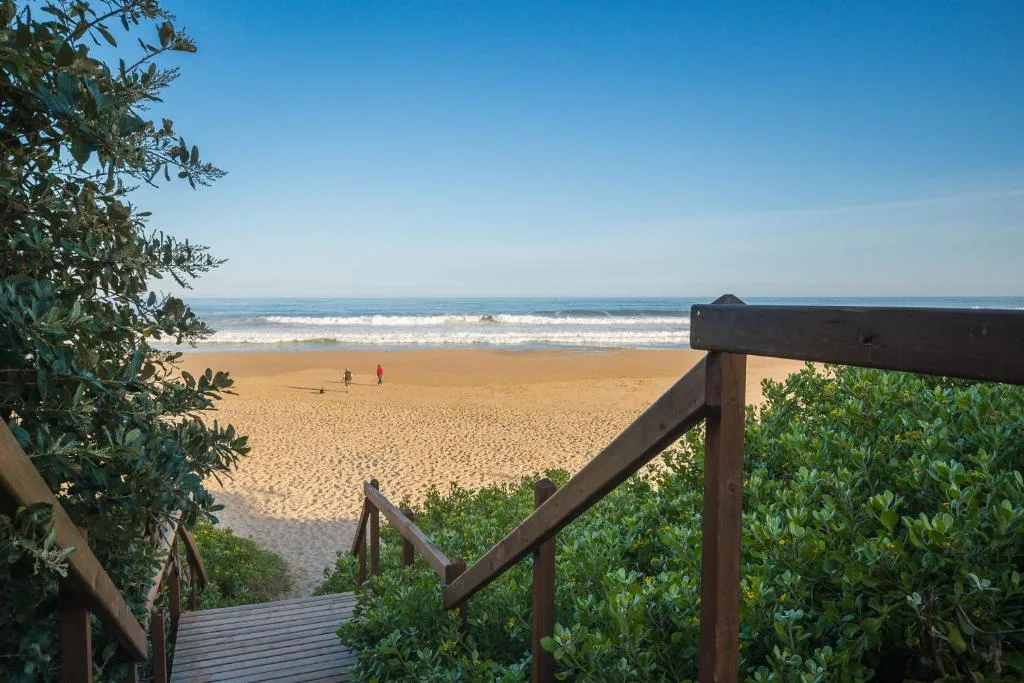
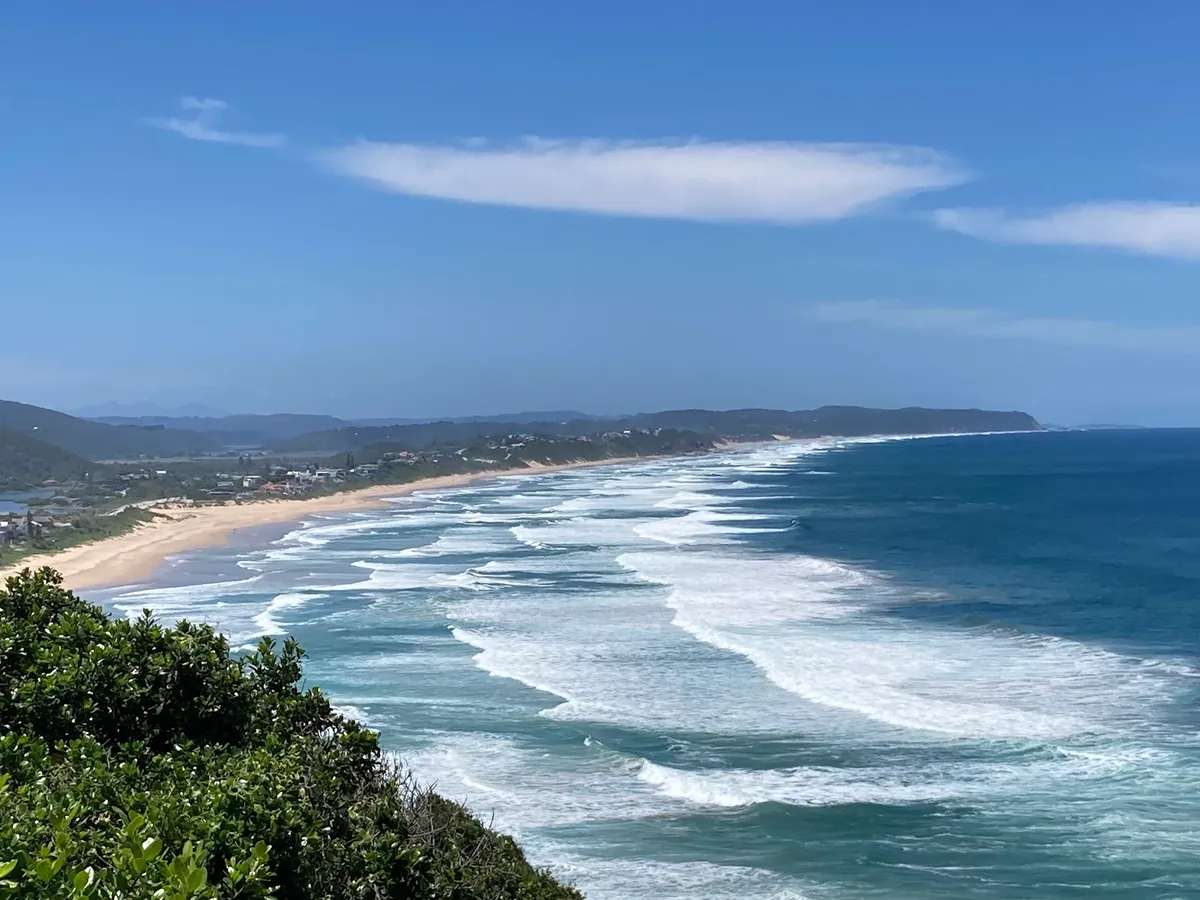
The beach is the reason most people stop. It runs for kilometres with steep green cliffs behind it, which is what gives it that hemmed-in, end-of-the-world feel you don't get on the flatter Mossel Bay beaches. Access is by stairs from the road at several points, and parking is limited at the main one, so arrive before 10am in December and you'll be fine.
It's a properly certified beach, not just a pretty one. Wilderness Beach held full Blue Flag status for the 2025/26 season, alongside Herold's Bay and Victoria Bay, with Leentjiesklip running as a pilot beach. Worth knowing how that award works before you plan around it: the Blue Flag season runs 1 December to 28 February only, and WESSA announces the following season's list at the end of October. So a beach being "Blue Flag" is a summer-season certification, not a year-round label.
One caution that matters more than the flag: this beach has rip currents. Swim between the flags when lifeguards are on duty, and treat the shore break with respect on a big-swell day.
2. Hike the Half-Collared Kingfisher Trail to the waterfall
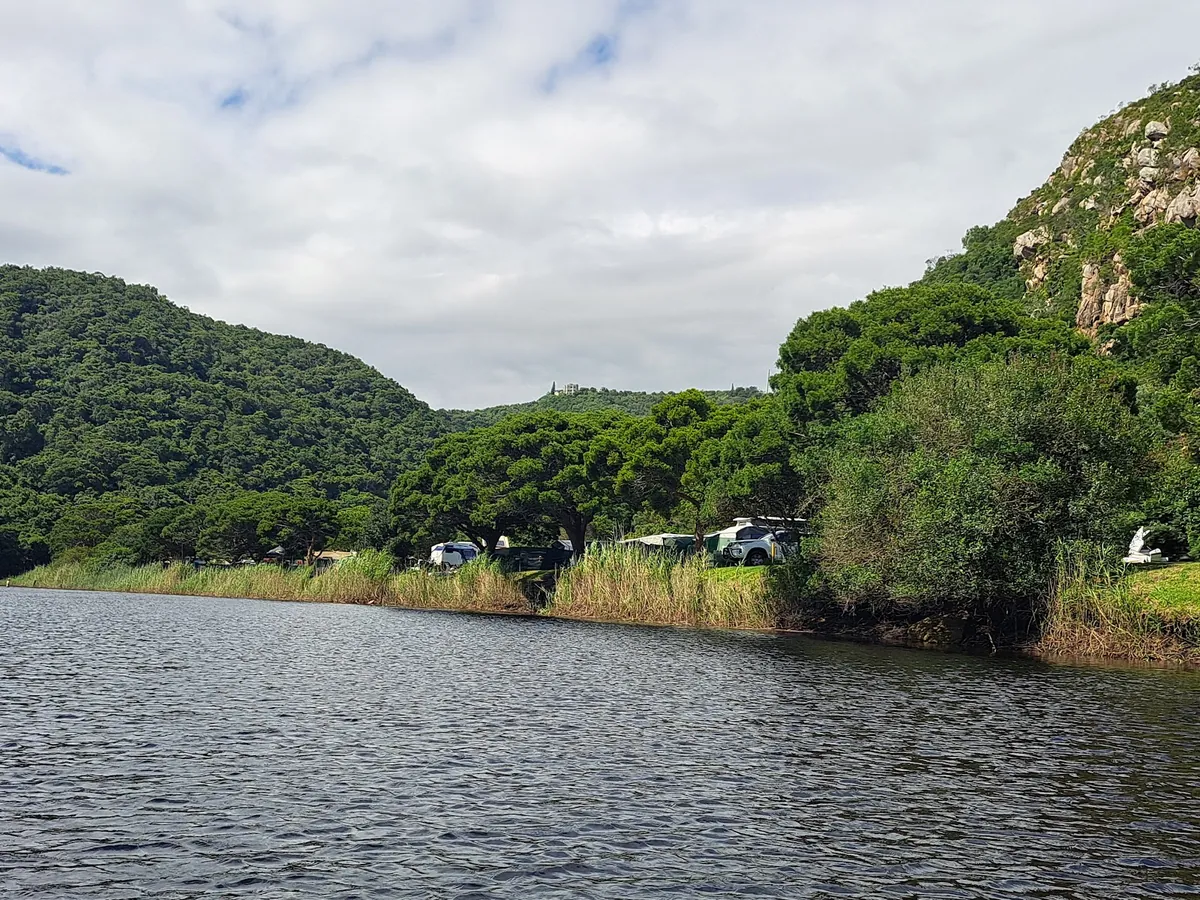
This is the walk everyone means when they say "the Kingfisher trail". SANParks lists it as the Half-collared & Giant Kingfisher Trail: 7km, 3 to 3.5 hours, a linear there-and-back starting within walking distance of the Ebb-and-Flow rest camp. It follows the Touw upstream through indigenous forest to a waterfall you can picnic at. Partway along you cross the river on a pontoon you pull yourself, the bit children remember for years afterwards.
Ignore the 7.2km and 8km figures circulating on other sites: SANParks, who manage the trail, publish 7km and 3 to 3.5 hours, and that is the number to plan around.
Practical bits: it is inside the national park, so the daily conservation fee applies (see below) unless you hold a Wild Card. Day visitors are allowed until 17h30, and no dogs are permitted. Full trail detail is on the SANParks trails page.
3. Paddle the Touw River and the lakes
Wilderness is one of the few places on the Garden Route where the water is calm enough that a complete beginner can take a canoe out and enjoy it. The Touw runs from the estuary inland through the forest, and the lake chain behind the village — Island Lake, Langvlei, Rondevlei and Swartvlei, linked by the Serpentine — is flat, sheltered and full of birds.
Eden Adventures hires canoes and kayaks, and if you'd rather someone else did the planning they run guided trips too. You'll see paddleboards stowed under half the cabins in the rest camp, which tells you how the locals spend a still morning.
4. Kloofing the gorges
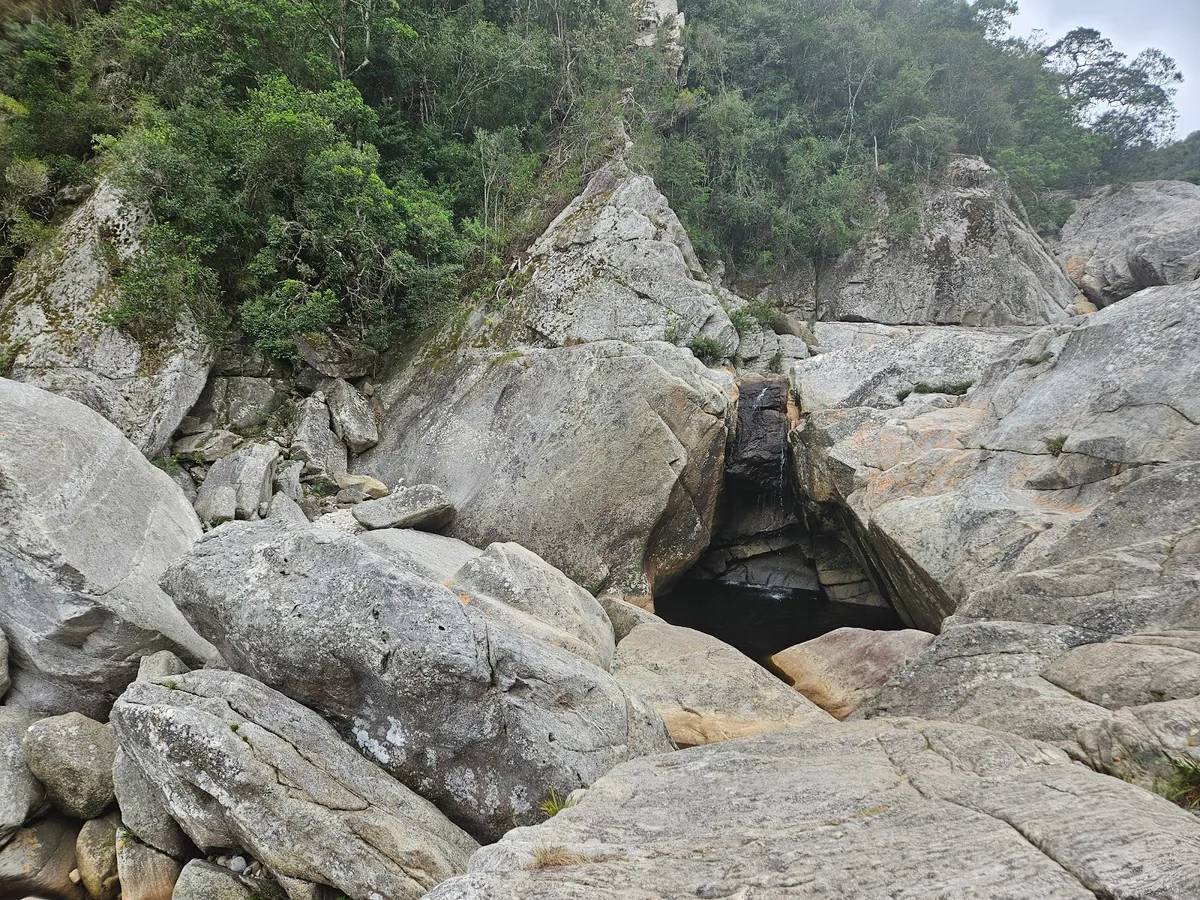
The same operator runs kloofing: scrambling, swimming and abseiling your way down a river gorge. The rock here is pale, water-smoothed sandstone with deep dark pools between the boulders, and it is genuinely a different landscape from anything you see at road level. It's the most physical thing on this list and the one most likely to become the story you tell when you get home.
5. Fly off the Map of Africa
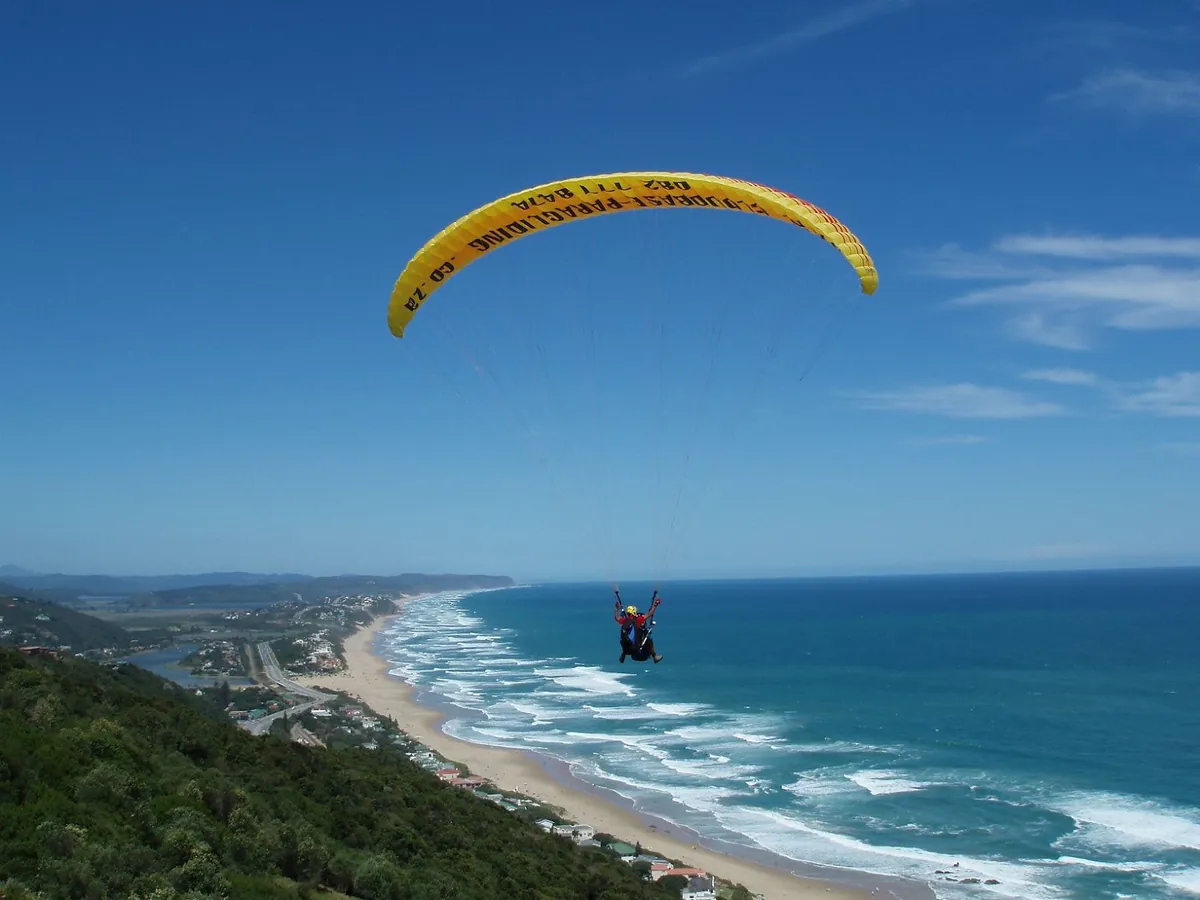
The ridge above Wilderness is one of the better tandem paragliding spots in the country, and you don't need any experience: you're strapped to a pilot and your only job is to run a few steps. Flights launch from the high ground near the Map of Africa and land on the beach, so you get the whole coastline, the lagoon and the lake chain laid out underneath you.
Cloudbase Paragliding holds a 4.9 rating from 174 Google reviews, which is the sort of number that only comes from an operator taking nervous first-timers seriously. Conditions decide everything here, so book early in your stay so you've got days in hand if the wind is wrong.
6. The two viewpoints: Map of Africa and Dolphin Point
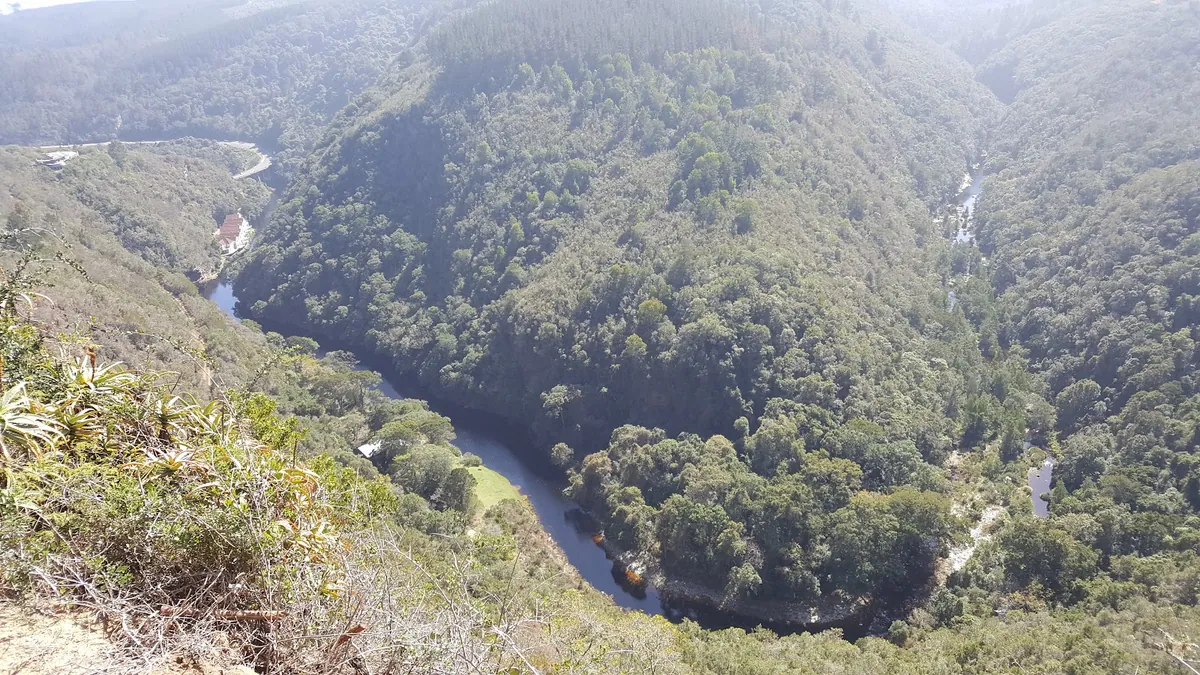
Map of Africa is the famous one: a bend in the Kaaimans River that loops a forested hill into a shape resembling the African continent. Be honest with yourself about what you'll see: the resemblance reads best from height and in photographs, and from the platform you're mostly looking at a very deep, very green river gorge. Which is worth the drive on its own. It's free, it's signposted off the Saasveld road, and it's also where the paragliders launch.
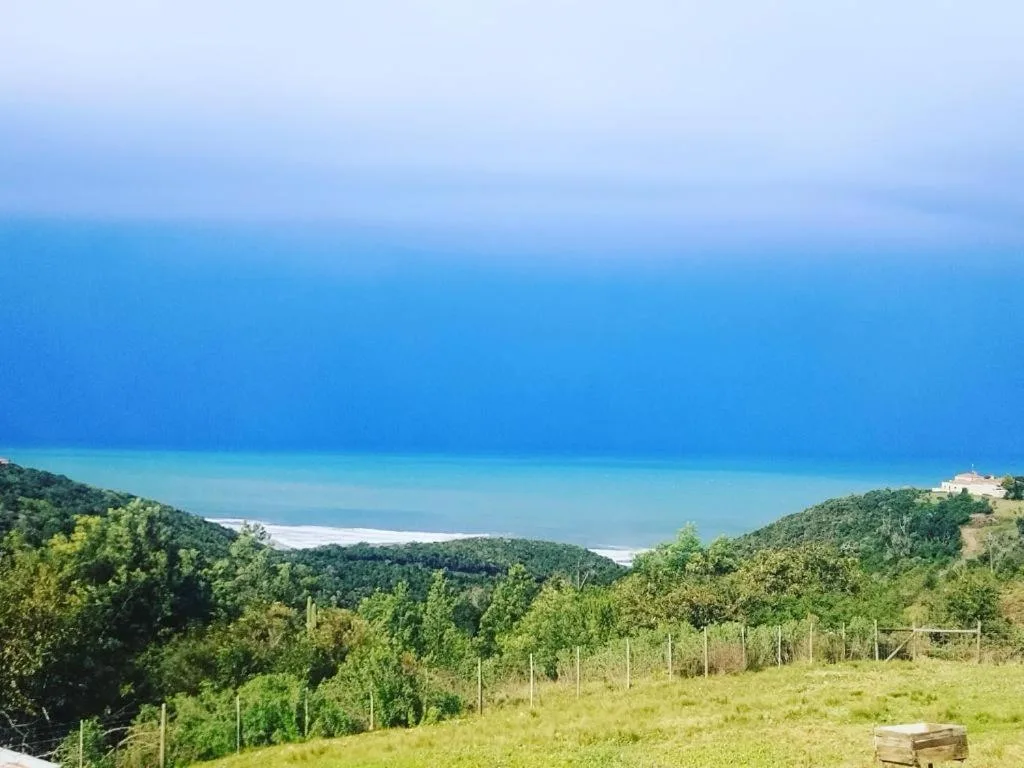
Dolphin Point is the one we would send you to first. It is a roadside pull-off on the old road above the beach, and it gives you the classic Wilderness view: the whole beach curving east, the village on its dune shelf, mountains stacked behind. On a clear day you can see as far as Gericke’s Point at Sedgefield. Two minutes off the N2 and no entry fee. One caveat we could not settle: the N2 through the Kaaimans Pass below here has been under roadworks, and we found no 2026 source confirming the pull-off’s current access either way. Check locally on the day rather than driving out on our word.
7. Walk to the Woodville Big Tree
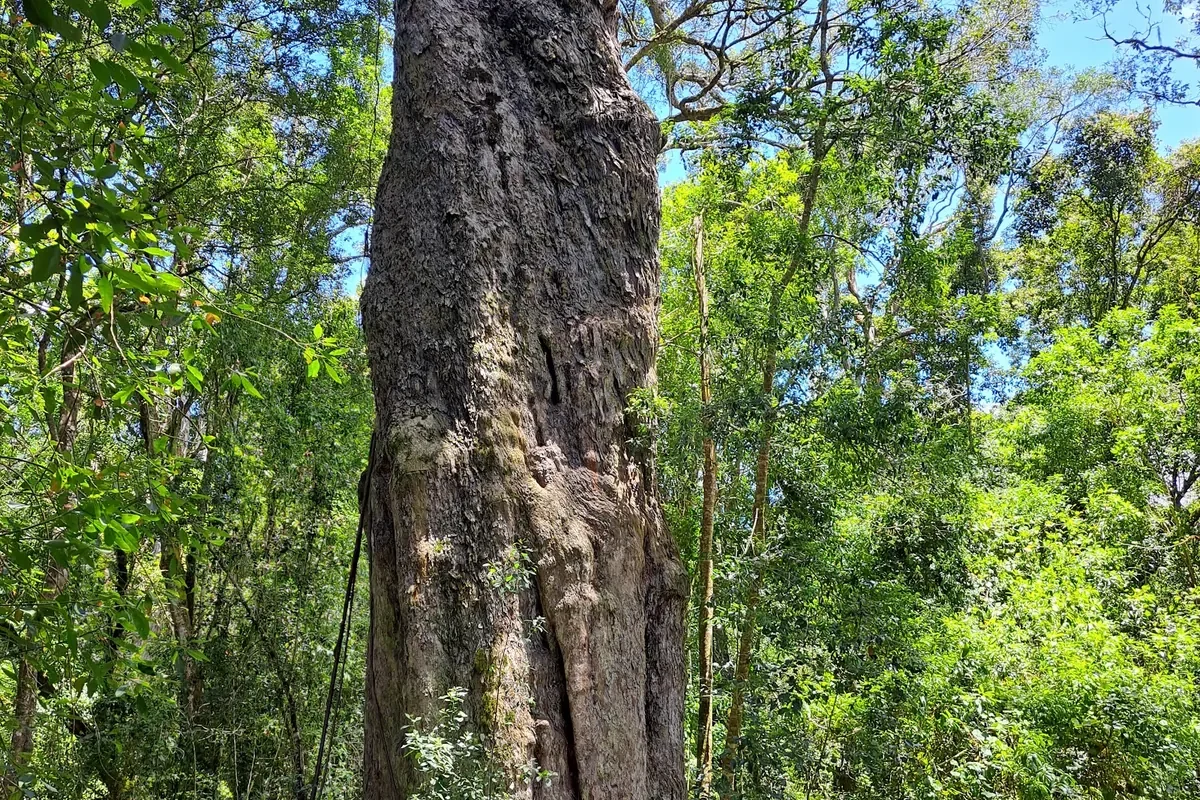
Inland from the village, off the Seven Passes Road, stands an Outeniqua yellowwood that SANParks describes as about 31 metres tall and believed to be over 800 years old. A circular boardwalk rings its base to keep thousands of pairs of feet off the roots, and a short shaded forest loop runs from the parking area, easy enough for grandparents and toddlers on the same outing.
Worth correcting a figure you will see repeated elsewhere: the widely-quoted "9 metres in diameter" does not belong to this tree. SANParks applies that to the Outeniqua yellowwood in Tsitsikamma, roughly 200km east, which is "close to 40 meters high and about 9 meters in diameter". Two different trees, routinely conflated.
Access note, and check it before you go: the Seven Passes Road has been under construction. The George Herald reported on 13 January 2026 that it "is open to all traffic except heavy vehicles", with stop-and-go controls in places and the whole route still to be treated as a construction site.
It's the quietest thing on this list and the best one for a hot afternoon, because the forest canopy drops the temperature noticeably.
8. Treetop courses and the Big Zip
Searches for a "Wilderness zipline" turn up a lot of noise, and much of it points at the Tsitsikamma canopy tour, which is a real thing, but it's at Storms River, roughly two hours east. Not a Wilderness activity.
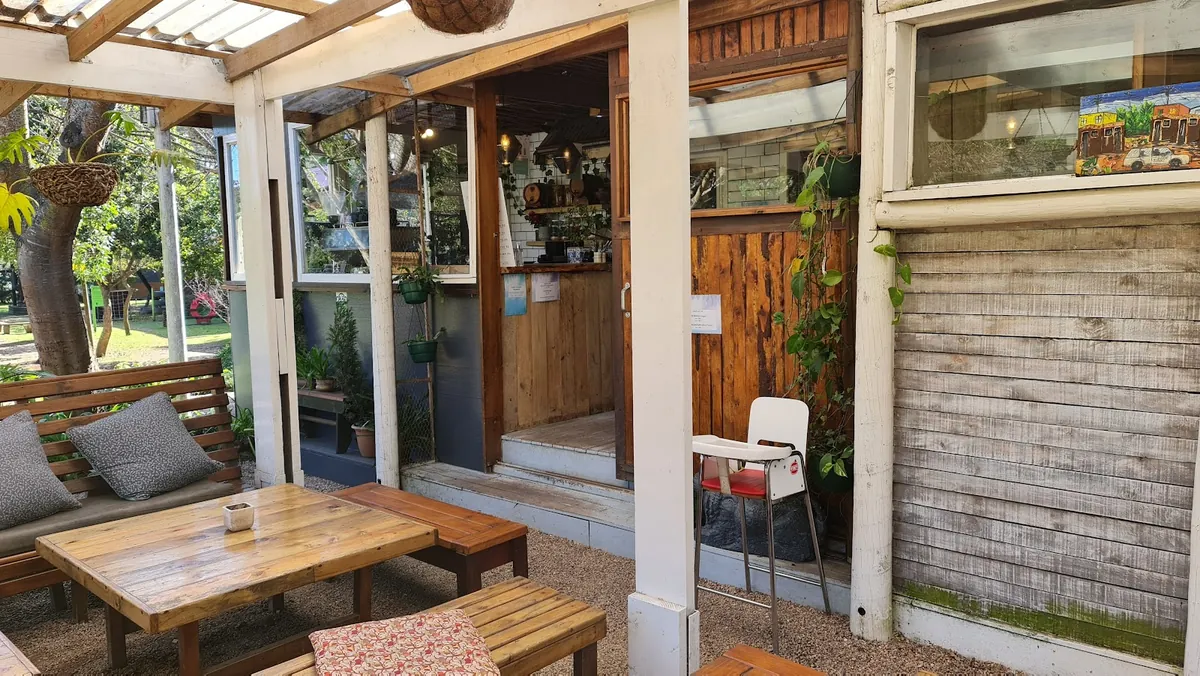
What actually is here is Acrobranch Garden Route, at Timberlake Organic Village on the N2, about 10km east of Wilderness village, a 15-minute drive, with a George postal address. Four rope courses plus a 130m zipline, priced per course, with age and height minimums worth checking before you drive out with a five-year-old:
| Course | Obstacles | Minimum | Price |
|---|---|---|---|
| Acro-twigs | 18 | Ages 3–6 | R170 |
| Monkey Moves | 17 | Ages 7+, 1.2m | R210 |
| Swinging Tarzan | 16 | Ages 7+, 1.3m | R250 |
| High Flying | 17 | Ages 9+, 1.3m | R310 |
| Big Zip (130m zipline) | — | Ages 7+, 1.2m | R110 |
Combo packages bundling a course with zipline rides run R260–R360. Open Wednesday to Sunday, 9am to 6pm from September to April and 9am to 5pm from May to August. Prices and hours are as listed by Acrobranch in August 2026. Check before you go, because these move.
9. Drive the Outeniqua Pass
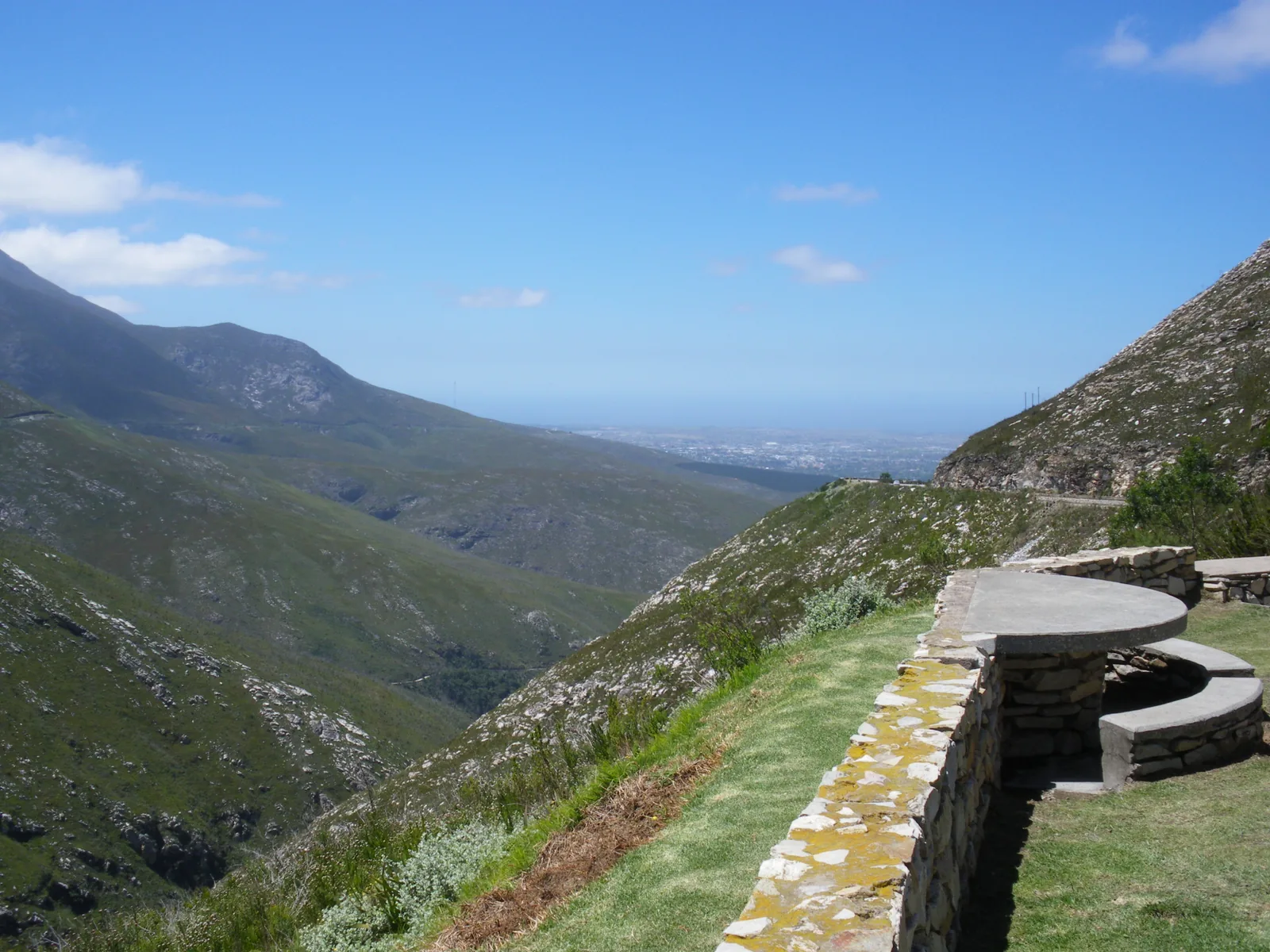
Strictly this one is a day trip rather than a Wilderness attraction: the pass runs north out of George on the N9 towards Oudtshoorn, not through Wilderness. It earns its place anyway. It has proper stone-walled stopping places built into the bends, not just gravel shoulders, and pulling in at one puts a green valley, the whole of George and the sea below you. It holds a 4.8 rating on Google, unusually high for a stretch of road.
Do it as a half-day: up the pass, over to the Cango Caves or an ostrich farm at Oudtshoorn, back down in the late afternoon. If you're planning the wider drive, our guide to driving the Garden Route covers the N2 legs either side.
What about the Choo-Tjoe?
Worth clearing up, because plenty of older guidebooks and a fair number of current blog posts still tell you to ride it. The Outeniqua Choo-Tjoe is not running, and you cannot book a ticket. The George Herald reported in June 2026 that it "became a dedicated tourist attraction in 1996 before operations ceased in 2006".
The better news is that it isn't dead. Classic Rail is restoring the line, and the first phase — the Waterfront Express between Sedgefield and Knysna — is the section being worked on now. Classic Rail's stated objective, quoted by the Herald, is "to have a train operating between Knysna and Sedgefield in 2027". Treat that as an intention rather than a timetable, and don't build a trip around it yet.
What a day in the park costs
The Kingfisher trail, the rest camp and the river all sit inside the Wilderness Section of the Garden Route National Park, so a daily conservation fee applies. For the 2025/26 season, valid 1 November 2025 to 31 October 2026, the Wilderness Section is R61 per adult, R30 per child, and R182 for a family of four.
Not a South African passport? The same daily fee runs R124 an adult and R62 a child for SADC nationals, and R235 / R118 for everyone else, worth budgeting for if the park is on your itinerary more than once.
Two things worth knowing. First, Wilderness is one of the cheaper SANParks sections in the country: the Tsitsikamma Storms River Mouth section of the same park costs R82 an adult, R41 a child and R246 for a family of four. Second, that rate expires at the end of October 2026 and SANParks adjusts fees annually from 1 November, so check the current sheet if you are reading this later.
For the park itself — the lakes, the bird hides and the rest of the trail network — we've written it up separately in our guide to Wilderness National Park.
See it before you go
Where to base yourself
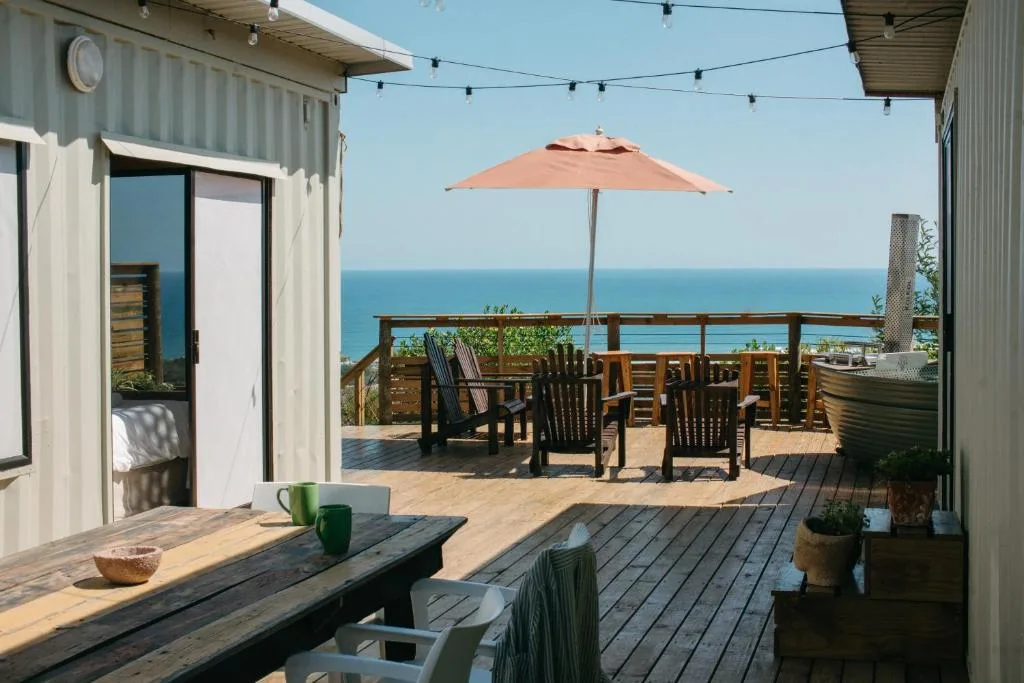
Almost everything on this list is within about fifteen minutes of the village, so where you sleep matters less here than in a town like Knysna where the attractions are spread out. What does matter is whether you want the beach side of the N2 or the lake side: the beach side gets you the surf and the stairs down to the sand, the lake side gets you the still water and the birds. Browse our Wilderness self-catering places to see both.
Sources
- The Citizen — SANParks 2025/26 daily conservation fees by park, published 16 August 2026.
- George Trails — Half-Collared Kingfisher Trail route, permit, pontoon crossing and access times.
- George Herald — George Blue Flag beach awards for the 2025/26 season.
- George Herald — Outeniqua Choo-Tjoe restoration progress and the 2027 objective, published 8 June 2026.
- SANParks — Half-collared & Giant Kingfisher Trail distance and duration, and the Touw pontoon crossing.
- SANParks — Woodville Big Tree height and age, and the separate Tsitsikamma yellowwood figures.
- George Herald — Seven Passes Road open to all traffic except heavy vehicles, published 13 January 2026.
- Acrobranch Garden Route — course list, height and age minimums, prices and opening hours.
Where Wilderness stays sit
Every listing plotted, with attractions dotted around it. Tap a navy pill to see the stays in that cluster.
Frequently asked questions
Is Wilderness South Africa worth visiting?
Yes — for a beach-and-forest base rather than a restaurant-and-shopping one. In a small area you get a Blue Flag summer beach, a national park section with a waterfall walk and five lakes, tandem paragliding and two free viewpoints. It is quieter than Knysna and Plettenberg Bay, which is the point.
What is Wilderness famous for?
Its setting — a long wild beach hemmed in by steep green cliffs, with the Touw River, a chain of five lakes and indigenous forest directly behind the village, and the Outeniqua Mountains above it. It is also known as one of South Africa’s better tandem paragliding spots.
How long is the Kingfisher Trail in the Wilderness?
SANParks, who manage it, publish 7km and 3 to 3.5 hours for the Half-collared and Giant Kingfisher Trail — a linear there-and-back starting within walking distance of the Ebb-and-Flow rest camp. Ignore the 7.2km and 8km figures circulating elsewhere.
How much does it cost to hike the Half Collared Kingfisher Trail?
There is no separate trail permit — the SANParks daily conservation fee for the Wilderness Section applies, unless you hold a Wild Card. For the 2025/26 season, valid to 31 October 2026, that is R61 per adult and R30 per child for South Africans, R124 / R62 for SADC nationals and R235 / R118 for everyone else.
Which is better, Wilderness or Knysna?
Knysna if you want restaurants, shops and a lagoon town with things happening. Wilderness if you want a beach, forest walks and quiet, with George Airport a short drive away. They are 25 minutes apart on the N2, so many visitors base in one and day-trip the other.
What activities are available at Wilderness Dunes?
The dune-backed beachfront stretch is used for swimming, surfing, long beach walks and whale watching in season. Canoeing, kayaking and paddleboarding happen on the calmer Touw River and lakes just behind the dunes rather than in the surf.
What are some fun things to do in Wilderness on a budget?
Dolphin Point and the Map of Africa viewpoints are both free. The beach is free. A day in the national park — the Kingfisher waterfall trail, the river and the lakes — is R61 an adult for the 2025/26 season, which is among the cheapest SANParks entry fees in the country.