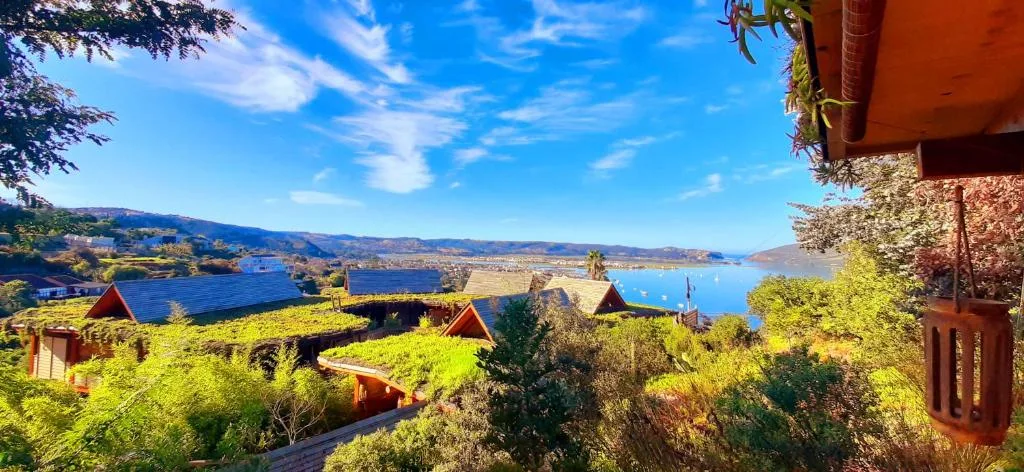

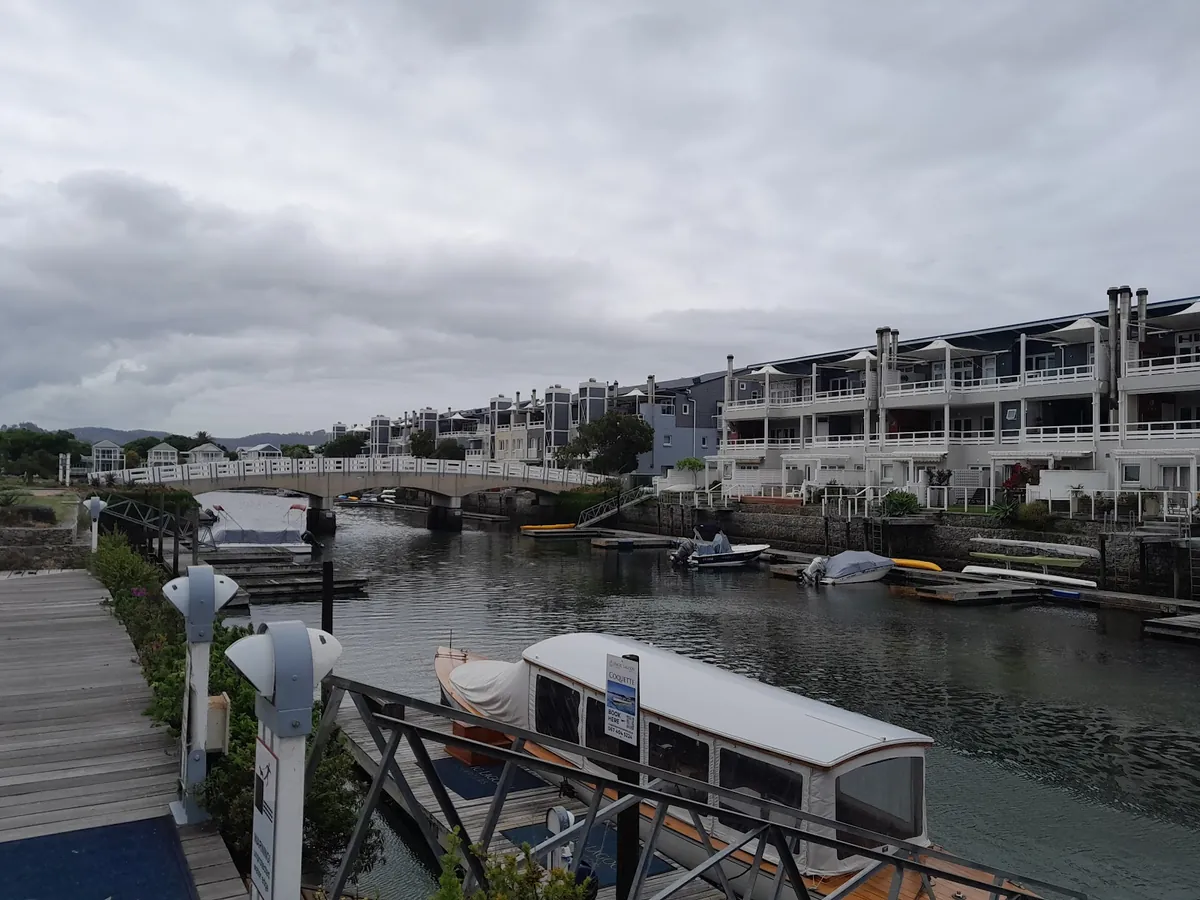
The first time you cross the bridge onto Thesen Island, Knysna, the obvious comparison is somewhere coastal in the Cape — Hermanus, maybe, or Camps Bay. The actual comparison is a small Dutch town. Twenty-one arched bridges, a grid of tidal canals, gabled colonial homes facing the water, and a single road running its spine. Then you remember you're inside Knysna Lagoon, looking at the Heads framed between the gables, and the comparison falls apart. There isn't really anywhere else like Thesen Islands. This is the guide I'd hand a friend deciding whether it's worth a half-day, or worth basing a week of their Garden Route trip there.
What is Thesen Islands?
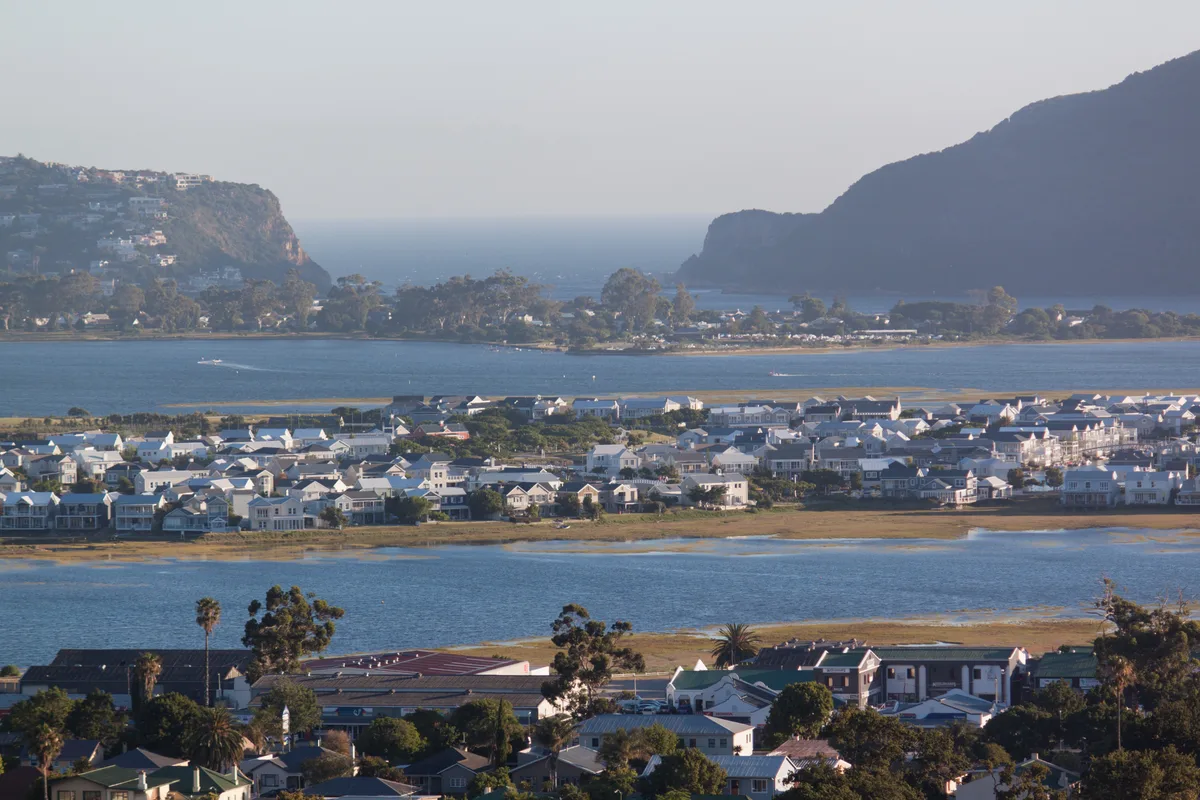
Strip away the marketing copy and here's what you're looking at. Thesen Islands is a single-purpose residential development covering 90 hectares of what used to be a working sawmill site in the middle of Knysna Lagoon. The 19 islands and the canals between them were excavated during construction; the surrounding 25 hectares of tidal water flushes through them twice a day on the same tide that fills and empties the Heads.
Every home is built to a strict colonial-maritime design code — pitched roofs, weatherboard cladding, white-and-cream walls, dark shutters. The estate is gated, with a single manned entry point off Long Street, and the residential islands are private. The commercial bit — Thesen Harbour Town, at the head of the estate as you cross the bridge — is open to anyone. That distinction matters more than any guide I've read makes clear, and I'll come back to it.
The Thesen family — Norway to Knysna
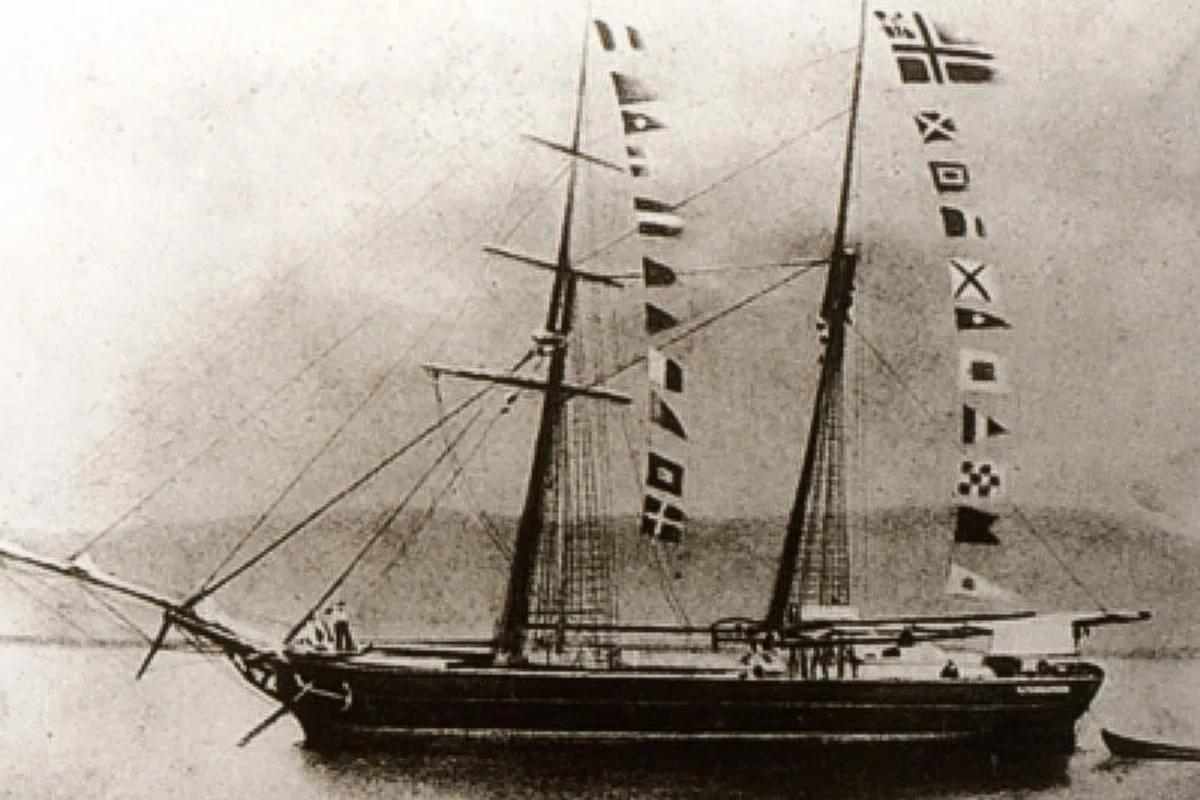
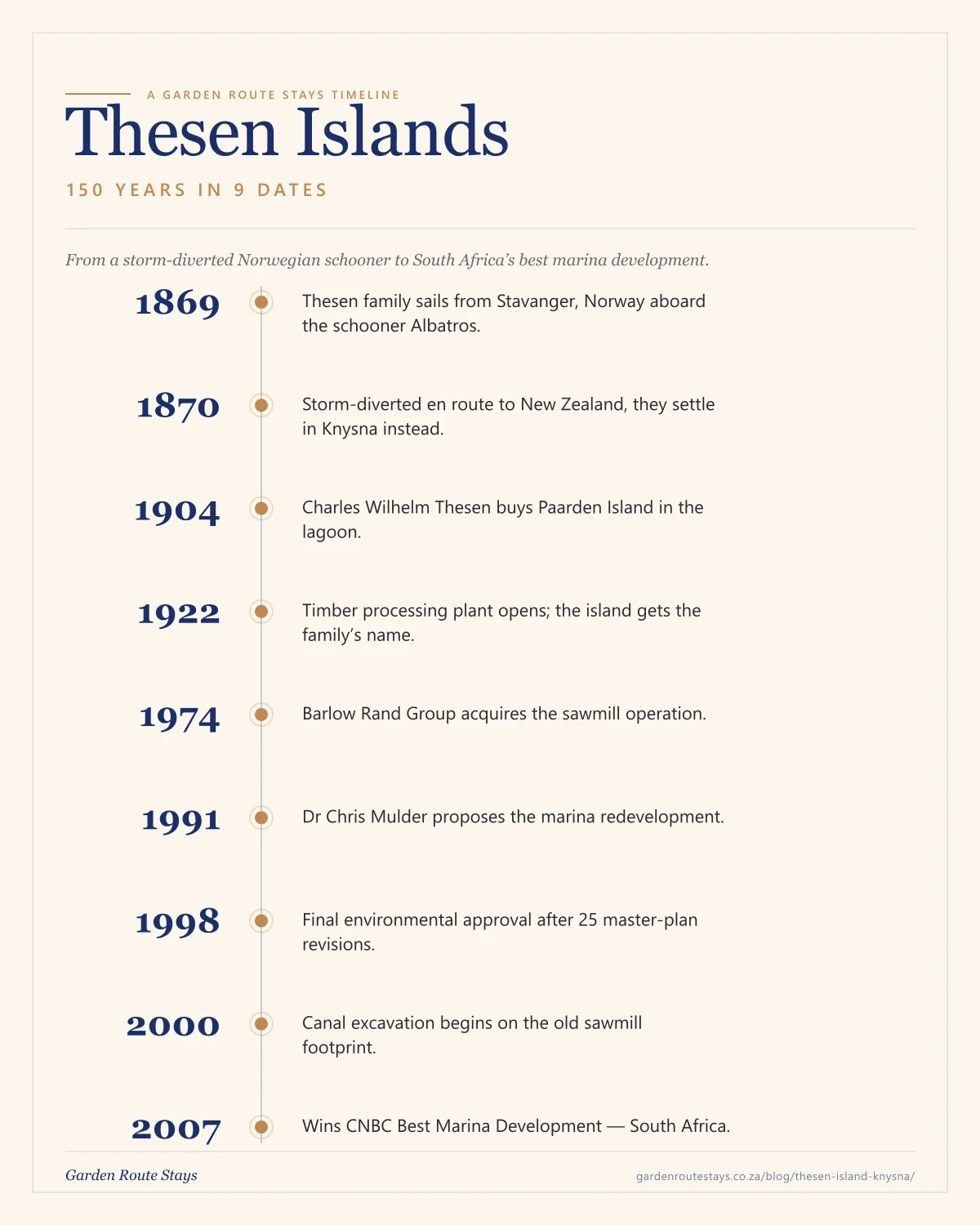
The name on the gate isn't a developer's invention. Arndt Leonard Thesen left Stavanger, Norway in August 1869 with his wife and nine children on the schooner Albatros, supposedly bound for New Zealand. Storm damage forced them into Cape Town instead, and after a winter in the Cape they sailed east along the South African coast and settled in Knysna in 1870. They never made it to New Zealand.
The family ran shipping, trading and timber out of Knysna for the next half-century. In 1904, Arndt's son Charles Wilhelm Thesen bought what was then called Paarden Island — a low, flat sandbank in the middle of the lagoon — and in 1922 he opened a timber processing plant on it. That's the moment the island got renamed. For most of the 20th century, "Thesen Island" meant a sawmill: stacks of yellowwood and stinkwood logs from the Knysna forests, a slipway, a boatyard, and the Knysna Oyster Company shipping oysters from the lagoon.
The Barlow Rand Group bought the operation in 1974. By 1990 the sawmill was being squeezed by environmental concerns about effluent in the lagoon, and Barlow commissioned the Knysna-based architect Dr Chris Mulder of Chris Mulder Associates Inc (CMAI) to work out what else the site could become.
From sawmill to canal estate
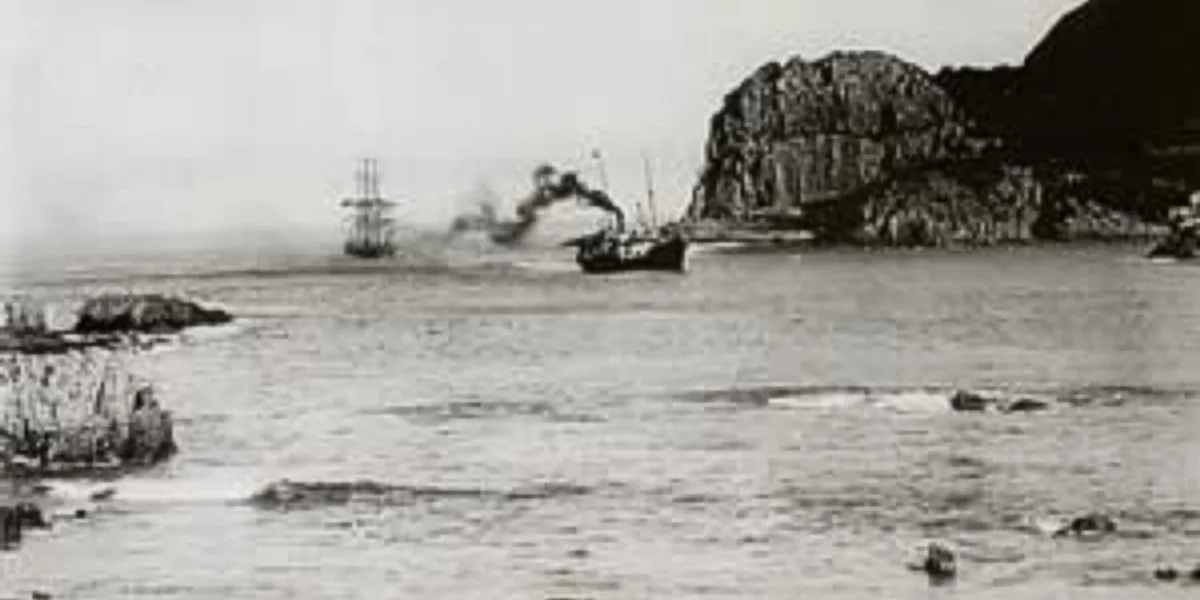
The redevelopment took a decade to get off the ground. Dr Mulder's first concept was filed in 1991. Final environmental approval was granted in December 1998, after twenty-five rounds of changes to the master plan. Construction of the canals began in September 2000. The Thesen Island Development Company (TIDC) — the entity that built and sold the estate — was Mulder's company; Sotheby's and Lew Geffen appear as real-estate agents on the resale market, not as developers.
The plan was unusual. Rather than landscaping over the old sawmill footprint, the team excavated through it, breached the original causeway to restore tidal flow, replaced it with a 20-metre span bridge, and used the spoil to shape the 19 smaller islands. The old power station was kept and turned into The Turbine Boutique Hotel and Spa. The Boatshed where Thesen's Boatyard had operated became part of The Lofts Boutique Hotel. The Sawtooth (Dry Mill) building was converted into apartments and a small motoring museum. Almost everything else is new construction — but built to read as if it had always been there.
It worked. Thesen Islands won "Best Marina Development — South Africa" at the 2007 CNBC International Property Awards, and the marina has held Blue Flag status for multiple consecutive years.
Thesen Islands vs Knysna Quays — they're not the same place
This is the single most common point of confusion in Knysna, and it's worth two paragraphs.
Thesen Islands is the canal estate I've described above — inside the lagoon, reached by causeway off Long Street, gated. Knysna Quays (sometimes "Knysna Waterfront" or "Waterfront Knysna Quays") is a separate waterfront precinct on the Knysna mainland. It's anchored by the Protea Hotel by Marriott Knysna Quays and the 34 South restaurant, and it's where the Featherbed ferry terminus and the Knysna Yacht Club sit (the Yacht Club is a neighbour of Thesen Islands, not on it).
The two are about a 15-minute walk apart. Both face onto the lagoon. Both have restaurants and waterside seating. But Knysna Quays is freely accessible from the main road; Thesen Islands has a security gate, residential rules, and a different feel — quieter, more residential, less retail. If a Knysna guide says "stay at Knysna Quays" they mean a hotel apartment with a Marriott in the lobby. If it says "stay on Thesen Islands" they mean a private home on a canal. They are not interchangeable.
Getting there + visitor access
From the centre of Knysna, drive south on Main Road / Waterfront Drive, then turn off onto Long Street. Long Street climbs over the causeway and onto the estate — there's a security boom on the right as you cross the bridge. Visitors with no booking on the residential side simply continue straight ahead, past the boom, into the parking area of Thesen Harbour Town, which is the commercial precinct. Parking here is free.
If you're staying overnight on the residential islands, your host clears your name with security in advance; you state your booking at the gate and they let you through. Day visitors cannot drive onto the residential islands — and trying tends not to work, because the gate genuinely turns people back. The estate is private property.
What you can do, on foot, is more generous than people realise. From Thesen Harbour Town's pavements you can walk along the lagoon edge, sit on the public benches by the marina, watch boats coming in, and follow the Heritage Walk signs (more below). You won't get to wander the residential canals, but you'll see plenty.
Thesen Harbour Town — what to actually do
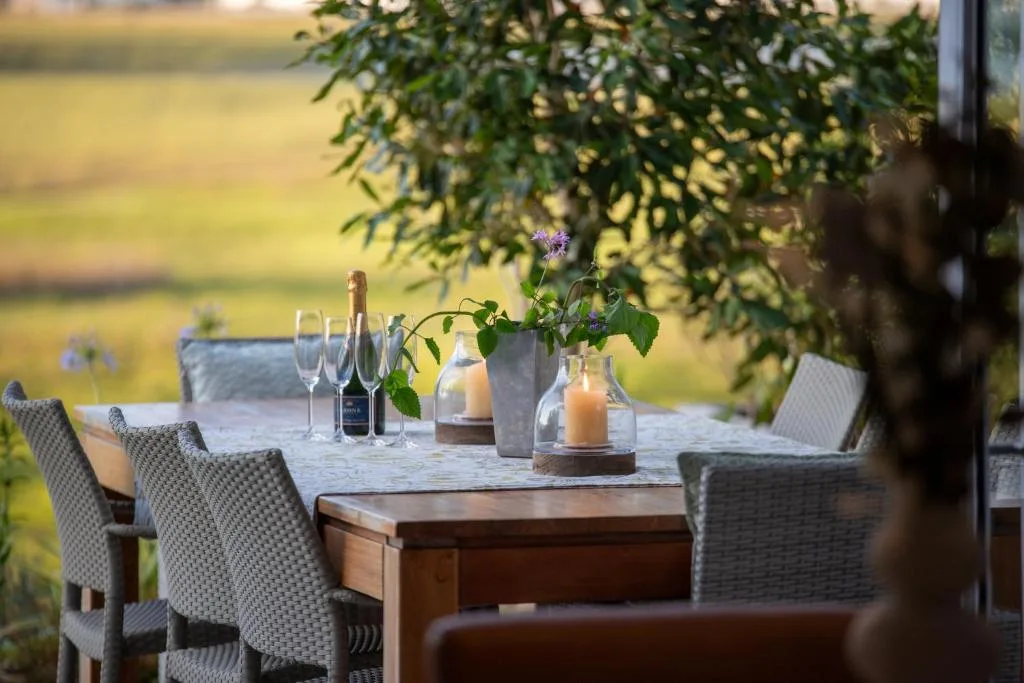
Harbour Town is the part of Thesen Islands most visitors come for. It occupies the headland just past the bridge — a cluster of restaurants, boutiques, galleries, tour operators and the Knysna Oyster Company building, laid out around a small marina basin.
The mix changes year to year, but the dependable anchors are:
- Île de Pain — the wood-fired bakery and breakfast restaurant in the old Boatshed building. The single most-visited eatery on the estate.
- Sirocco — Mediterranean and steakhouse menu, marina-facing terrace, mid-priced.
- Tapas & Oysters — small plates and Knysna oysters; the oysters travel less than a kilometre from the Oyster Company's lagoon beds to the plate.
- Flo & Co — coffee and lighter food, casual.
- The Project Bar — drinks and live music certain nights.
- The Turbine Hotel — the converted power station; non-residents can book lunch or a spa treatment.
- Ocean Odyssey — lagoon and sea cruise operator; office in Harbour Town, boats leave from the marina.
- The Motorcycle Room — small but well-curated museum in the Sawtooth building. Free.
The whole precinct is a 10-minute walk end to end. Most visitors arrive, eat at Île de Pain, walk the Heritage Walk, look at the seahorse exhibit, and either leave or take a cruise. Two hours is the minimum; a half-day is comfortable.
The Thesen Island Heritage Walk
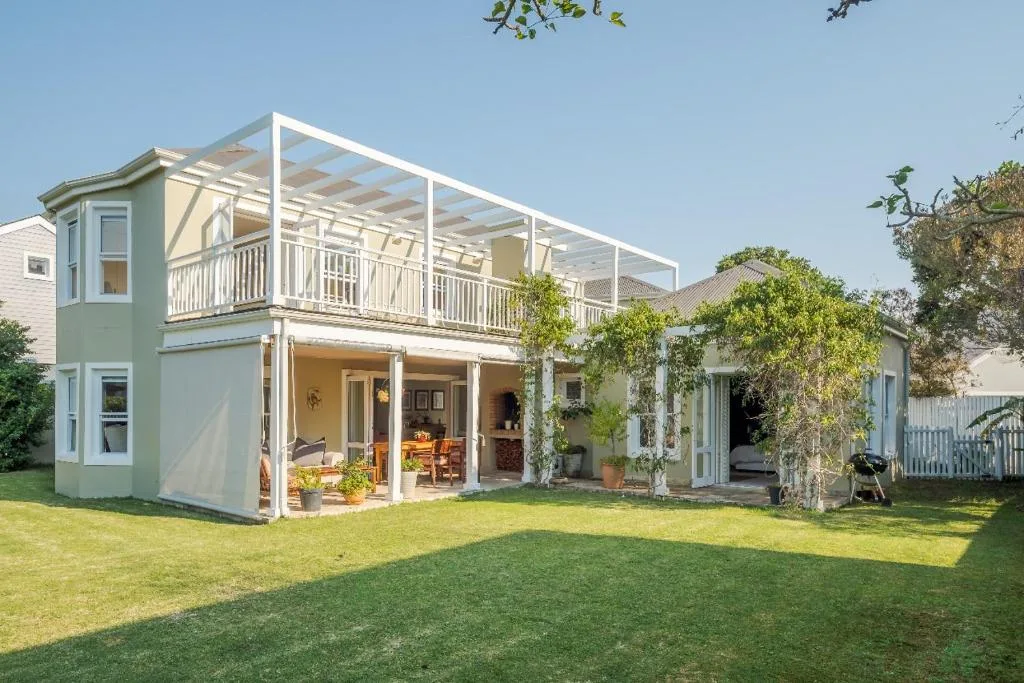
If you only do one thing on Thesen Islands, do this. The Heritage Walk is a self-guided trail of 12 numbered signboards along Long Street and the marina edge, telling the story of the three industries that operated on the island: Thesen's Sawmill, Thesen's Boatyard, and the Knysna Oyster Company.
The route begins on the corner of Long Street and Punt Close — outside Île de Pain — and finishes at the traffic circle by the NSRI Museum at the southern end of Long Street. It's only a few hundred metres in total; you'll be done in about an hour if you read every board, less if you skim.
The walk passes the three preserved heritage buildings:
- The Boatshed — Thesen's old boatyard, now partly The Lofts Boutique Hotel. Île de Pain occupies the other half. The whitewashed walls and pitched roof are original.
- The Sawtooth / Dry Mill Building — long, low, with the distinctive zigzag sawtooth roofline that gave Cape mills their name. Now the Dry Mill apartments and The Motorcycle Room.
- The Power Station — the chimney is the giveaway. Now The Turbine Boutique Hotel.
There's a printed guide booklet that some Harbour Town businesses stock, but the signboards stand on their own. Free, year-round, no booking.
Where to eat on Thesen Islands
The dining is concentrated in Harbour Town. Île de Pain is the one most people fly to first — and rightly.
Beyond Île de Pain, the spread is what you'd expect from a marina precinct that has to serve a residential population year-round rather than only summer tourists. Sirocco is reliable for a marina-side dinner; Tapas & Oysters works for a lighter evening and the oysters are local; Flo & Co does decent coffee through the day. For something special, the Turbine Hotel restaurant uses the old power station's industrial bones as the dining room — book ahead, especially in season.
If you want broader options — including the 34 South deli-and-fishmonger combination, which a lot of guides wrongly place on Thesen — you walk 15 minutes west to Knysna Quays. Different precinct, same lagoon.
The Knysna seahorse + birds + lagoon ecology
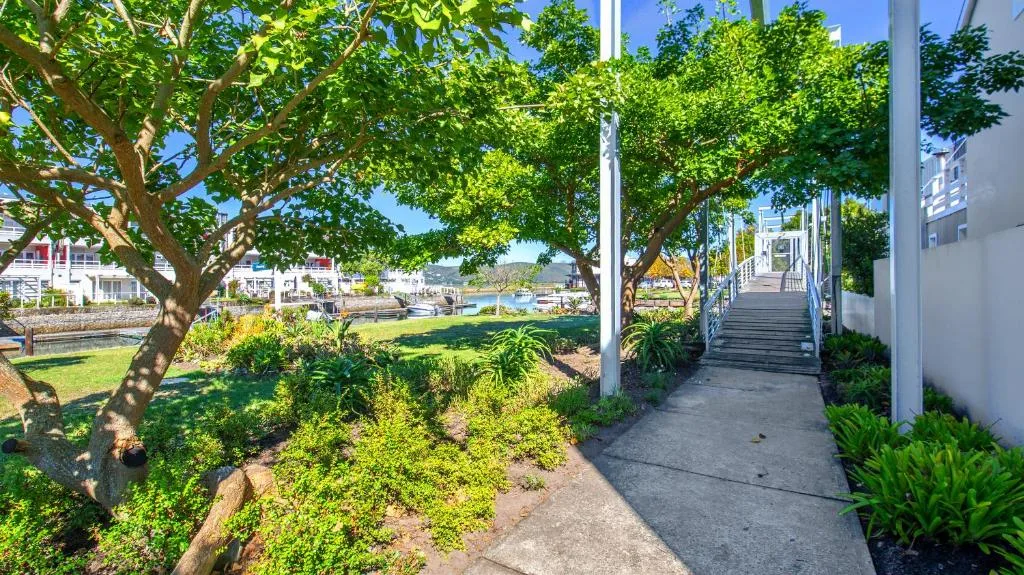
The headline draw, for anyone who reads the signboards, is Hippocampus capensis — the Knysna seahorse. It's South Africa's only endemic seahorse, listed as endangered on the IUCN Red List since 2007, and it survives in only three estuaries on the southern Cape coast. Knysna is the species' primary habitat, and the gabions lining the Thesen Islands canals are one of their preferred microhabitats.
The SANParks Jetty Building on Thesen has a small captive viewing exhibit — the easiest way to actually see one. At low tide on a calm clear day, you can sometimes spot them on the nearest jetties around Harbour Town. The gabion baskets also shelter octopuses, and the occasional Cape fur seal makes it through the Heads and explores the canals.
The bird list is longer than you'd expect for a developed estate. The HOA's count records 103 species, including African fish eagle, four kingfisher species (malachite, giant, half-collared, pied), grey and black-headed heron, African black oystercatcher, African spoonbill, Egyptian goose and five plover species. The reason is the tidal exchange: the canals are functionally an extension of the lagoon's intertidal feeding grounds, and the birds treat them as such. Early morning around the marina edge is best.
Where to stay on Thesen Islands
Two ways to do it. Either you book one of the hotel rooms — The Turbine, The Lofts — or you take a self-catering house or apartment on the canals. The hotels are convenient and easy; the houses give you the canal-on-your-doorstep experience that's actually unique to Thesen.
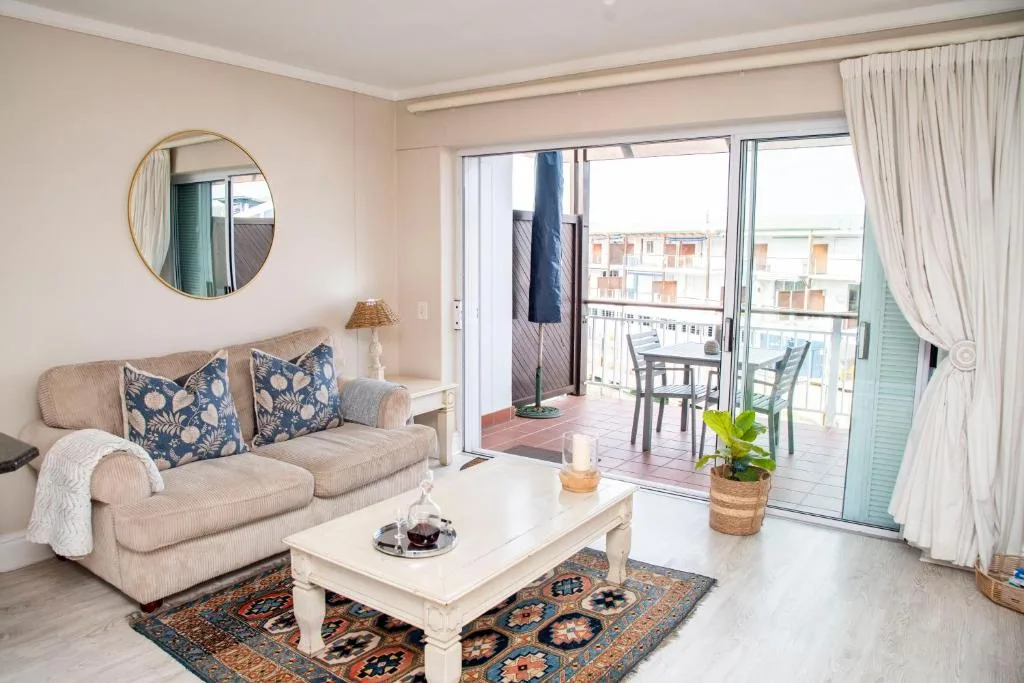
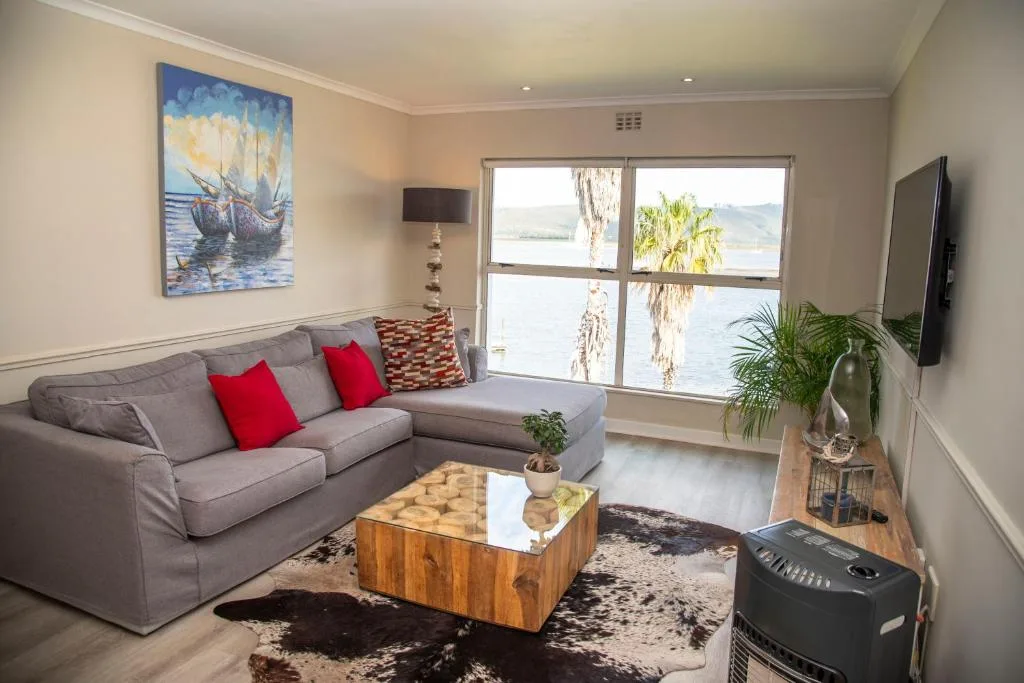
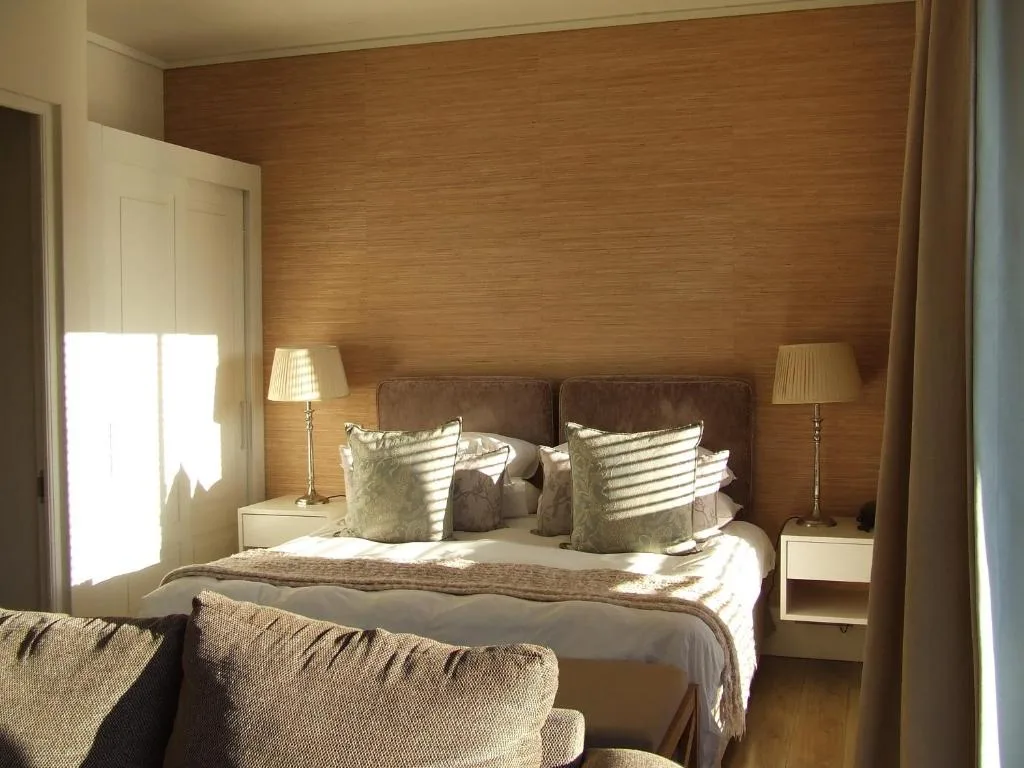
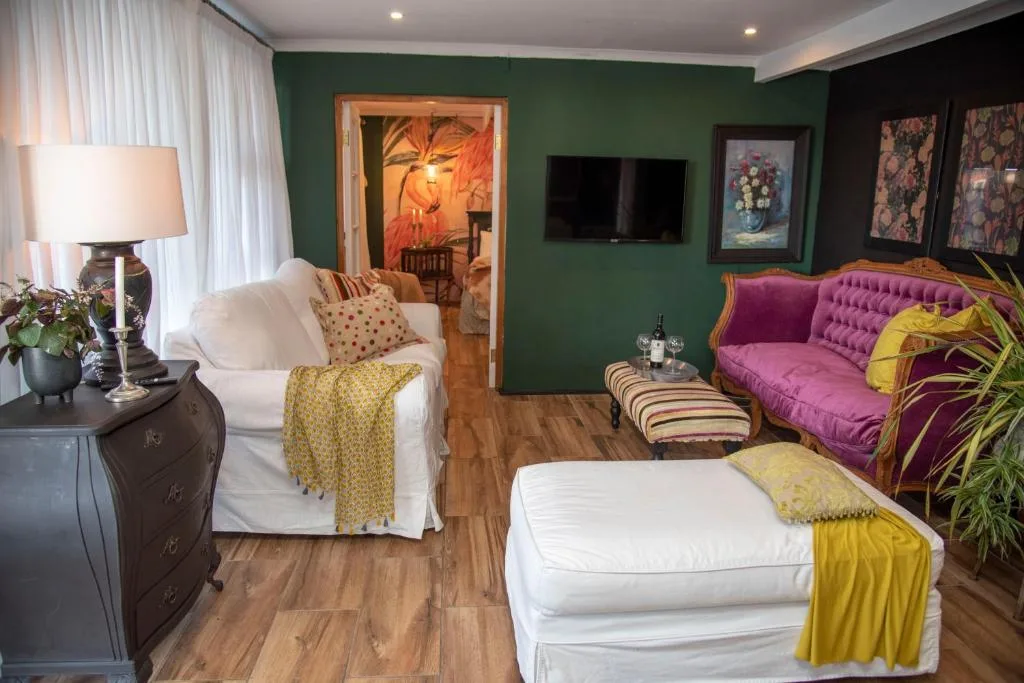
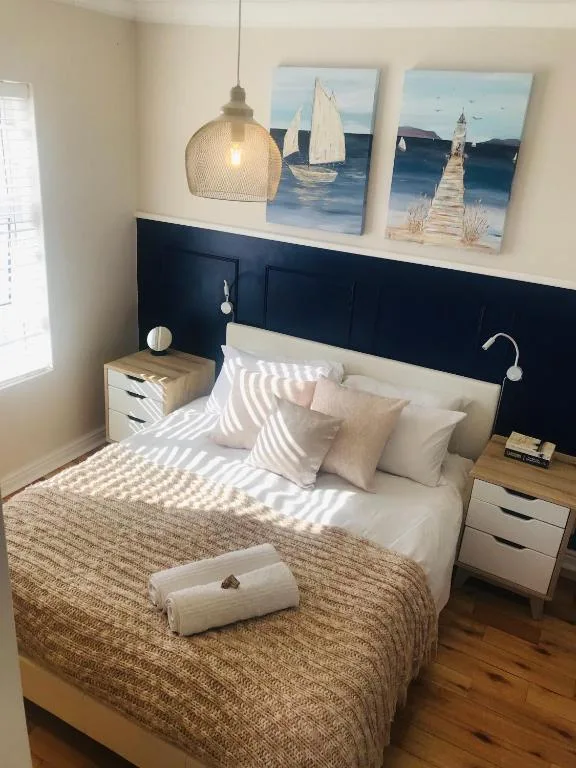
Self-catering is what we list on Garden Route Stays. The canal villas come with private jetties — some hosts include kayaks or paddleboards as part of the booking — and the architecture means you get water views from at least the living room, often from every bedroom. Three I'd point a friend at:
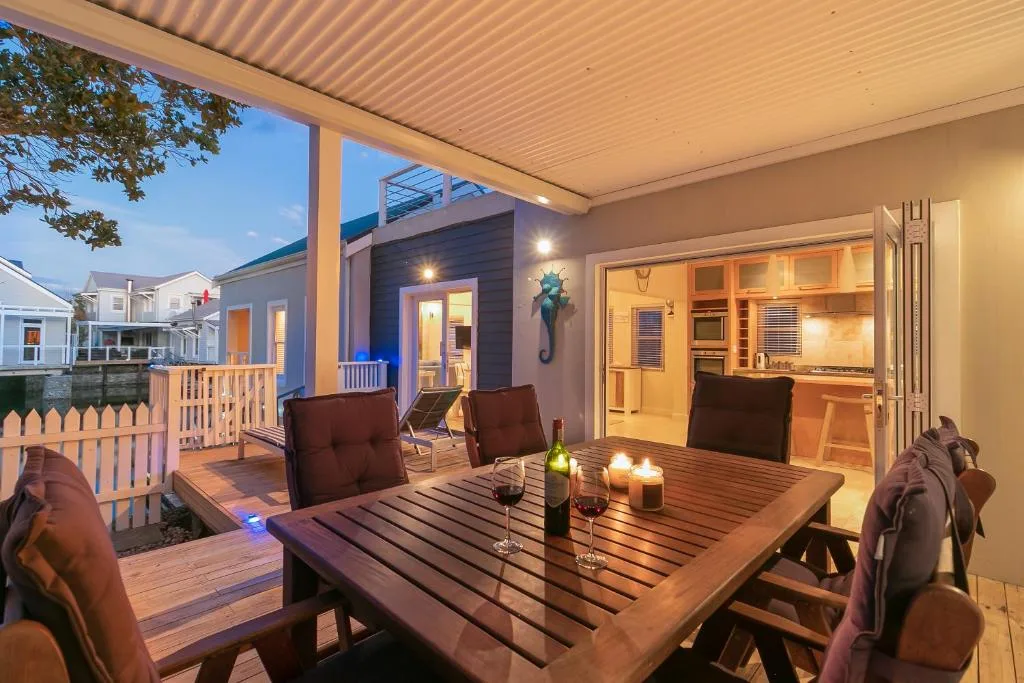
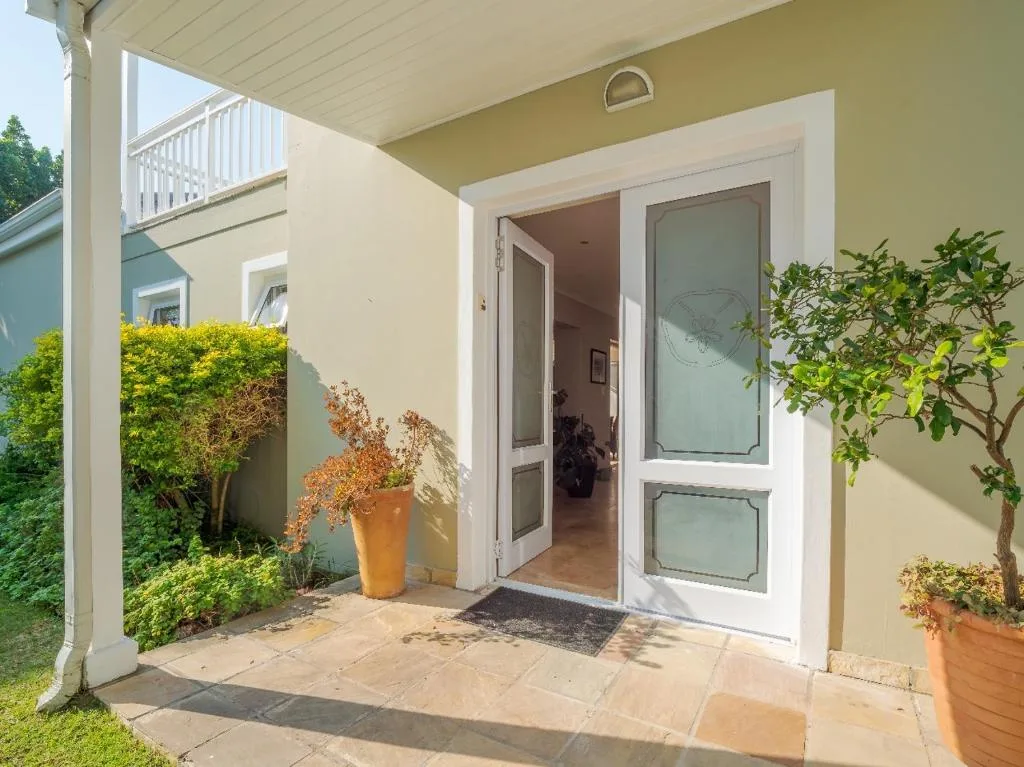
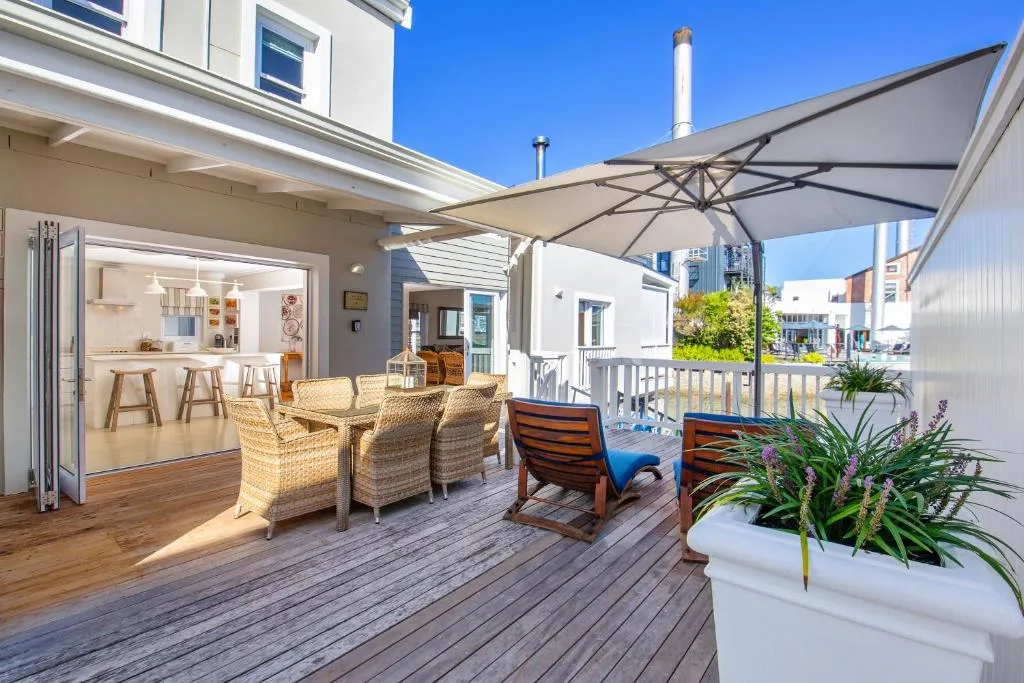
If you'd rather see the full Knysna inventory side-by-side with these, our where to stay in Knysna page covers the full set including the Heads, the Quays and Brenton-on-Sea.
Thesen Island on the map
What's nearby
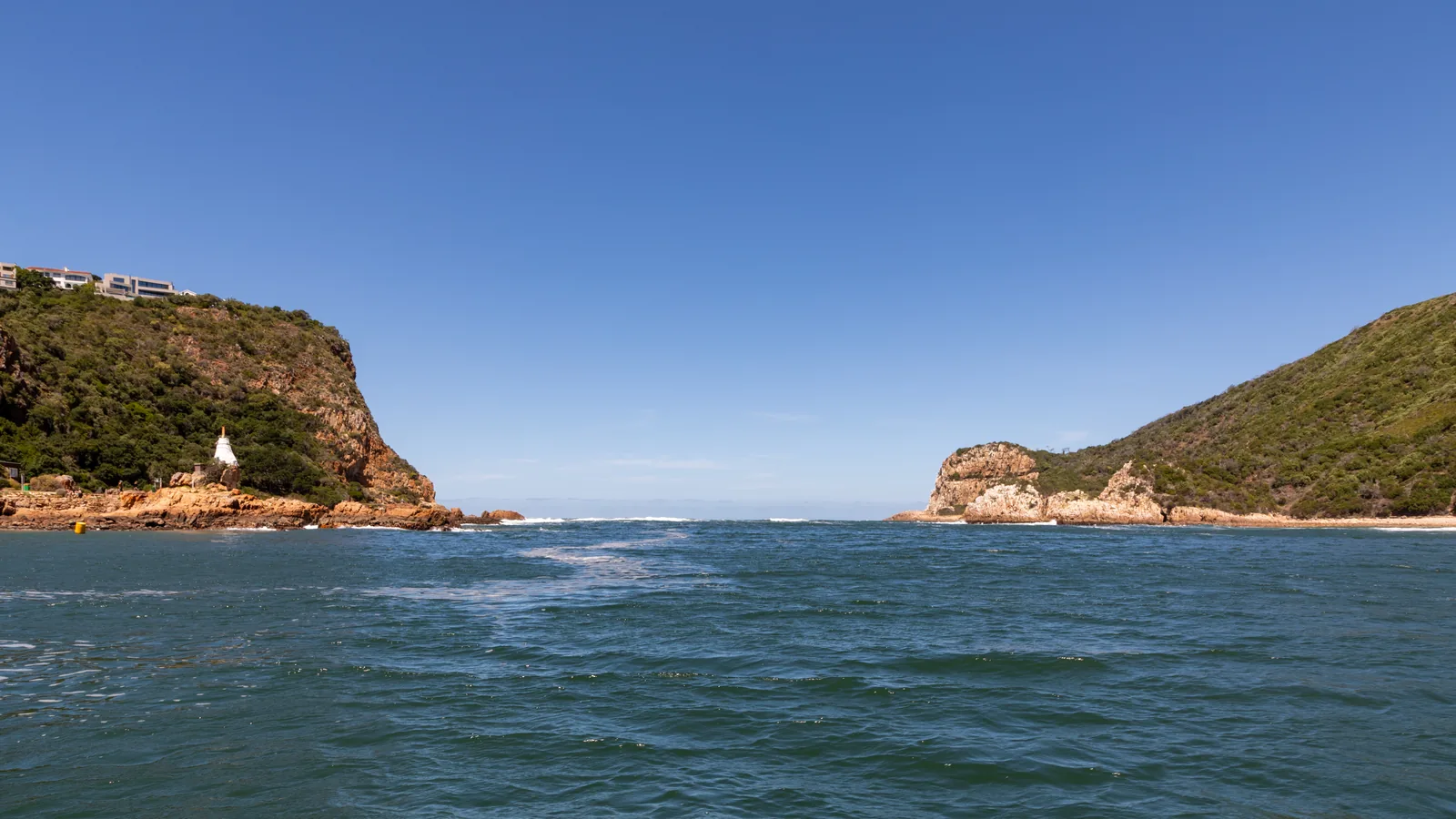
Thesen Islands sits roughly halfway between the Knysna Heads (the lagoon mouth, ~8 km east via George Rex Drive) and Brenton-on-Sea (the Indian Ocean beach village, ~15 km west via Brenton Road). The Featherbed Co. ferry terminus is a 5-minute drive — it leaves from Remembrance Drive on the mainland, not from Thesen — and the Knysna Yacht Club is a 10-minute walk along the lagoon shore.
The two practical day-trip combinations:
- Half-day on Thesen + half-day at the Heads — eat at Île de Pain, walk the Heritage Walk, drive to the Eastern Head viewpoint for sunset. The two together cover Knysna's signature landmarks in a single, walkable, drivable loop.
- Thesen + Brenton beach day — coffee at Île de Pain, drive west to Brenton-on-Sea for the long Indian Ocean beach and a swim, dinner back on the lagoon. A good rhythm if you're staying multiple nights.
The simplest summary I can give a first-time visitor: Thesen Islands is the most distinctive built environment on the Garden Route, and the only reason to stay there over Knysna Quays or the main town is if you want the canal-on-your-doorstep experience the residents pay for. Walk it for an afternoon and you'll see why it exists. Stay a few nights and you'll understand why people don't leave.
Sources
- Thesen Island Home Owners Association — About (estate size, dwelling counts, redevelopment history, awards)
- Thesen Island HOA — FAQ + security and access rules
- Thesen Island HOA — Fauna & Flora (Knysna seahorse, gabion octopuses, bird counts)
- Knysna Museums — Thesen Island Heritage Walk (12-signboard route, preserved heritage buildings, 2007 CNBC award)
- Visit Knysna — Heritage and Seahorses on Thesen Island
- Wikipedia — Charles Wilhelm Thesen (1869 Norway departure, 1904 Paarden Island purchase, 1922 timber plant)
- Wikipedia — Knysna Yacht Club (founded 1910, neighbour-not-on-Thesen)
- Waterfront Knysna Quays — 34 Degrees South (location confirmation: Quays, not Thesen)
- Visit Knysna — Featherbed Nature Reserve (Featherbed ferry departs from Remembrance Drive, not Thesen)
Where Knysna stays sit
Every listing plotted, with attractions dotted around it. Tap a navy pill to see the stays in that cluster.
Frequently asked questions
Where is Thesen Island located?
Thesen Islands sits inside Knysna Lagoon, on the Garden Route in South Africa's Western Cape, about 5 minutes' drive south of Knysna's main street. The estate is reached by a single causeway and 20-metre bridge off Long Street, which is also the spine road running through it. From the gate, the Knysna Heads are roughly 8 km east, and George Airport is about 65 km west.
Is Thesen Island man-made?
The 19 islands are man-made, but the land they sit on isn't. The original landmass — called Paarden Island until 1922 — was a natural sandbank in Knysna Lagoon. During the early-2000s redevelopment, channels were excavated through the old sawmill site to carve the canal grid and create the smaller islands, all linked by 21 arched bridges over tidal waterways.
How many houses are on Thesen Island?
There are 512 free-standing homes plus 56 Dry Mill apartments — 568 dwellings in total across 90 hectares. The architecture is colonial maritime style with strict design controls, which is why the estate looks visually unified rather than patchwork. A large share of the houses are holiday lets rather than full-time residences, which is why the canals quieten in winter.
Is Thesen Island worth visiting?
Yes — but only the public Harbour Town precinct is freely accessible. That section has dining, the Heritage Walk, the SANParks Seahorse exhibit and waterside paths, and most visitors spend 2–3 hours there. The residential islands sit behind a 24-hour security gate and are not open to drop-in visitors. If you're staying overnight on the estate, you get the lagoon-on-your-doorstep experience the residents pay for.
What is the lifestyle like on Thesen Island?
Quiet, walkable, and unusually safe for South Africa. The estate has 24-hour manned security, no through-traffic, and wide pavements along every street, so children cycle to friends' houses and residents walk dogs at night without incident. Kayaks, paddleboards and small motorboats slip in and out of private jetties; the canal is effectively a shared garden.
What is the difference between Thesen Island and Knysna Quays?
Thesen Islands is a gated canal estate inside the lagoon, reached by causeway off Long Street. Knysna Quays is a separate waterfront precinct on the Knysna mainland, about a 15-minute walk away, anchored by the Protea Hotel by Marriott Knysna Quays and the 34 South restaurant. People mix them up because both sit on the water — but they're different places with different access rules.
Can you see the Knysna seahorse on Thesen Island?
Often, yes. The endangered Knysna seahorse — South Africa's only endemic seahorse — lives in the gabions and seagrass along the Thesen Islands canals. Walk to the SANParks Jetty Building on Thesen for the captive viewing exhibit, then check the nearest jetties at low tide on a clear day. The gabions also shelter octopuses and the occasional visiting seal.