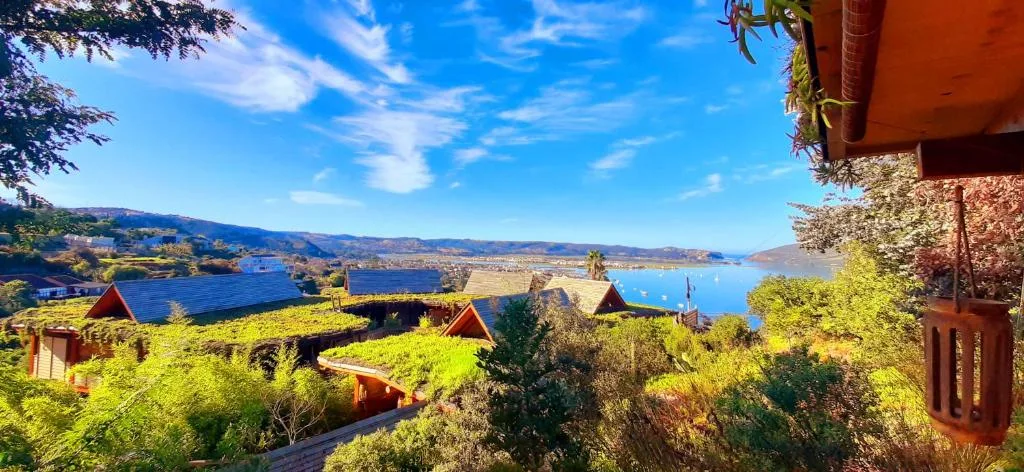
If you're planning a Knysna South Africa travel guide trip, you're heading to the lagoon town in the middle of the Garden Route — six hours east of Cape Town, an hour from George Airport, and the easiest single base for the kind of Garden Route week most visitors are imagining. I've been coming back here since childhood, and the short version is: stay at least three nights, spend one of them watching the sun set over the Knysna Heads, one walking the indigenous forest behind town, and one eating oysters somewhere on the water. This is the long version of that — what Knysna actually is, the four neighbourhoods you can stay in, what to eat, when to come, and how to skip the things that aren't worth your time.
What is Knysna?
Knysna is a coastal town on the northern shore of a large tidal estuary on South Africa's southern coast, almost exactly halfway along the stretch of the Western Cape known as the Garden Route. It has roughly 76,000 inhabitants per the 2019 census, sits in the Garden Route District Municipality, and was named the "Heart of the Garden Route" by South African tourism long enough ago that the slogan now feels earned rather than aspirational.
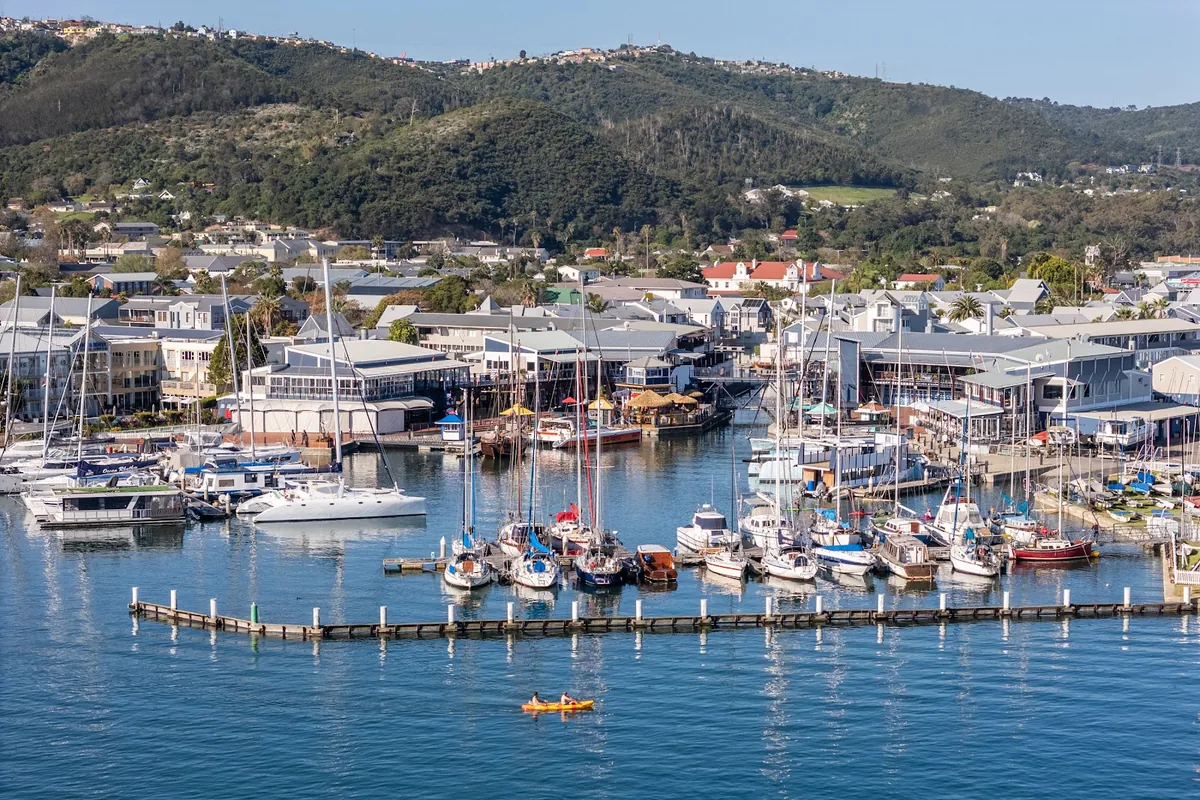
What makes Knysna geographically different from the rest of the Garden Route is that it's built around water rather than next to it. The lagoon — technically an estuary, but no one local calls it that — runs through the town. Most of what you'd want to do here is on, in, or beside that water: the Heads at the lagoon's mouth, the canals of Thesen Islands inside the lagoon, the oyster beds and seahorses in its margins, the long forest behind it. The actual high street is small. The lagoon is the main event.
Where Knysna fits on the Garden Route
Knysna sits roughly in the middle of the Garden Route's six-town stretch. Driving west to east along the N2 you'll hit: Mossel Bay → George → Wilderness → Sedgefield → Knysna → Plettenberg Bay. From George Airport it's a 67-kilometre, 45-minute drive east. From Plett (the next town east), it's 30 km — about 25 minutes. From Cape Town the full drive is 520 km on the N2, typically 5 to 6 hours including a stop or two.
For most first-timers we recommend Knysna as the base for the middle of a Garden Route week. It has the broadest accommodation choice in the region, the most concentrated food-and-drink scene, and the deepest hinterland of things to do without long drives. Plett is the better choice if your trip is beach-led; George if you're flying in late and need a quiet first night; Wilderness if you want a smaller, quieter base. But for almost everyone else: Knysna.
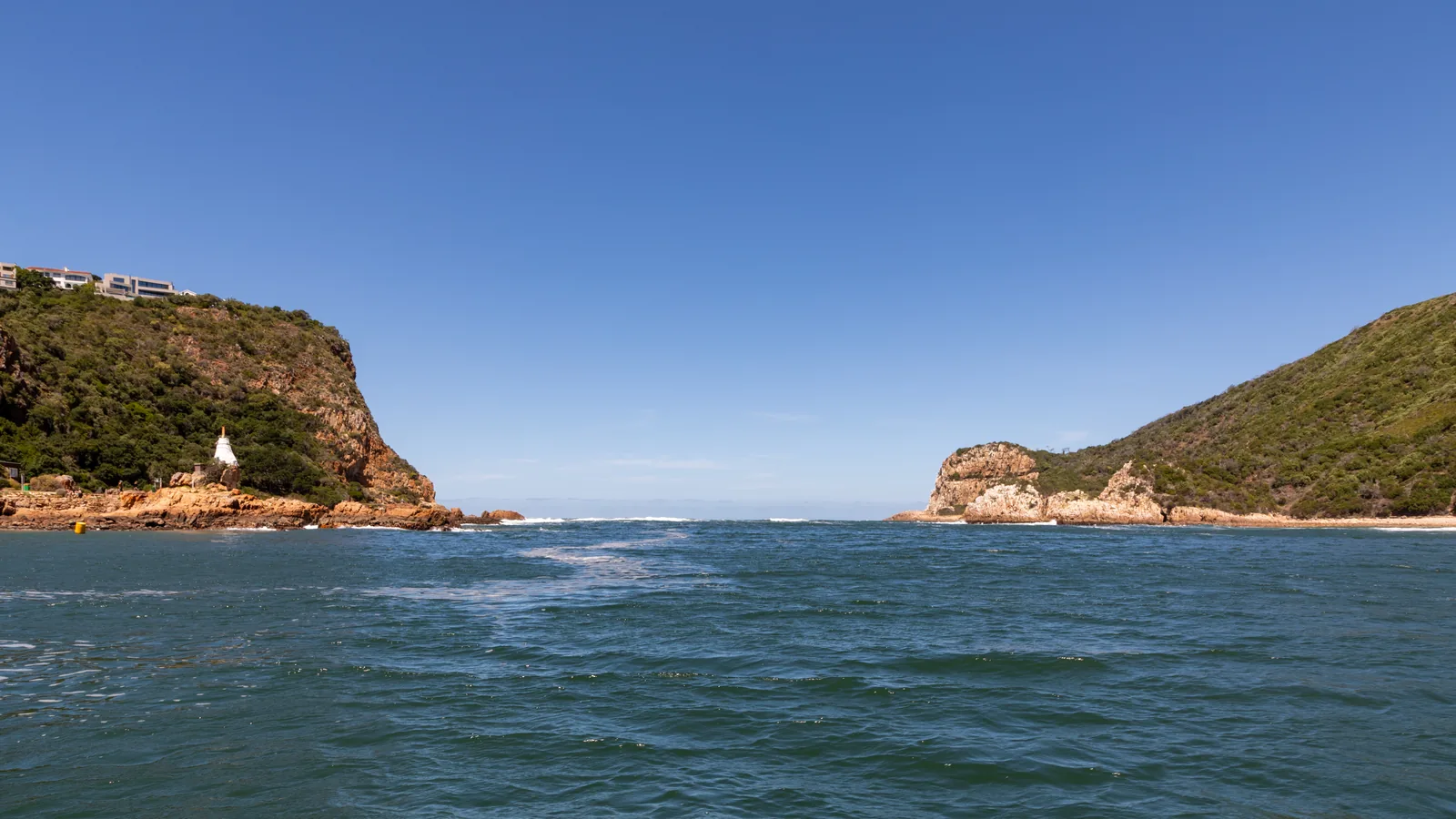
The Knysna Heads — the town's signature view
Two sandstone cliffs frame the mouth of the estuary where the lagoon meets the Indian Ocean. The Eastern Head has a free public viewpoint at the top of Coney Glen Road and is where almost everyone goes. The Western Head is private (it's inside Featherbed Nature Reserve) and accessible only by ferry. The navigable channel between them is just 90 metres wide and is one of the more dangerous harbour entrances in the world — widely quoted as a Royal Navy assessment, and the Paquita shipwreck below the Eastern Head since 1903 makes the point either way.
You should drive up the Eastern Head on your first afternoon. It's a 10-minute drive from the centre of town, parking is free, there's a café at the viewpoint and a beach (Coney Glen) at the base. For the deeper version of the same trip — Eastern vs Western, what's worth doing on the ferry, the safety story — we have a dedicated piece in The Knysna Heads guide.
Thesen Island and Knysna Quays — the waterfront heart
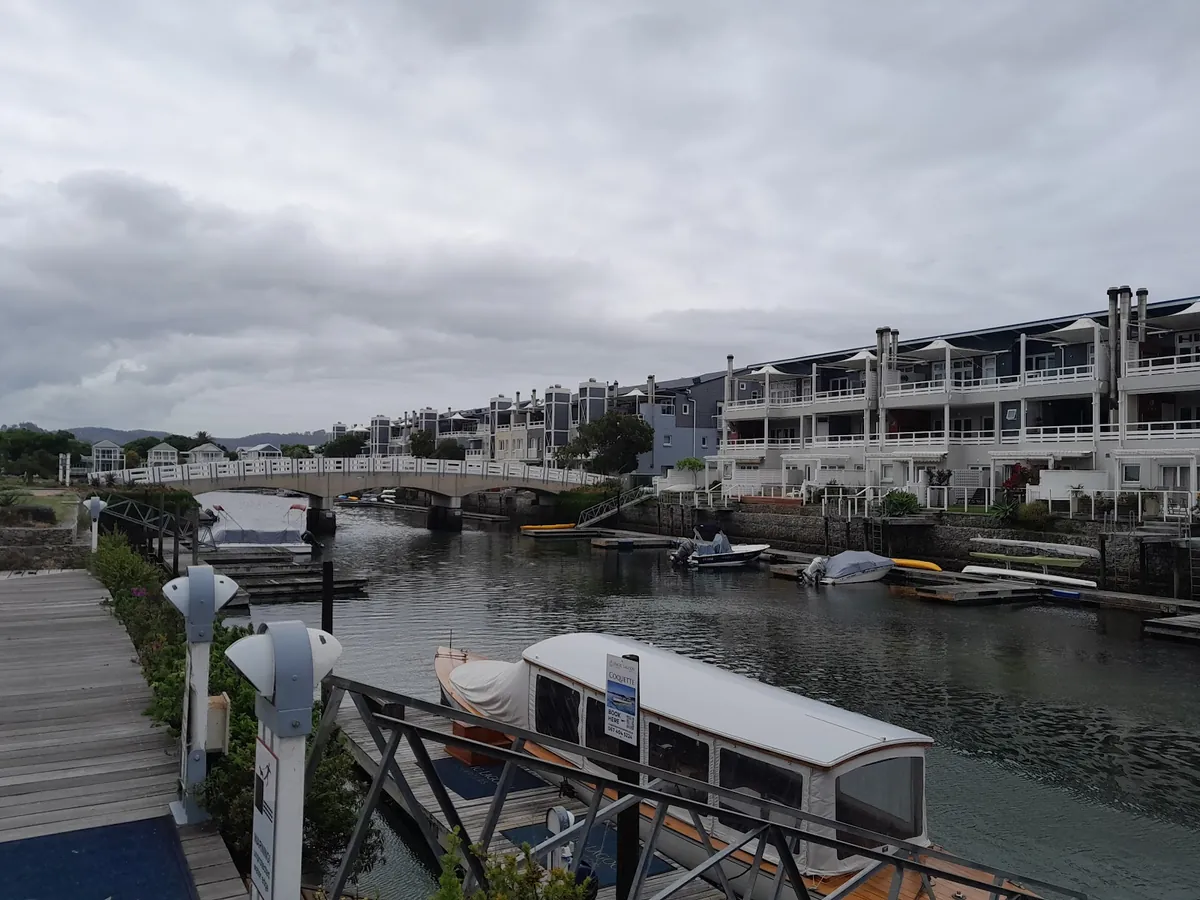
Two waterfront precincts sit on either side of the lagoon entrance: Thesen Islands (a 90-hectare canal estate of 19 man-made islands on the old sawmill site, gated, with public dining and shopping at Thesen Harbour Town) and Knysna Quays (a mainland waterfront precinct with the Protea Hotel by Marriott, the 34 Degrees South deli, and the Featherbed ferry terminus). Visitors routinely confuse the two. They're a 15-minute walk apart and feel completely different.
Thesen Islands is the more distinctive built environment. The Heritage Walk along Long Street (12 signboards, self-guided, about an hour) tells the 130-year story of the Thesen family who ran timber and shipping from Knysna from 1869, plus the marina redevelopment that converted the sawmill site to canals in the early 2000s. Île de Pain — South Africa's first artisan wood-fired-oven bakery — is the most-visited eatery here. For the full version see our Thesen Islands visitor's guide.
Brenton-on-Sea and the ocean-side beaches
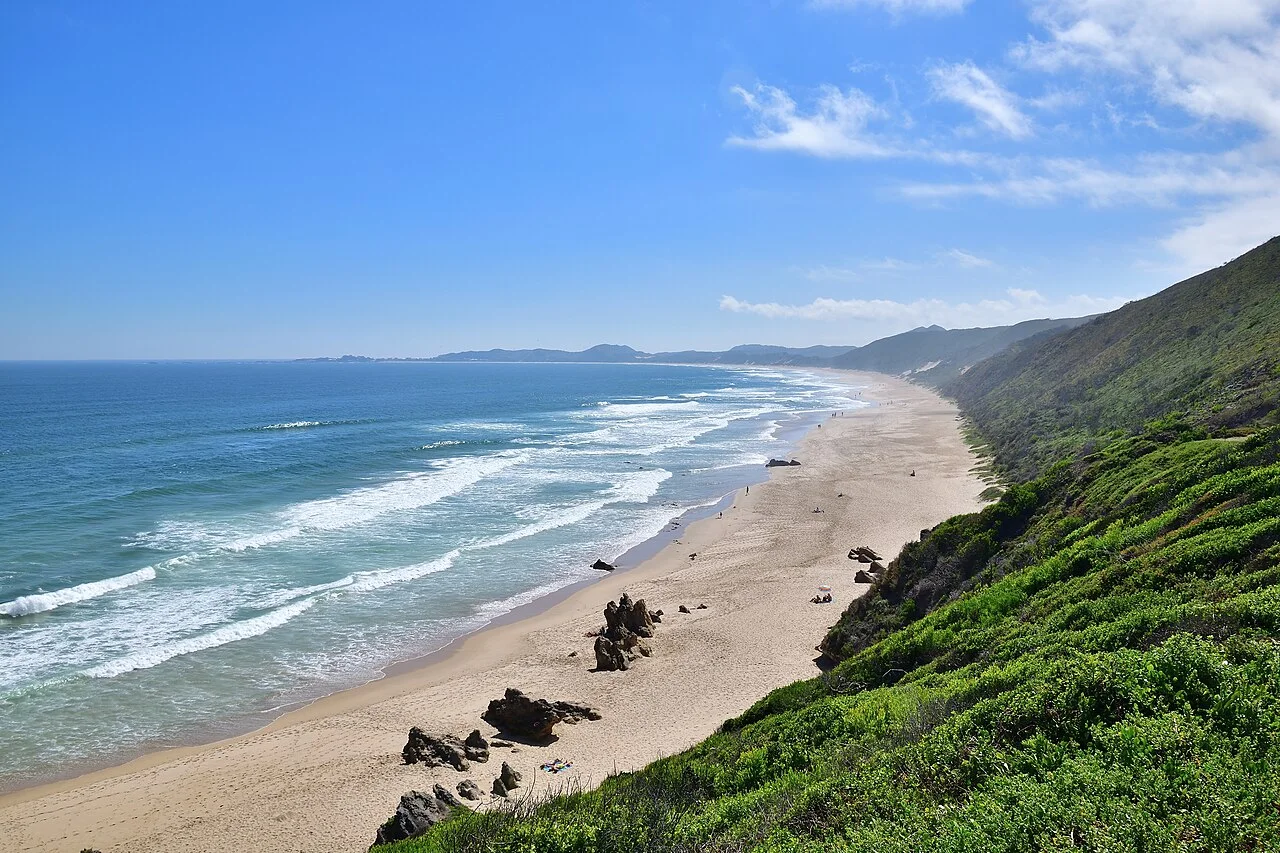
Knysna proper has no ocean beach — the lagoon mouth is too narrow and too dangerous. The town's swim-and-surf beach is at Brenton-on-Sea, a small clifftop village 20 minutes' drive west via Brenton Road. The beach itself is eight kilometres of pale sand backed by Buffalo Bay and the Sinclair Nature Reserve, and is the longest unbroken stretch of sand between George and Plett. Buffalo Bay (4 km further along the same coast) is smaller, more sheltered, and where Knysna locals tend to send their out-of-town friends. Sinclair, in between, is a SANParks nature reserve and the only fynbos-cover stretch most visitors will see on the Garden Route.
Walking the full Brenton beach takes about two hours one-way. The clifftop village above it is small (a handful of restaurants, one general store) and very quiet outside South African school holidays. For the longer breakdown of beach, village and accommodation, see Brenton-on-Sea visitor's guide.
The lagoon and estuary — Knysna's living heart
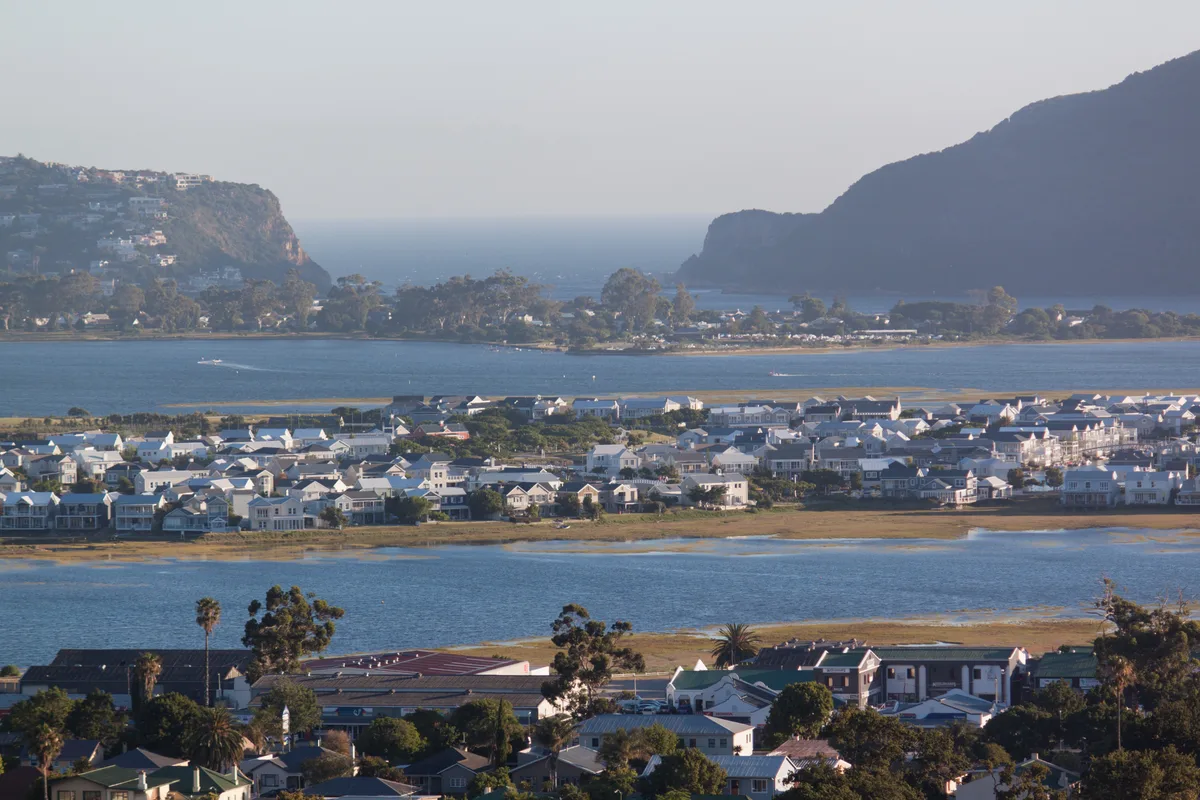
Strictly speaking the "lagoon" is an estuary — an S-shaped tidal estuarine bay, 1,633 hectares in extent, with a channel about 19 km long and up to 2 km wide. It's the largest estuary on South Africa's south coast and has the highest plant and animal diversity of all the country's estuaries. SANParks manages it as part of the Garden Route National Park; it was proclaimed a National Lake Area in 1985. Locally everyone still calls it the lagoon, and we will here too.
The water carries three things worth knowing about:
- The Knysna seahorse, Hippocampus capensis, South Africa's only endemic seahorse, listed as Endangered on the IUCN Red List since the 2017 assessment. It lives in only three estuaries on the south coast (Keurbooms, Knysna, Swartvlei). The SANParks Jetty Building on Thesen Islands has a small captive viewing exhibit and is the easiest way to see one.
- The oysters. Pacific oysters (Crassostrea gigas) are South Africa's only farmed oyster, and despite the Knysna Oyster Festival's branding, they're no longer commercially cultivated in the lagoon itself — the 1996 floods killed more than 90% of the cultivated stock and nutrient levels never recovered. Festival oysters today come from Saldanha Bay and Nelson Mandela Bay (Gqeberha). The Knysna Oyster Company shop on Thesen Islands is still where most visitors eat them.
- The birds. The estuary is on the SANParks bird-list with over 120 recorded species; the standout sightings for visitors are the African fish eagle, the Knysna turaco (Knysna loerie, the area's emblem), the African black oystercatcher and four species of kingfisher. The gabions along Thesen Islands' canals are particularly productive at low tide.
Worth knowing: Knysna was declared a Hope Spot by Mission Blue in 2014 — one of only a handful in South Africa — partly on the strength of the seahorse and partly on the estuary's overall biodiversity.
Knysna Forest — big trees, the Tsitsikamma belt, the lost elephants
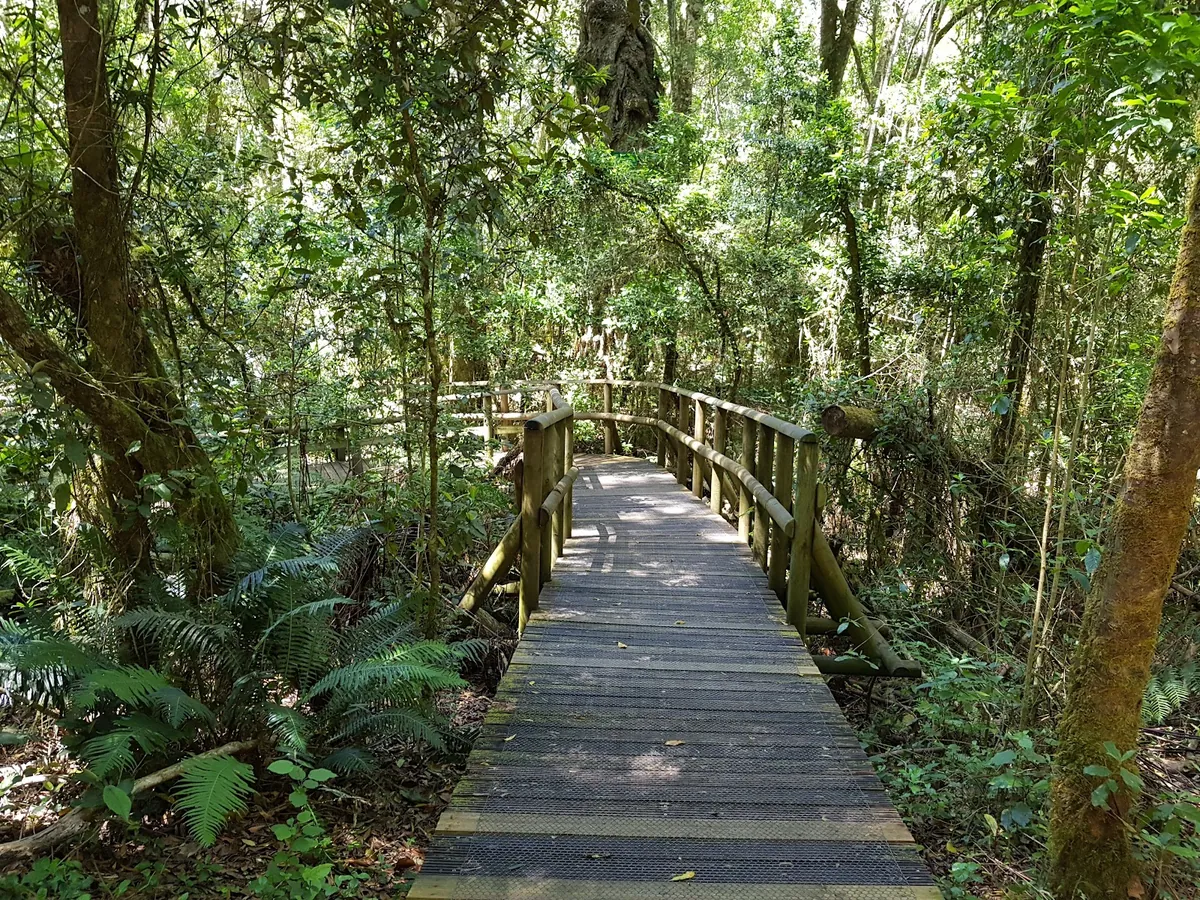
Behind Knysna town, the indigenous Knysna-Amatole montane forests run east toward Tsitsikamma, covering roughly 3,100 km² across the Eastern and Western Cape. Together with the Amatole forests further east, this is South Africa's largest single block of indigenous forest. Dominant trees are Outeniqua yellowwood (Afrocarpus falcatus), real yellowwood (Podocarpus latifolius), ironwood and stinkwood.
Three things to know about this forest:
- The Big Tree at Diepwalle. An Outeniqua yellowwood roughly 40 metres tall with a 9-metre-diameter trunk, dated at around 600–800 years old (one published scientific estimate puts germination at 1350 ± 10 years). It sits at Diepwalle Forest Station on a wheelchair-friendly boardwalk loop, 30 minutes' drive north of Knysna.
- The Garden of Eden boardwalk. A SANParks 1-km loop on the N2 between Knysna and Plett, 10 minutes east of town. The easiest indigenous-forest walk on the Garden Route — pram-and-wheelchair friendly, dogs on lead allowed, free entry.
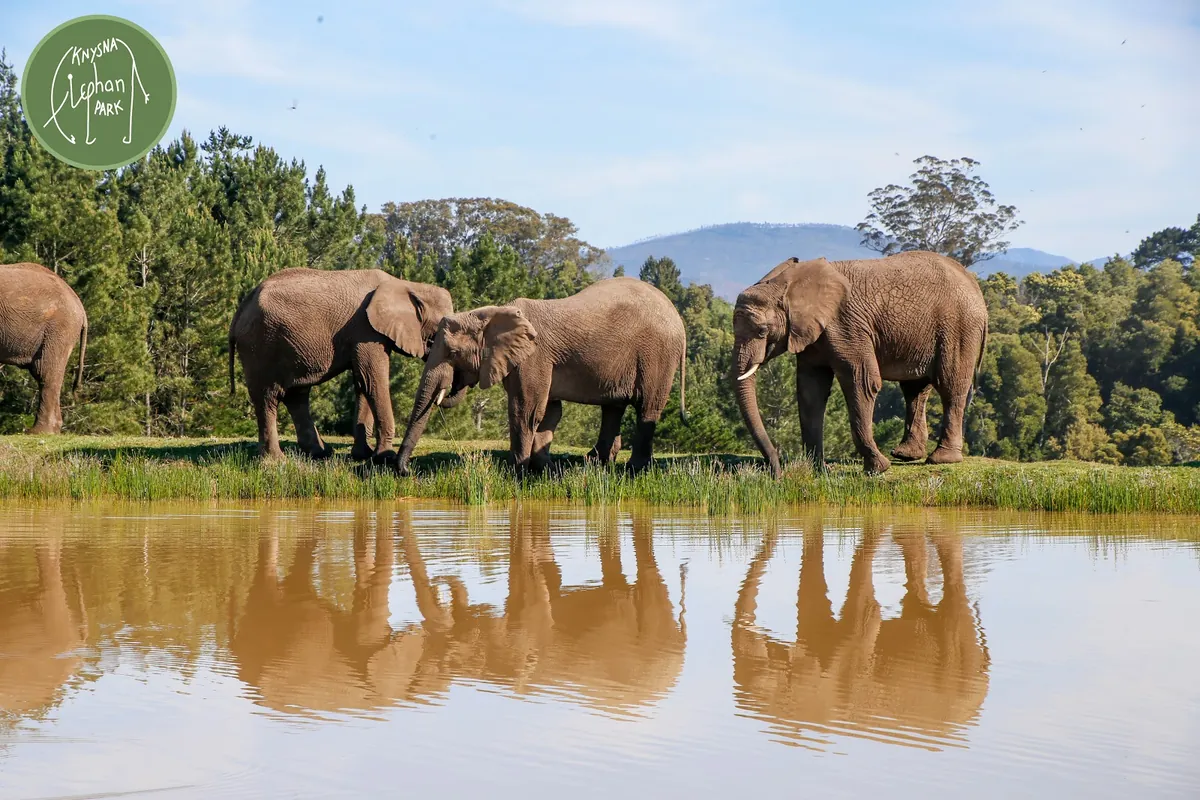
- The Knysna elephants. The legendary last wild African forest elephants. The SANParks-led 2014–2019 study (camera traps, dung surveys, the work of ecologist Lizette Moolman) concluded that only one mature adult female, known as "Strangefoot", remained as of 2019. Subsequent post-2019 guide-reported sightings have not been corroborated in peer-reviewed publications. So while the romance of the lost herd still gets sold to visitors, the responsible answer is: as of the most recent SANParks survey, only one elephant remained, and she ranges across 60,000 hectares of forest. You will almost certainly not see her. The Knysna Elephant Park (a separate captive facility, not in the forest) is a different proposition — see the things-to-do section below.
Top things to do in Knysna
The list any first-time visitor should work from, organised by category and by half-day chunks — our best things to do in Knysna guide ranks them with photos, hours and reviews:
- Water — Featherbed ferry + Western Head 4×4 and walk (4 hours, paid, the single most popular outing); a lagoon sunset cruise from the Waterfront; kayak or paddleboard the Thesen Islands canals; charter a yacht through the Knysna Yacht Club for an afternoon.
- Forest — Garden of Eden boardwalk (free, 1 hr); Diepwalle Big Tree + the King Edward VII walk (free, half day with picnic); Goudveld Forest Reserve and the abandoned Millwood gold-mining village (full day, paid SANParks entry).
- Views — Eastern Head viewpoint at sunset (free, 20 min); the lookout above Brenton-on-Sea cliffs (free, 30 min); a drive over the Phantom Pass back into town (free, 1 hr).
- Food + drink — Île de Pain breakfast on Thesen Islands; oysters at the Knysna Oyster Company or 34 Degrees South on the Quays; a tasting at Mitchell's Brewery (the country's first craft brewery, founded 1983 — see below); the Saturday Knysna Market at the high school for produce.
- Wildlife — Knysna Elephant Park (a separate captive facility and research site, not to be confused with the wild forest population — 4.6 stars from 4,900+ Google reviews, 20 minutes west on the N2); Birds of Eden the world's largest free-flight aviary (Plett side, 30 min east); Monkeyland (also Plett side).
- Family / rainy day — the SANParks Jetty Building seahorse exhibit on Thesen Islands; the NSRI Museum at the southern end of Thesen Long Street; the Saturday market; East Head Café for a long lunch.
Where to eat
The town has roughly three dining stages: Thesen Islands and Knysna Quays for the waterfront set, the town centre for the unpretentious, and the forest periphery for the off-road taverns. Pick from each at least once.
Beyond Île de Pain — which is breakfast or daytime only — the dinner crew goes to 34 Degrees South at the Knysna Quays Waterfront for seafood (4.4 stars, 4,750+ reviews) or one of the steakhouses in town. The Tapas & Oysters bar on Thesen Harbour Town is the easy choice for a smaller meal with local oysters. The Knysna Oyster Company shop, also on Thesen, is the place to actually buy oysters by the dozen to take home or eat on a deck.
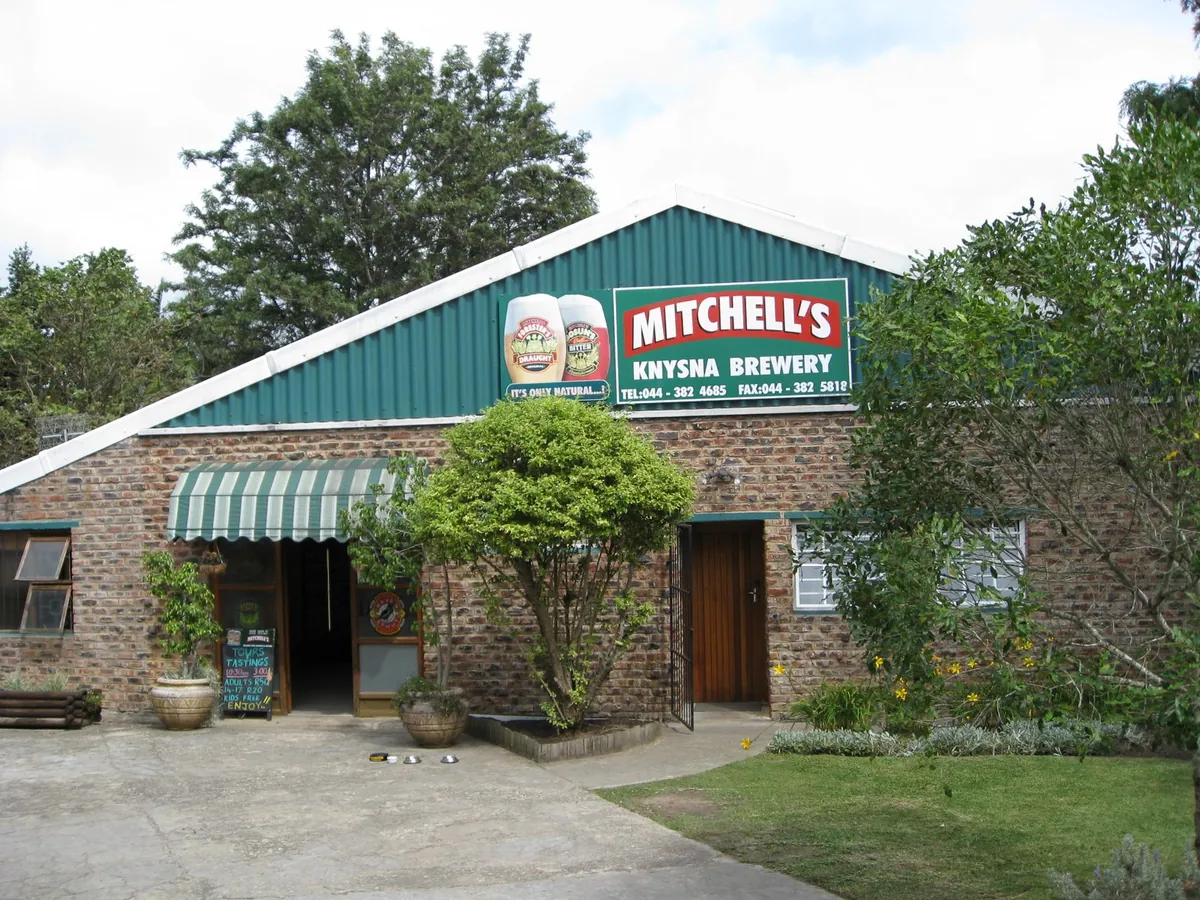
For history: Mitchell's Brewery opened at Thesen House in 1983, founded by ex-SAB brewer Lex Mitchell. It was South Africa's first craft brewery and the founding beers — Forester's Lager and Bosun's Bitter — were the country's first independent craft beers. Mitchell sold to Scottish & Newcastle in 1998 and brewing has since moved out of town, but the original building still trades and the beer is on tap.
Where to stay
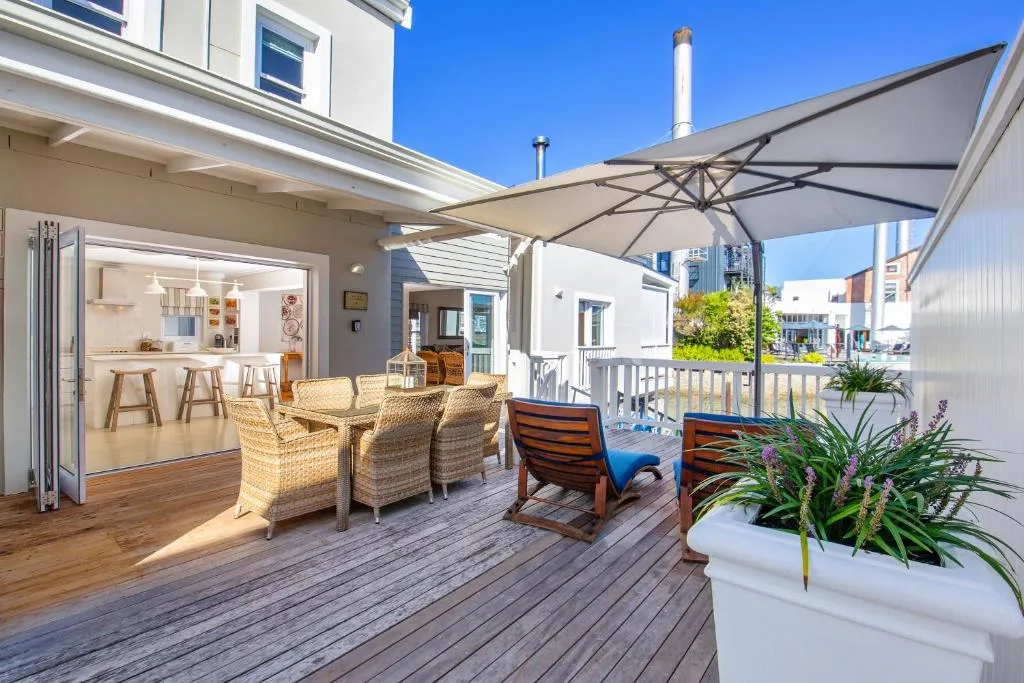
Four neighbourhoods cover most of what visitors actually book:
- Thesen Islands — canal villas on the man-made island grid, gated and quiet, walking distance to Thesen Harbour Town's restaurants. Self-catering dominates. The most distinctive choice if you want a private deck onto water.
- Leisure Isle — an inhabited natural island inside the lagoon, residential, very quiet, families and longer stays. A 5-minute drive from Thesen via the causeway.
- Brenton-on-Sea — clifftop village above the beach, 20 minutes west. The right choice if your trip is beach-led.
- Knysna Central / Quays — walking distance to restaurants and the Featherbed ferry. Hotel apartments at the Quays Marriott; some self-catering on the mainland edge.
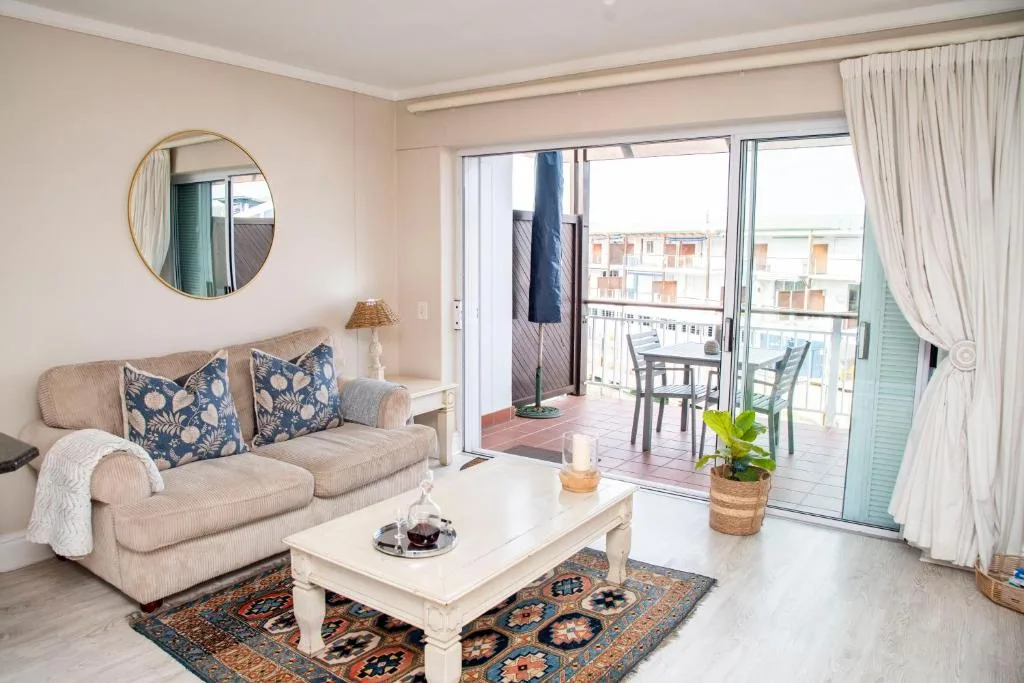
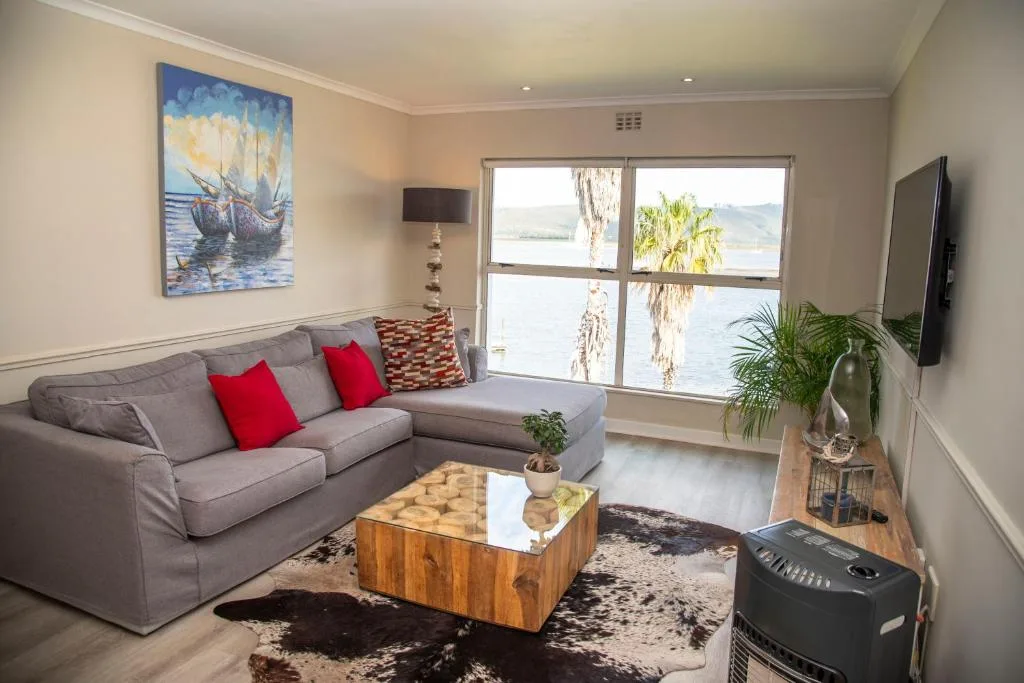
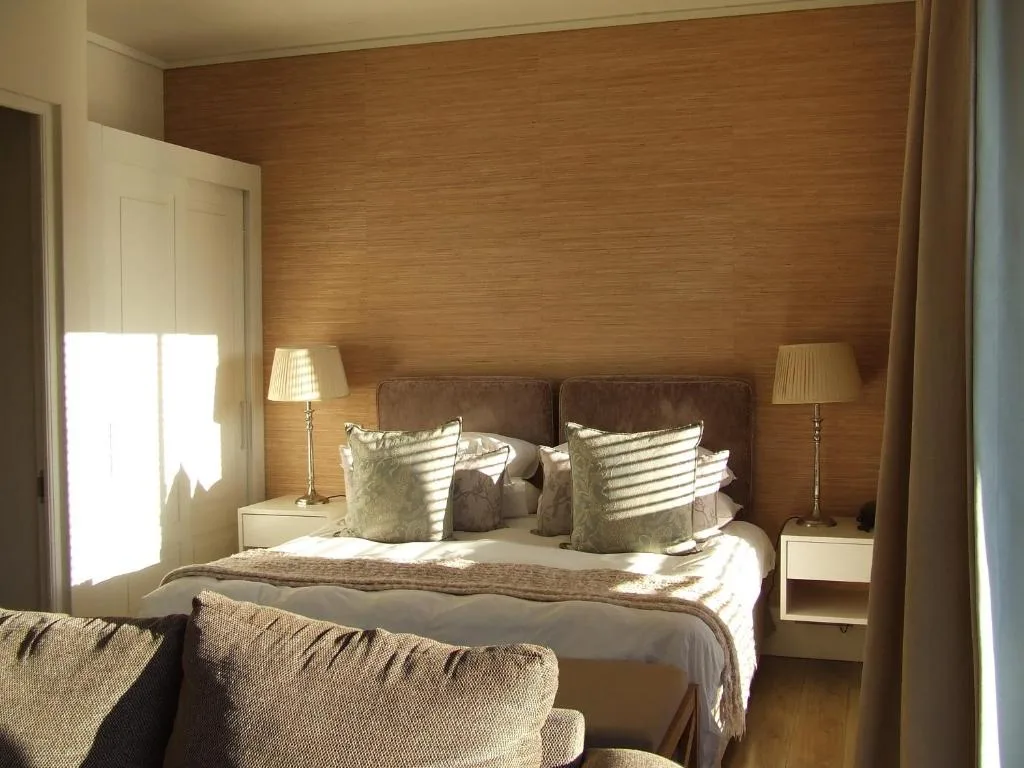
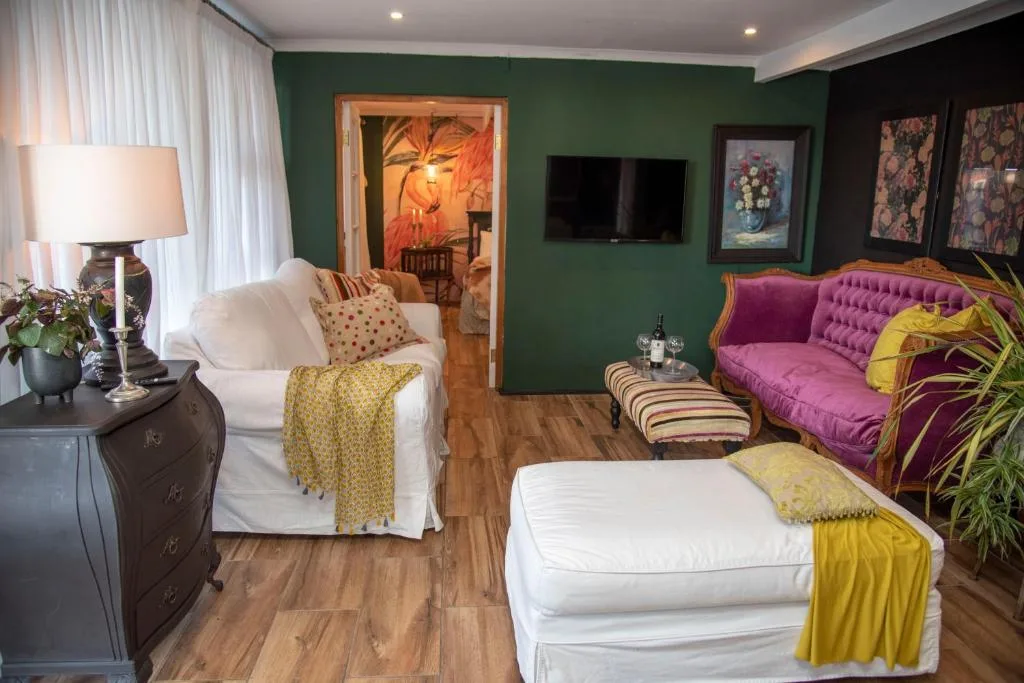
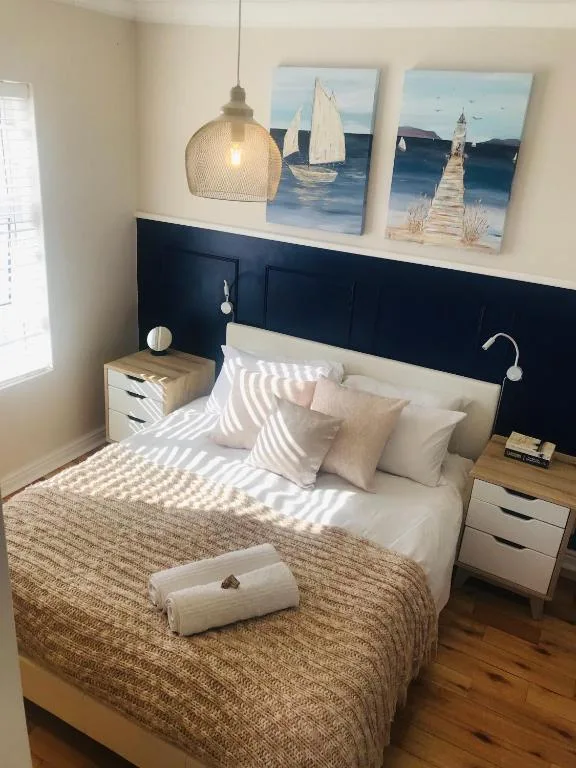
Self-catering is what we list. Our full Knysna inventory — neighbourhood-filtered, with ratings and Google review counts — lives at our where to stay in Knysna page, and the auto-rendered set below picks our best-rated current listings.
Knysna on the map
Getting to Knysna
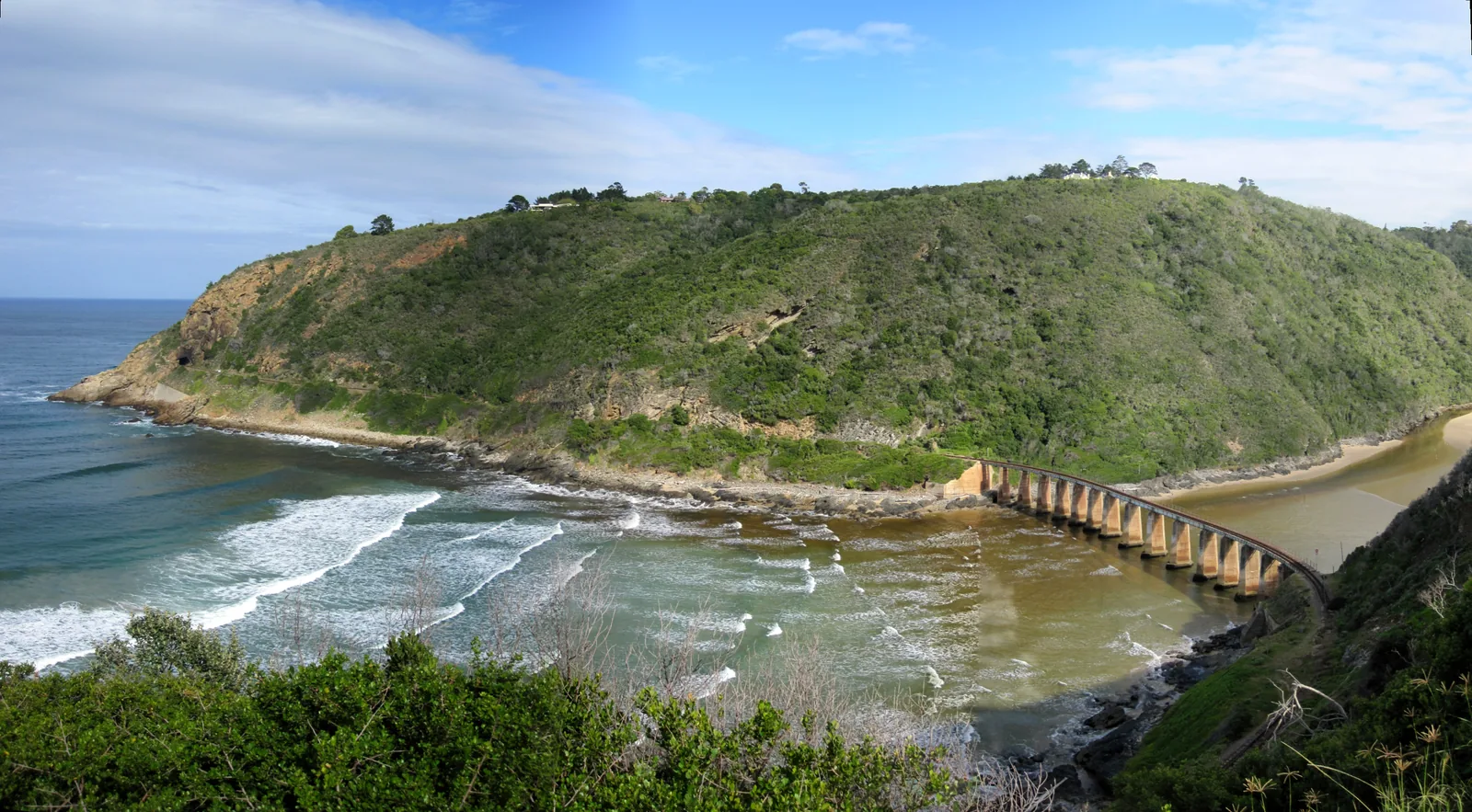
From Cape Town: 520 km on the N2, 5 to 6 hours. Stop at Mossel Bay or Wilderness if you're breaking the drive. The N2 is single-carriageway for most of the route between Riversdale and Mossel Bay, so factor in slow traffic behind trucks.
From Johannesburg: easiest is to fly to George (45 minutes onward by car), or to Cape Town (5–6 hours onward) or Gqeberha / Port Elizabeth (3 to 3.5 hours onward, 330 km). George Airport sits 67 km west on the N2 and is the right airport for almost every Knysna trip.
From Plettenberg Bay: 30 km east on the N2, about 25 minutes.
Within Knysna a car is almost essential — public transport is sparse. The town centre is small enough to walk in if you're staying central, but the beach (Brenton), the forest (Diepwalle, Garden of Eden) and the Heads all need wheels. Uber works locally and is reasonably reliable in daytime.
Best time to visit
Knysna's climate is mild year-round — it sits in the southern Cape's temperate strip — but the experience changes by month:
- December–February (summer / SA school holidays) — peak season, warmest water for swimming, the town busiest. Restaurants book out. Self-catering rates highest. Avoid late December if crowds matter to you.
- March–May (autumn) — our pick. Sunny, mid-20s, low rainfall, all attractions open, accommodation rates dropping back. The lagoon water still warm enough for kayaking.
- June–August (winter) — cool (lows around 8–10°C, daytime 16–20°C), occasional rain, gloriously quiet. This is when the locals reclaim Knysna. The Oyster Festival (10 days in late June / early July) is the one exception — busiest week of the year.
- September–November (spring) — whale season overlaps with the southern Right whale migration off Plett; wildflowers in the fynbos; days warming up. Brenton and Buffalo Bay beaches are at their best.
The 2026 Knysna Oyster Festival runs 03–12 July — 10 days of food, sport (the Cape Pine Forest Marathon, the Momentum Lagoon Mile swim), and roughly 200,000 oysters consumed. Visit Knysna calls it "the Garden Route's biggest annual event" and they're right — book accommodation months ahead if you're targeting those dates.
Practical travel tips
- Money. South African Rand. Cards work almost everywhere; cash for small markets. Tip 10–15% in restaurants, R10–R20 for porters, R10 for petrol attendants.
- Load-shedding. Scheduled power cuts are a fact of SA life. Most self-catering and all hotels have inverters or generators; ask before booking if working remotely.
- Water. Tap water is safe to drink. Lagoon is fine to swim in along sheltered edges (Bollard Bay, Leisure Isle).
- Pack. Layers — winter mornings cold, summer afternoons warm. Walking shoes for forest. Swimming kit year-round.
- Safety. Standard SA travel sense — don't carry valuables visibly, e-hail after dark. Visit Knysna's line is "safe but be vigilant" and that's fair.
- School holidays. SA holidays mid-Dec to mid-Jan, three weeks April, two weeks July (Oyster Festival), short October. Prices rise and restaurants book out.
Sources
- Wikipedia — Knysna (population, geography, history)
- Knysna Municipality — Accessibility (distances, drive times)
- SANParks Knysna Estuary Situation Assessment Report (estuary size, biodiversity, lake-area proclamation 1985)
- Visit Knysna — The Knysna Heads (90-metre channel, Western vs Eastern Head)
- Wikipedia — Knysna seahorse (IUCN Endangered, three habitats)
- Wikipedia — Knysna-Amatole montane forests (forest ecoregion, dominant species)
- Wikipedia — Knysna elephants (2019 SANParks survey, lone female Strangefoot)
- Knysna Oyster Festival — History (founded 1983 by Dick Ginsberg + Rose Smith)
- Visit Knysna — Oyster Festival 2026 (03–12 July 2026 dates)
- South Africa.co.za — Oyster production (Pacific oyster cultivation, why not Knysna estuary)
- Crush Magazine — Mitchell's Brewery (1983 founding, Lex Mitchell, Forester's Lager)
- Wikipedia — Featherbed Nature Reserve (150 ha, opened 1984, Heritage Site)
Where Knysna stays sit
Every listing plotted, with attractions dotted around it. Tap a navy pill to see the stays in that cluster.
Frequently asked questions
Is Knysna in Cape Town?
No. Knysna is a separate town on the Garden Route, about 520 km east of Cape Town along the N2 highway — roughly a 5- to 6-hour drive. It sits 60 km east of George (and its airport), and 330 km west of Gqeberha (Port Elizabeth). The two towns share a province (Western Cape) but otherwise have nothing in common.
What is Knysna known for?
The lagoon and the Heads. Knysna sits around a 1,633-hectare tidal estuary that meets the sea between two sandstone cliffs — the Heads — visible from most of the town. Behind it sit the largest remaining indigenous forests in South Africa. Add the annual Oyster Festival, the Thesen Islands canal estate, and a tradition of small-batch food and craft beer, and you have the trip the rest of the Garden Route gets compared to.
Is it worth visiting Knysna?
Yes — for most Garden Route trips, Knysna is the place to base yourself. The lagoon, the Heads, the forest and three distinct beach neighbourhoods all sit within 20 minutes of each other, which makes it the easiest town to spend three or four nights without driving every day. We say 2-3 nights minimum; longer if you want to walk Featherbed or do day trips out to Plett or Wilderness.
Is Knysna safe to walk around?
Yes, with normal South African awareness. Visit Knysna's official line is that the area is safe but you need to be vigilant — apply standard travel sense (don't carry valuables visibly, don't walk alone at night outside busy areas, use Uber or e-hailing after dark). Thesen Islands, Knysna Quays and Leisure Isle are particularly quiet and walkable; the central town can feel busier, especially during the Oyster Festival in July.
Which area to stay in Knysna?
Four anchors. Thesen Islands for the canal-on-your-deck experience and a quiet residential feel. Leisure Isle for the same lagoon-side calm with a more residential village character. Brenton-on-Sea for the Indian Ocean beach (15 minutes' drive west). Knysna Central / Quays for walking distance to restaurants and the ferry. Hotel-style stays cluster on the Quays; self-catering is broadest on Thesen and Leisure Isle.
How long do you need in Knysna?
Three nights is the standard recommendation from Visit Knysna and is about right. Two nights covers the Heads + a lagoon cruise + a meal at Île de Pain. Three nights adds the forest (Garden of Eden boardwalk, Diepwalle Big Tree) and a beach day at Brenton or Buffalo Bay. Five nights or more makes Knysna a comfortable base for day trips out to Plettenberg Bay, Tsitsikamma or Wilderness.
Is Knysna better than Plettenberg Bay?
They're different rather than ranked. Knysna is lagoon-and-forest with one signature view (the Heads) and a self-contained town feel. Plett is beach-first, with longer Indian Ocean sands and easier swimming, and feels more resort-y in season. Most Garden Route trips include both — they're 30 minutes apart. We have a longer piece on it in [Plettenberg Bay vs Knysna](/blog/plettenberg-bay-vs-knysna/).