Most people arrive in Plett for the beaches and leave surprised that there's a rhino grazing 15 minutes up the road. Plettenberg Bay Game Reserve sits inland at Wittedrift, a short drive from the sea, and it's the closest thing to a proper open-vehicle safari you'll get on this stretch of the Garden Route without driving hours into the Karoo. It's small, it's honest about what it is, and, if you're travelling with kids or nervous about the whole safari palaver, it's malaria-free and you'll be back at your stay in time for lunch.
This is the guide I'd give a friend who had a free morning in Plett and wondered whether the game drive is worth it. Short version: yes, if you go in with the right expectations. Here's what those should be.
What you'll see at Plettenberg Bay Game Reserve
Let's clear up the Big Five question first, because the marketing muddies it. The reserve's own current wording says it's home to two of Africa's Big Five: the rhino and the elusive wild leopard. That's the honest number. Older listings and booking sites will tell you three, four, even all five; don't believe them. There are no lions and no elephants here. The leopard is real but nocturnal and shy, so realistically you won't see it on a daytime drive.
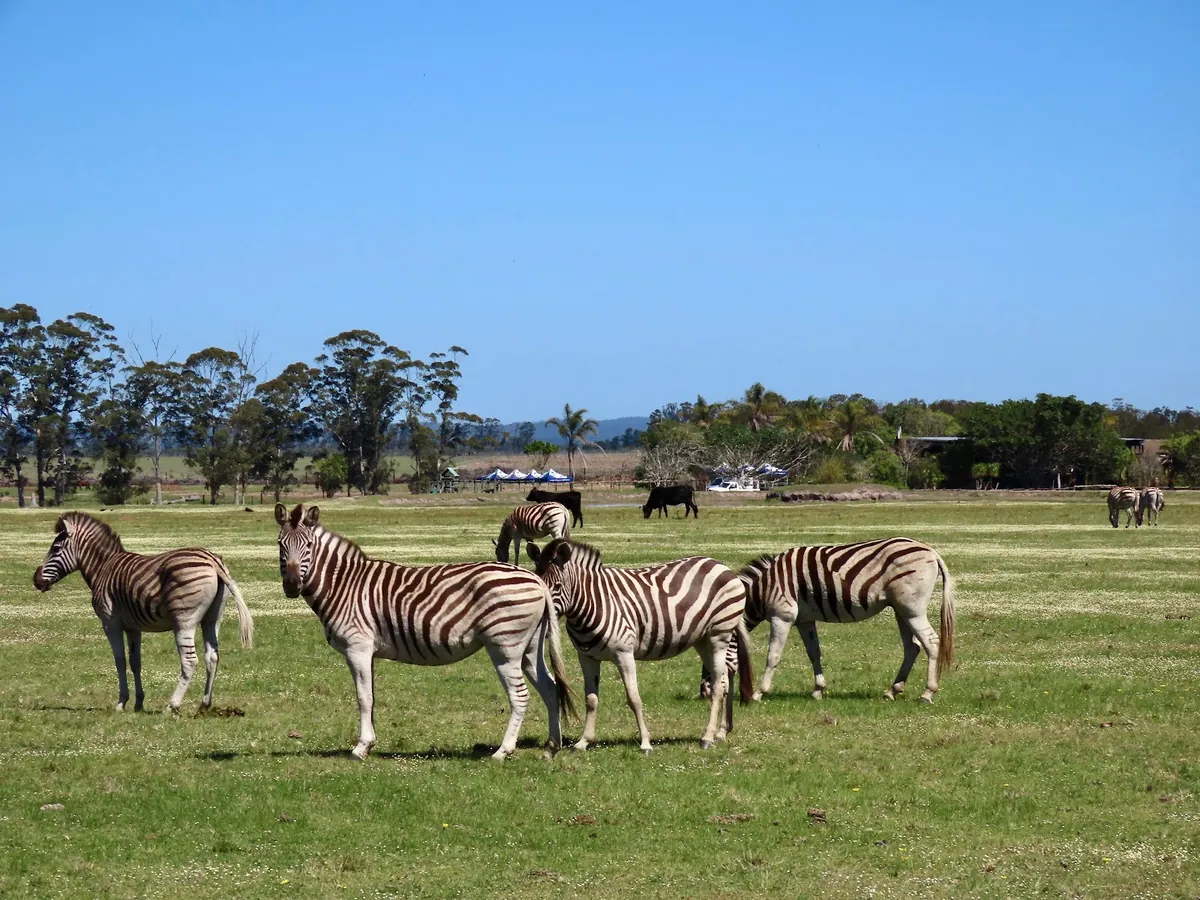
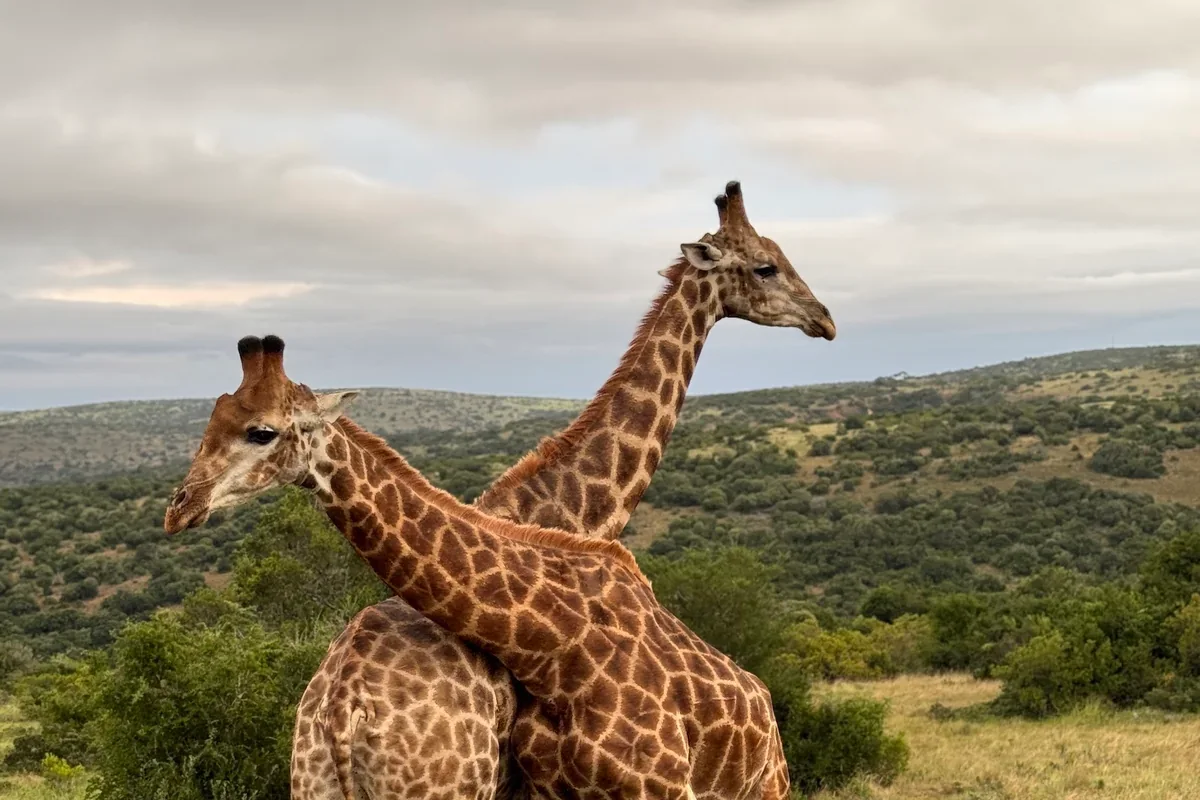
What you will see is genuinely good for a reserve this size: rhino (the headline act), giraffe, zebra, hippo, crocodile, wildebeest and a spread of antelope species, plus more than 100 recorded bird species across the 2,200 hectares. One recent visitor summed it up plainly: "one rhino, a few giraffes, hippos, crocodiles, but no elephants and lions." That's a fair picture. Go expecting a relaxed morning among plains game with a rhino sighting as the prize, and you'll have a lovely time. Go expecting the Serengeti and you'll be disappointed.
If it's guaranteed elephant, big-cat or primate encounters you're after, that's a different kind of outing. The ethical animal sanctuaries around Plett (the Elephant Sanctuary, Monkeyland, Birds of Eden and Jukani) are the ones to book. They're rescue-and-rehabilitation facilities, not a wild reserve, so the experience is closer and more predictable, but it's not a game drive.
The game drive experience
The drive itself is the reason to come. You go out in an open Land Rover with a ranger for about two hours, blankets provided because the early mornings and late afternoons bite even in summer. Being open-sided is the whole point. You feel the temperature drop as you cross into the shade, hear the birds, and get close to the animals in a way a closed vehicle never manages. The guides come well reviewed; guests repeatedly single them out by name for knowing the animals and the land.
There are horseback safaris too, running twice a day with a game ranger, if you'd rather see the reserve from the saddle. And the coffee shop and bar are open to the public, so you don't have to be booked on a drive to stop in. Handy if half your group wants the safari and the other half wants a flat white and a view.
Game drive times, prices and booking
No competitor page lays this out cleanly in one place, so here it is. The reserve runs six drives a day, which is more flexibility than most small reserves offer, so you can do an early-morning drive before the beach, or a late-afternoon one as the light softens.
| Detail | What to expect |
|---|---|
| Drive length | About 2 hours |
| Daily departures | 8h30, 10h00, 11h00, 12h30, 15h00, 16h00 |
| Standard price | From around R990 per adult, R490 per child |
| SA ID-holder special | From around R590 per adult |
| Vehicle | Open Land Rover, ranger-guided, blankets provided |
| Also offered | Horseback safaris, twice daily |
A word on prices: treat every figure above as "from around", not gospel. Reserves adjust rates seasonally and the South African resident special comes and goes, so confirm the current price on the reserve's own site or by phone when you book. As a rule, the earliest and latest drives give you the coolest weather and the most active game; the midday slots are quieter on both counts.
Getting to Plettenberg Bay Game Reserve
Here's where most guides go wrong, so read this bit carefully: the reserve is not off the N2 to the east near The Crags, and it's not one of the sanctuaries on that road. It's inland at Wittedrift, north of town. From Plett, take the N2 east toward Keurbooms, turn left onto the R340 at Wittedrift just past the Bitou River bridge, and follow it to Uplands, where the reserve is signposted, with the last stretch on gravel. The full address is Uplands Road, Wittedrift, Plettenberg Bay. It's roughly a 15-minute drive from the town centre.
That closeness is the reserve's quiet advantage. You're not committing a whole day or a long transfer. You can be on a morning drive and on the beach by lunchtime, which makes it one of the easiest half-days to slot into a Plett trip. The map below shows how the town, its stays and the surrounding attractions sit together.
Is Plettenberg Bay Game Reserve worth it?
The reserve rates 4 out of 5 across 339 Google reviews, and that number tells the story well: consistently good, not flawless. The people who love it are families with young children, first-time safari-goers who want a gentle introduction, and anyone short on time who wants the feeling of a game drive without a Kruger-sized commitment. It's affordable, it's close, it's malaria-free, and a two-hour drive is about right for kids' attention spans.
The people who leave lukewarm are usually the ones who expected the full Big Five and did the maths afterwards. Manage the expectation and the value is obvious. It's a Southern Cape plains-game reserve doing exactly what it says, and doing it 15 minutes from your stay.
Where to stay near Plettenberg Bay Game Reserve
Because the reserve is an easy 15-minute drive from town, you don't need to stay on its doorstep. Any central Plettenberg Bay self-catering works as a base, and you get the beaches, restaurants and the rest of the best things to do in Plett thrown in. Pick something near Central Beach or Robberg and the game reserve is a simple morning outing from your kitchen table.
Garden Route Stays is reader-supported — if you book a stay through one of our links we may earn a small commission, at no extra cost to you.
Sources
- Plett Game Reserve — official website — reserve name, size, malaria-free status, game-drive offering and pricing.
- Plett Game Reserve — game drive page — 2,200-hectare figure, "two of Africa's Big 5 in rhinos and leopards", antelope/giraffe/zebra/hippo/crocodile, standard R990/R490 pricing.
- Plett Tourism — Plettenberg Bay Game Reserve — "two of the Big Five – the rhino and the elusive wild leopard", malaria-free, two-hour open-Land-Rover drives, coffee shop and bar open to the public.
- nature-reserve.co.za — Plettenberg Bay Game Reserve — 15-minute distance from town, 100-plus bird species, horseback safaris twice daily.
Where Plettenberg Bay stays sit
Every listing plotted, with attractions dotted around it. Tap a navy pill to see the stays in that cluster.
Frequently asked questions
How much is a game drive at Plettenberg Bay Game Reserve?
At the time of writing, a two-hour game drive is around R990 per adult and R490 per child at the standard rate, with a South African ID-holder special from about R590 per adult. Prices change, so check the reserve's current rates before you book.
Is Plettenberg Bay Game Reserve Big Five?
Not in the full sense. The reserve markets itself around the Big Five, but its own current wording says it's home to two of them — rhino and the elusive, rarely-seen leopard. There are no lions or elephants. You'll reliably see rhino, giraffe, zebra, hippo, antelope and 100-plus bird species.
Which of the Big Five is hardest to see?
The leopard. It's nocturnal, solitary and a master of staying hidden, so sightings are rare even in reserves that have them. Plettenberg Bay Game Reserve has leopard on the property, but don't count on seeing one — treat rhino, giraffe and hippo as the realistic highlights of the drive.
What is the difference between a game park and a game reserve?
In everyday South African use the terms overlap, but a game reserve is usually privately owned land managed for wildlife and controlled access, while a national or provincial park is state-run and open to self-drive visitors. Plettenberg Bay Game Reserve is private, so you explore it on a guided drive, not in your own car.
What is there to do in Plettenberg Bay today?
Plenty, whatever the weather. A morning or afternoon game drive at Plettenberg Bay Game Reserve is an easy half-day out, and it pairs well with the beaches, Robberg, or the ethical animal sanctuaries on the N2. See our ranked guide to the best things to do in Plett for a full day-by-day plan.