A friend once asked me what to do in Plett beyond "lie on the beach." The beach is genuinely enough for a lot of visitors — but Plett packs in way more than you'd expect. This is my ranked list of the best things to do in Plettenberg Bay — an opinionated order, not a directory. Worth-your-time picks at the top, tour-operator filler at the bottom, based on decades of coming back and the friends I've sent here who've reported back with the receipts.
Prefer the full directory?
If you'd rather browse every attraction by category — beaches, wildlife, wine, adventure, culture — head to the full Plett attractions directory →. This guide is a ranking; that page is a complete index.
Skip if you only have 2 days: the wildlife sanctuaries (nice but not the Plett experience), the Plettenberg Bay Game Reserve (you can see the Big 5 better elsewhere), and the canyoning (fun, but you're in Plett for the coast).
Prioritise if you only have 2 days: Robberg, a beach day, one boat-based whale or dolphin trip, and a long dinner on Main Street.
1. Walk the Robberg Nature Reserve — Plett's best hike
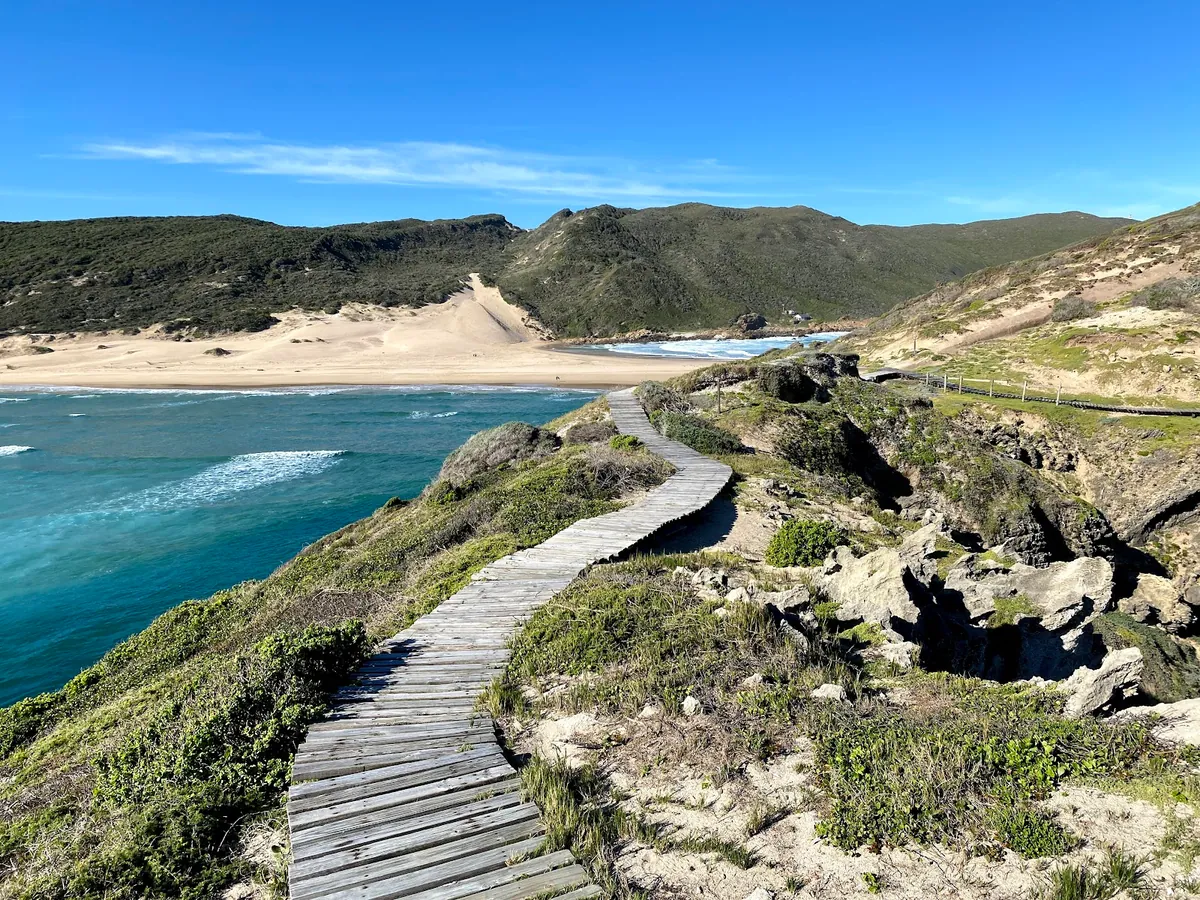
If you do one thing, do this. The CapeNature-managed peninsula that forms the southern wall of the bay is, for my money, the best day-hike between Cape Town and Port Elizabeth. Three trails from the same parking area:
- The Gap Circuit — 2.1 km, ~30 minutes. The fynbos-and-cliffs starter. Wheelchair-friendly in places.
- Witsand Circuit — 5.5 km, 2–3 hours. Past the Cape fur seal colony and over the big Witsand dune.
- Point Circuit — 9.2 km, 3–4 hours. The full peninsula out to The Island and back. The one to do.
Go early (6–8 am in summer), bring water and a windproof. Entry fee at the gate — CapeNature runs the reserve, so check the current rate on their site. You'll see gannets, seals, possibly dolphins off the point, and the best coastal views on this stretch of the Garden Route.
What it's not: a gentle stroll. Parts of the Point Circuit are exposed cliff-edge path. Not great for under-8s or anyone unsteady on uneven rock.
2. Plett whale and dolphin safaris (boat-based)
Plett is one of only seven Whale Heritage Sites in the world (World Cetacean Alliance, May 2023), and it's not for show. From June to November, Southern Right whales calve in the bay — mothers and calves parked within 100 metres of the shore for weeks. Humpbacks pass through November–February. Bryde's whales are resident year-round, along with bottlenose and humpback dolphin pods.
Two established operators run 2-hour safaris from Central Beach — Ocean Safaris and Ocean Blue Adventures. Both are permitted and responsible. Book the earliest-of-day slot: the light is cleanest and the bay is calmest before the southeaster kicks in.
Honest note: if you're coming outside whale season and don't care about dolphins, skip the boat. Use the money on a Robberg guided walk instead. If you're here in whale peak (July–October), this is the single best way to spend two hours in Plett. For a full month-by-month breakdown and all the land-based viewpoints, our deeper whale-watching guide has it.
3. Visit Plett's Blue Flag beaches
Six of Plett's beaches fly the Blue Flag for the 2025/26 season per WESSA's awarding body: Robberg 5, Lookout, The Dunes, The Waves, Singing Kettle, and Nature's Valley. Each has a different personality — from the lifeguard-patrolled family swim at Robberg 5 to the 10 km of empty sand at Lookout that connects to Keurbooms.
For the full ranking with dog rules, parking notes, swim conditions and which one matches your day, see the best beaches in Plettenberg Bay guide.
4. Swim with Cape fur seals at Robberg
Small-group boat trips depart Central Beach and head out to the Robberg colony. You snorkel (or just bob) while the curious juveniles investigate you — it's genuinely one of the stand-out wildlife experiences on the SA coast.
Current caveat: there's been a seal-rabies outbreak on the Cape coast since 2024. Reputable operators now screen for behaviour and keep a safe distance during encounters. Check the operator's current protocol before booking — if they're hand-wavy about it, skip them.
5. Sea kayaking from Plett's Central Beach
Three daily departures (typically 9 am, 12 pm, 2 pm), ~R400 per person, 1.5–2 hours on the water. Guided paddle across the bay with frequent dolphin sightings in calm morning conditions. Good for first-time kayakers — the guides launch you off the sand, so no tricky entry. Perfect for a half-day of activity that doesn't cost the earth.
6. Plett wildlife sanctuaries (Monkeyland, Birds of Eden, Jukani, Tenikwa)
Four animal sanctuaries cluster on a 10-minute drive east of town, mostly off the N2 toward The Crags:
- Monkeyland — free-roaming rescued primates in 12 hectares of indigenous forest. Guided walks only. Solid ethics.
- Birds of Eden — the world's largest free-flight aviary (2.3 hectares under a single mesh dome). Same estate as Monkeyland — buy a combined ticket.
- Jukani Wildlife Sanctuary — big cats and reptiles. Rescued animals only (the ethics piece matters in SA — avoid operations that offer "cub petting"; Jukani doesn't).
- Tenikwa Wildlife Awareness Centre — a wildlife rehabilitation centre focused on African cats, antelope, and small mammals. Their Cheetah Walk is ethical (on-lead, supervised, rescued animals only).
- Plett Elephant Sanctuary — interactive encounters with a small group of rescued African elephants. Gentle, well-managed, great for kids who are old enough to follow instructions.
Honest take: don't try to do all five in one trip — you'll burn out on themed attractions. Pick two max. Monkeyland + Birds of Eden is the classic family afternoon. Tenikwa is the most authentic conservation story.
7. Bloukrans Bridge bungee
40 minutes east of Plett, on the Western/Eastern Cape border in the Tsitsikamma. The Bloukrans Bridge bungee is the world's highest commercial bridge bungee at 216 metres (Macau Tower is higher overall, as a tower). Run by Face Adrenalin — good safety record since 1997. If you've bungeed elsewhere and are thinking "is it really that different?" — yes. The 7-second freefall into the forest gorge is a different experience from platform or crane bungees.
Not cheap. Book online in advance to skip the walk-up queue.
8. Paddle the Keurbooms River
Rent a canoe at the Keurbooms River Nature Reserve entrance (10 minutes east of Plett) and paddle upstream through indigenous forest. The river is flat and calm above the road bridge — zero whitewater, kid-friendly. Allow 3–4 hours for the full round trip to the narrow gorge.
Best in autumn when the water's still warm but the mosquitoes have eased off. Pack water, snacks, and a dry bag.
9. Surf The Wedge
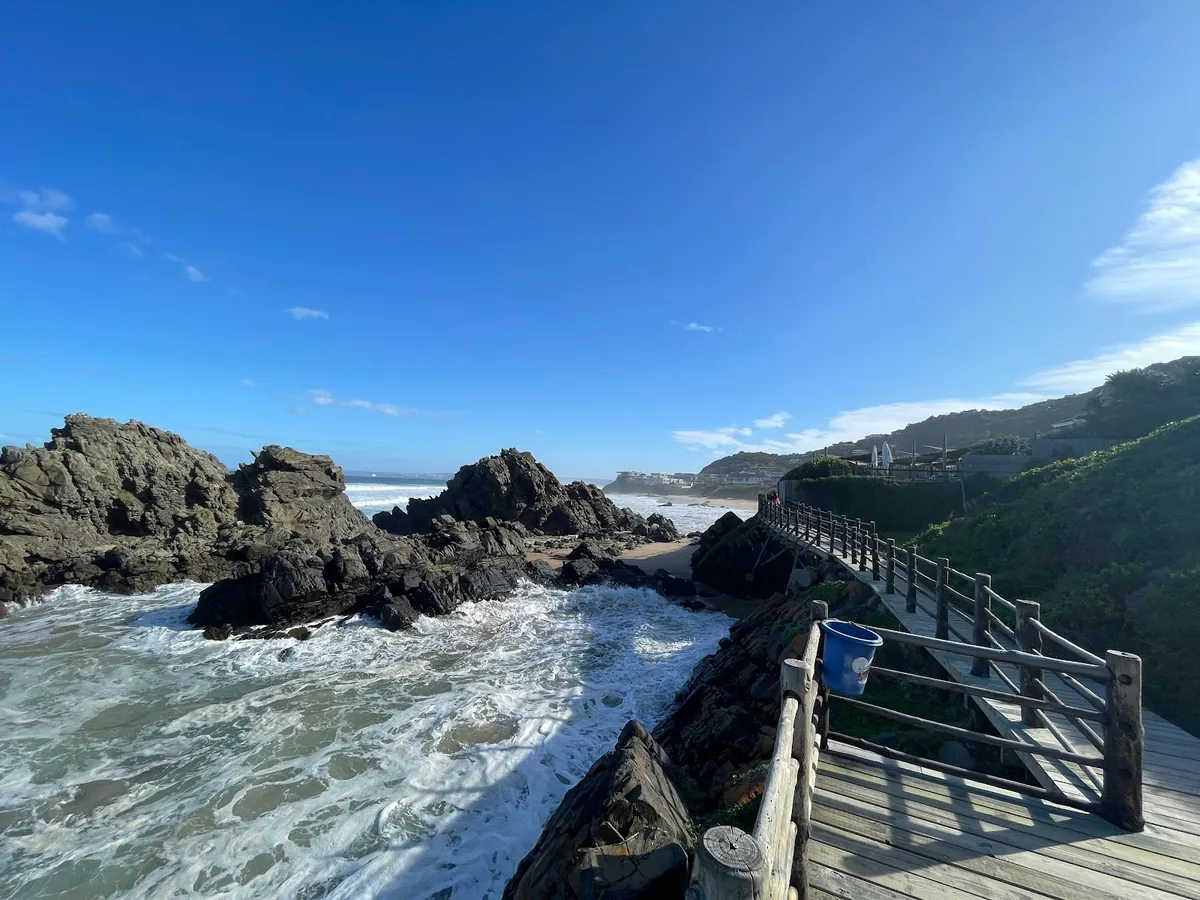
At the eastern end of Robberg Beach, where the peninsula shelters the break. A consistent right-hander when a clean south-west swell wraps around the headland. Not a beginner wave — more of an intermediate-to-advanced break with a shallow section at low tide.
Board hire is easier organised in town before you head to the beach — Plett Surf Culture on Main Street is the main shop. If you want a lesson, Gecko Surf School runs beginner sessions at Lookout Beach (gentler waves, easier entry).
10. Walk to Cathedral Rock from Singing Kettle
The most scenic short coastal walk in Plett that isn't Robberg. Park at Enrico's at Keurboomstrand, drop down onto Singing Kettle Beach, and walk east for 30–40 minutes. Cathedral Rock is a towering sea-cut arch you can wander up to at mid-tide and (carefully) under at low tide.
Check the tide before you go. High tide cuts off the return route — not dangerous, just annoying (you'll have to wait it out or take a longer route back via the road). A free tide table on the SA Tides app or the Windy app is enough.
11. Taste wine on the Plett Wine Route
The Plettenberg Bay Wine Route has a handful of cool-climate producers in the hills behind town. Plett makes good Sauvignon Blanc, Pinot Noir, and MCC (méthode cap classique — SA's answer to Champagne). Estates open for tastings include:
- Bramon Wine Estate — on the N2 east of town, tasting + vineyard lunch under the pergola. Probably the easiest first stop.
- Newstead Wines — estate lunches in The Crags.
- Luka Vineyards — small producer, tasting by appointment.
- Packwood Country House — combined tasting + restaurant on a country estate.
A morning of 2–3 estates plus lunch at one of them is the classic way to do it. Book ahead for the restaurant.
12. Kranshoek viewpoint — Plett's west-side coastal hike
15 minutes west of Plett toward Harkerville. Not a swimming spot — a cliff-top picnic area run by SANParks with one of the best coastal views on this stretch. The full coastal hike down to the waterfall and sea cave is ~9 km circular, 3–4 hours, steep in places. You can also just drive up, eat your picnic, and turn around.
Busy on weekends. Weekdays it's you and maybe two other cars.
13. Day trip: Nature's Valley
45 minutes east, inside the Garden Route National Park. Tiny village, indigenous forest, white beach, flat lagoon for kids. No cellphone signal in the village (a feature). Read the full day-trip notes in the Plettenberg Bay travel guide.
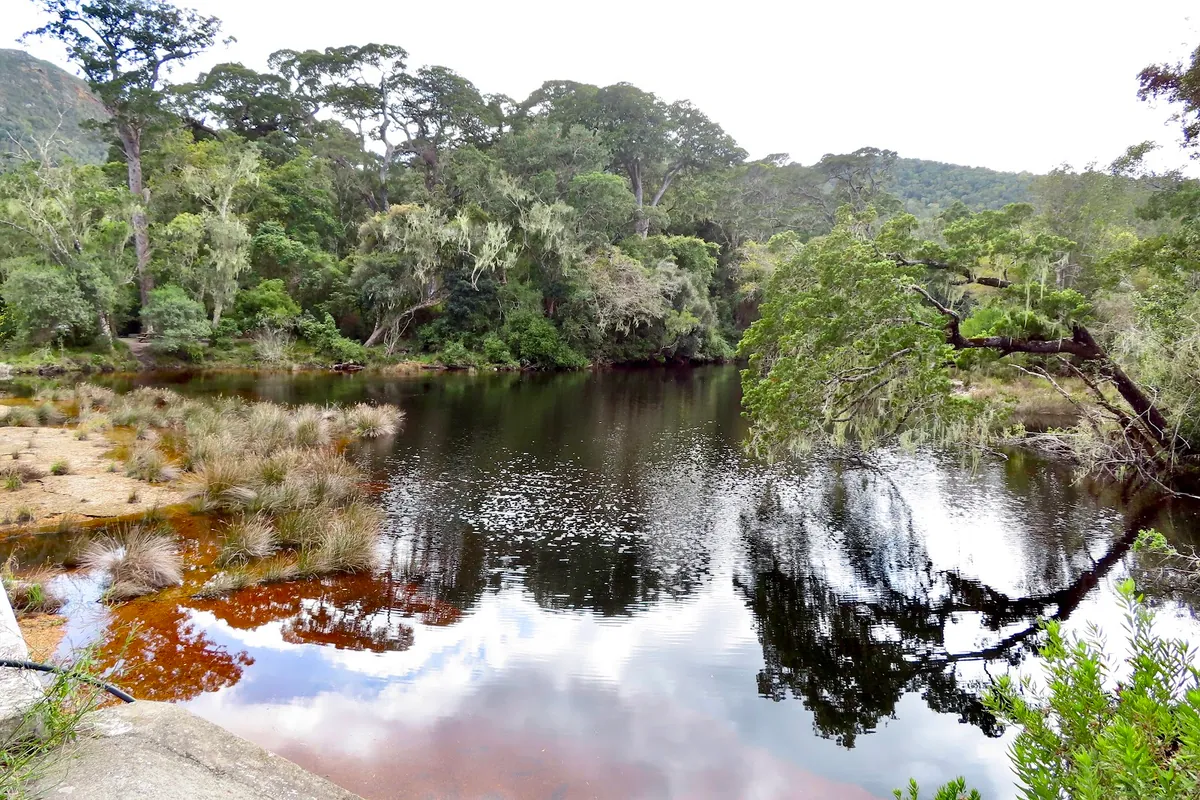
14. Day trip: Tsitsikamma section of Garden Route National Park
60 minutes east of Plett. Storms River Mouth suspension footbridges, the Otter Trail trailhead, boardwalk walks through milkwood forest, black-rock coves. The suspension bridges alone are worth the drive. Pay at the gate.
If you've already been to Bloukrans bungee (on the way), bundle the two into a single day-long eastern loop.
Plett practical tips
- Book ahead for the paid activities (bungee, swim-with-seals, wildlife sanctuaries with guided walks, Blue Flag boat operators) — peak season (Dec–Jan, Easter, July school holidays) sells out.
- Early mornings are always better for active things. The southeaster usually kicks in mid-afternoon; light is best 7–10 am; queues are shortest.
- Layers — Plett's coast can swing 10°C between morning and midday in winter. A jumper + windproof in the daypack isn't paranoid.
- Cash — mostly unnecessary (cards work everywhere), but keep some for car guards (R5–R20 at secure lots) and any small-town parking attendant.
- Sunscreen — SA summer UV is brutal. Factor 50+, long sleeves for kids, reapply after every swim.
- Emergency numbers — NSRI Station 14 Plettenberg Bay 082 990 5975; universal emergency 112.
Planning your Plett trip
Pair the activities above with a stay close to where you'll spend most of your time. If you're hiking Robberg daily, stay Beachy Head or Robberg side. If it's a beach-and-kids trip, Central or Keurbooms. If you want the wine-route mornings, any Plett Central or Hill neighbourhood is equidistant.
Start with all Plettenberg Bay self-catering or read the Plett self-catering guide for six hand-picked stays across the main neighbourhoods.
Sources
- Plett Tourism — Activities
- CapeNature — Robberg Nature Reserve
- CapeNature — Keurbooms River Nature Reserve
- SANParks — Garden Route National Park
- World Cetacean Alliance — Plettenberg Bay Whale Heritage Site
- Blue Flag South Africa (WESSA)
- Wines of South Africa — Plettenberg Bay Wine Route
- Bloukrans Bridge Bungy — Wikipedia
Where Plettenberg Bay stays sit
Every listing plotted, with attractions dotted around it. Tap a navy pill to see the stays in that cluster.
Frequently asked questions
Is there much to do in Plettenberg Bay?
Yes — Plett packs a surprising amount into a small town. The must-sees are Robberg Nature Reserve, a boat-based whale or dolphin safari, the Blue Flag beaches, and one of the wildlife sanctuaries (Monkeyland, Birds of Eden, Jukani or Tenikwa). Bloukrans bungee, sea kayaking and the Plett Wine Route round out a full week.
What is Plett known for?
Sweeping golden beaches, the iconic Robberg Peninsula, lagoons and estuaries, indigenous forests, and cool-climate wine estates in the hills behind town. Early Portuguese explorers called it Bahia Formosa — beautiful bay — and the name still fits. Plett is also a designated Whale Heritage Site.
What to do in Plett for free?
The best things in Plett don't cost anything. Walk any of the six Blue Flag beaches, hike the Cathedral Rock path east of Singing Kettle Beach, watch whales from the Robberg headland or Beacon Isle clifftops (June–November), and drive up to Kranshoek viewpoint for the coastal panorama.
How long is the Robberg walk?
Three looped options from the same car park. The Gap Circuit is 2.1 km (about 30 minutes); the Witsand Circuit is 5.5 km (2–3 hours, past the seal colony and dune); the full Point Circuit is 9.2 km (3–4 hours) out to The Island and back.
Is Robberg Nature Reserve worth visiting?
Yes — it's the single best day-hike between Cape Town and Port Elizabeth for most visitors. Three trail options, gannets and seals, and the best coastal views on this stretch of the Garden Route. Rated 4.9/5 across 3,683 Google reviews.