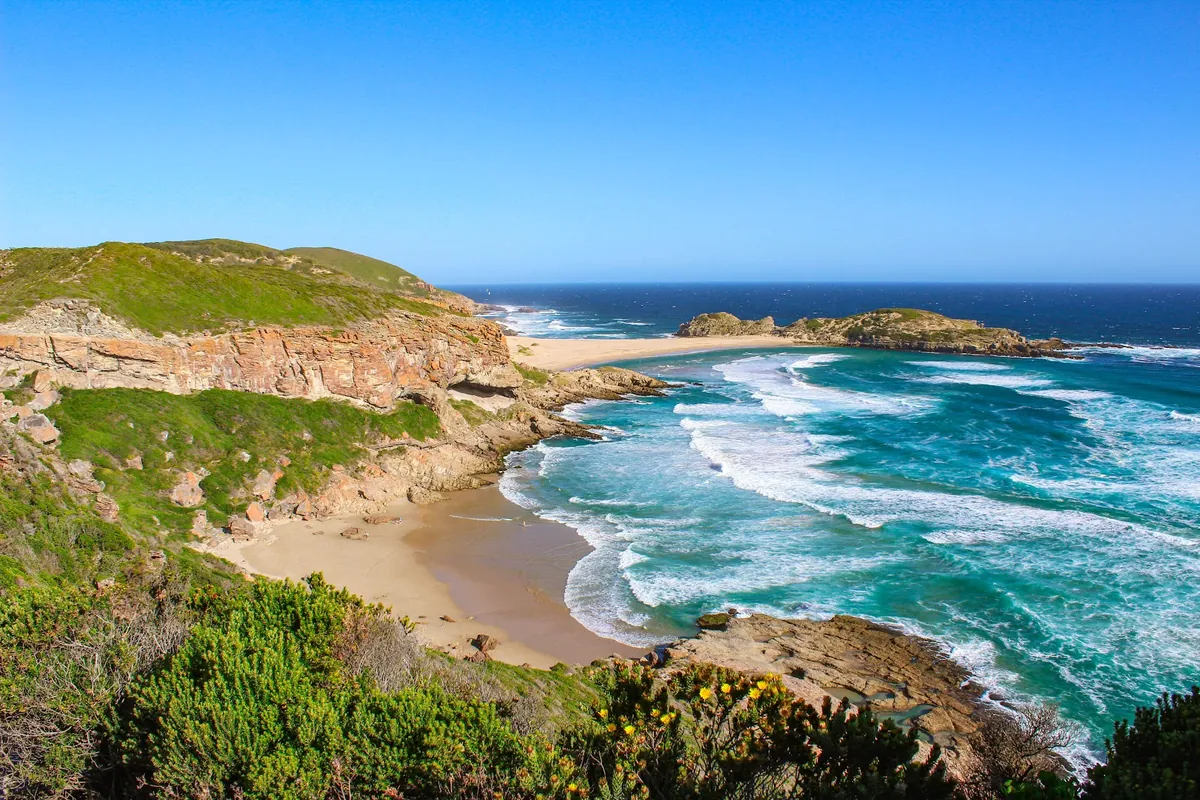
I've been coming back to Plettenberg Bay since I was a kid. Surf sessions off Robberg, warm summer water, the long evenings at a restaurant table when you meant to leave an hour ago — it's the stretch of South African coast I know best and keep recommending to friends. This is the guide I wish I'd had on my first proper trip: the beaches ranked by what they're actually good for, honest answers on when to visit, where to stay, and the practical stuff (load-shedding, water, cash) that every brochure skips.
If you only read one section, make it "When to visit" — getting the month right matters more in Plett than almost anywhere else on the Garden Route.
Where is Plettenberg Bay?
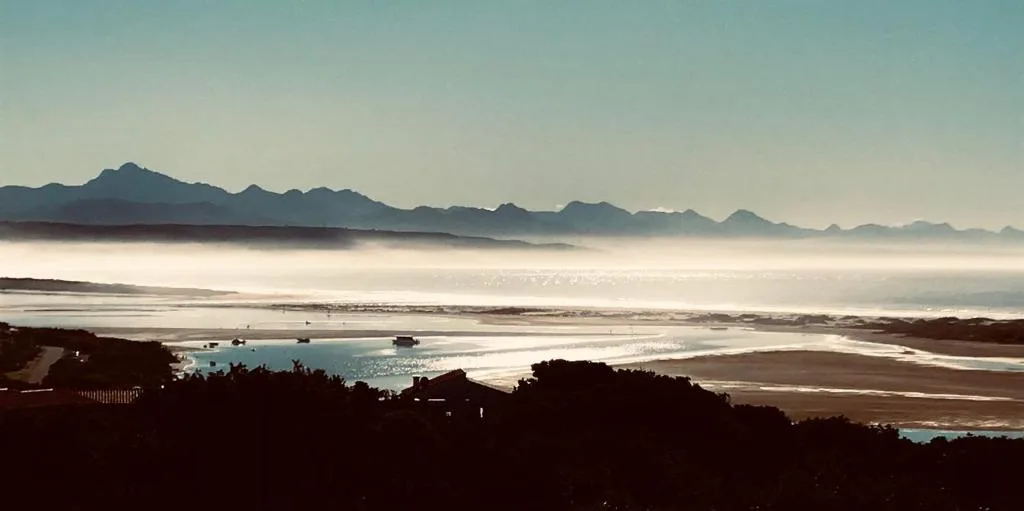
Plettenberg Bay sits on South Africa's southern coast, roughly a third of the way along the Garden Route between Mossel Bay and Storms River. The Portuguese navigator Manuel da Mesquita Perestrello charted it in 1576 and named it Bahia Formosa — "beautiful bay" — and the name isn't hyperbole. The bay itself curves in a long crescent from the rocky Robberg Peninsula in the south-west to the Keurbooms River mouth and the cliffs of The Dunes to the north-east, with ~15 km of walkable sand in between.
The town wraps up a gentle hill overlooking the bay, with the commercial strip along Main Street, residential streets climbing toward the Tsitsikamma foothills behind, and a scatter of suburbs stretching east across the Keurbooms River into Keurboomstrand and, further still, Nature's Valley.
Driving there:
- From Cape Town: ~500 km, 5–6 hours on the N2. Stop in Swellendam or Mossel Bay for lunch.
- From Johannesburg: too far to drive comfortably in one go. Most visitors fly into George (GRJ) and pick up a hire car there — 45 minutes west on the N2 and you're pulling into Plett.
- From Port Elizabeth / Gqeberha: ~210 km, ~2.5 hours. Easy half-day.
You can reach Plett by Intercape or Greyhound bus, but a hire car makes the place. Most of the best beaches, walks and restaurants are a 5–20 minute drive apart and almost none are on a reliable public-transport route.
When to visit Plettenberg Bay
The short version: late February to April, and September to November. Warm enough to swim, quiet enough to get a Wednesday-night restaurant table without a booking, cheaper than peak, and you catch the shoulders of whale season.
The longer version:
Summer peak — mid-December to mid-January
This is when Plett shows up in Joburg Instagram feeds. Water at 20–22°C, air in the high twenties to mid-thirties, every beach packed by 11 am, and every restaurant requiring a booking days ahead. Rates across self-catering double (sometimes triple). If you want the peak-season party and you book early, it's genuinely fun — but it's not the Plett I send first-timers to.
Shoulder — late Feb to April, and Sep to Nov
The locals' favourite window. Water still swimmable, days warm without being sweaty, evenings cool enough for a jumper, and the beaches thin out enough that you can walk Robberg at 6 am and see maybe three other people the whole circuit. Accommodation is 30–50% cheaper than peak. Whale season starts building from late May and peaks through September — so the September–November window overlaps calving season, which is the best land-based whale watching I've seen anywhere.
Winter — June to August
Cold to swim in (water drops to ~16–17°C), but the clearest land-based whale watching of the year. Southern Right mothers and calves parked in the bay for weeks. Mornings clear and crisp, afternoons short, restaurants half-empty. If you're coming from overseas expecting Thailand-beach weather, this is not it. If you're coming to walk, watch whales, and eat well without queues — winter is underrated.
Easter
Variable — usually good weather, usually busy (SA school holidays fall mid-April). Book 3+ months ahead if you want good stays.
Plettenberg Bay beaches — what each one is good for
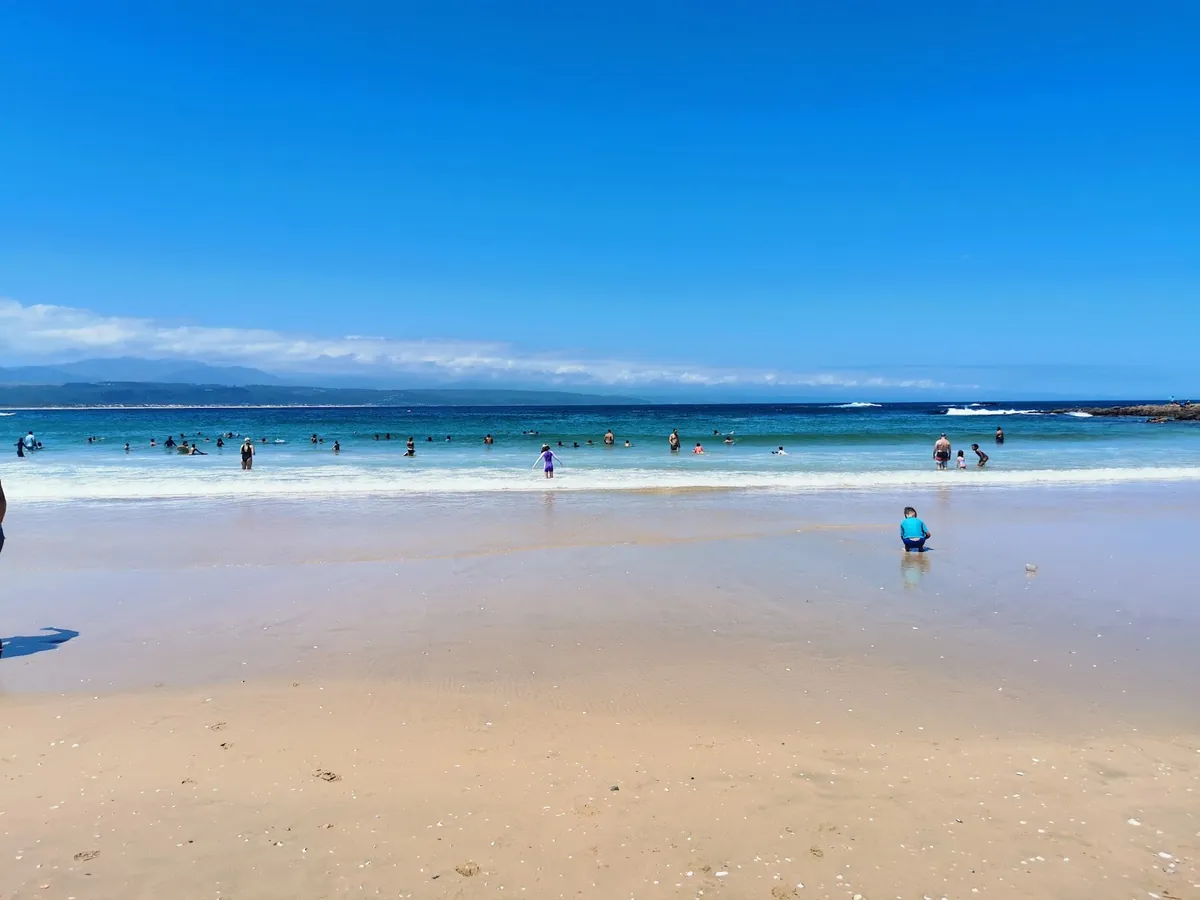
Plett has six Blue Flag beaches for the 2025/26 season (awarded annually by the Wildlife & Environment Society of South Africa against 33 criteria). There are another half-dozen coves and stretches worth knowing about.
The short version:
- Central Beach — the all-rounder. Lifeguards 1 Nov–30 Apr, sheltered, walking distance to restaurants. First-timer default.
- Robberg 5 — the best patrolled swim in Plett. Blue Flag, full peak-season lifeguards, wider and cleaner than Central.
- Lookout Beach — Blue Flag, 10+ km of continuous sand connecting to Keurbooms. Best for runs, walks, lagoon sports.
- Keurboomstrand — often empty midweek, a 10-minute drive east, near Enrico's and Arch Rock.
- The Dunes & The Waves — Blue Flag, below the Beachy Head residential strip, accessed via clifftop stairs. Quieter, locals' favourites.
- Singing Kettle — Blue Flag, reached via Enrico's, the 30-minute walk east to Cathedral Rock is the best short walk in Plett that isn't Robberg.
- Nature's Valley — Blue Flag, 45 minutes east, river-mouth beach inside Garden Route National Park.
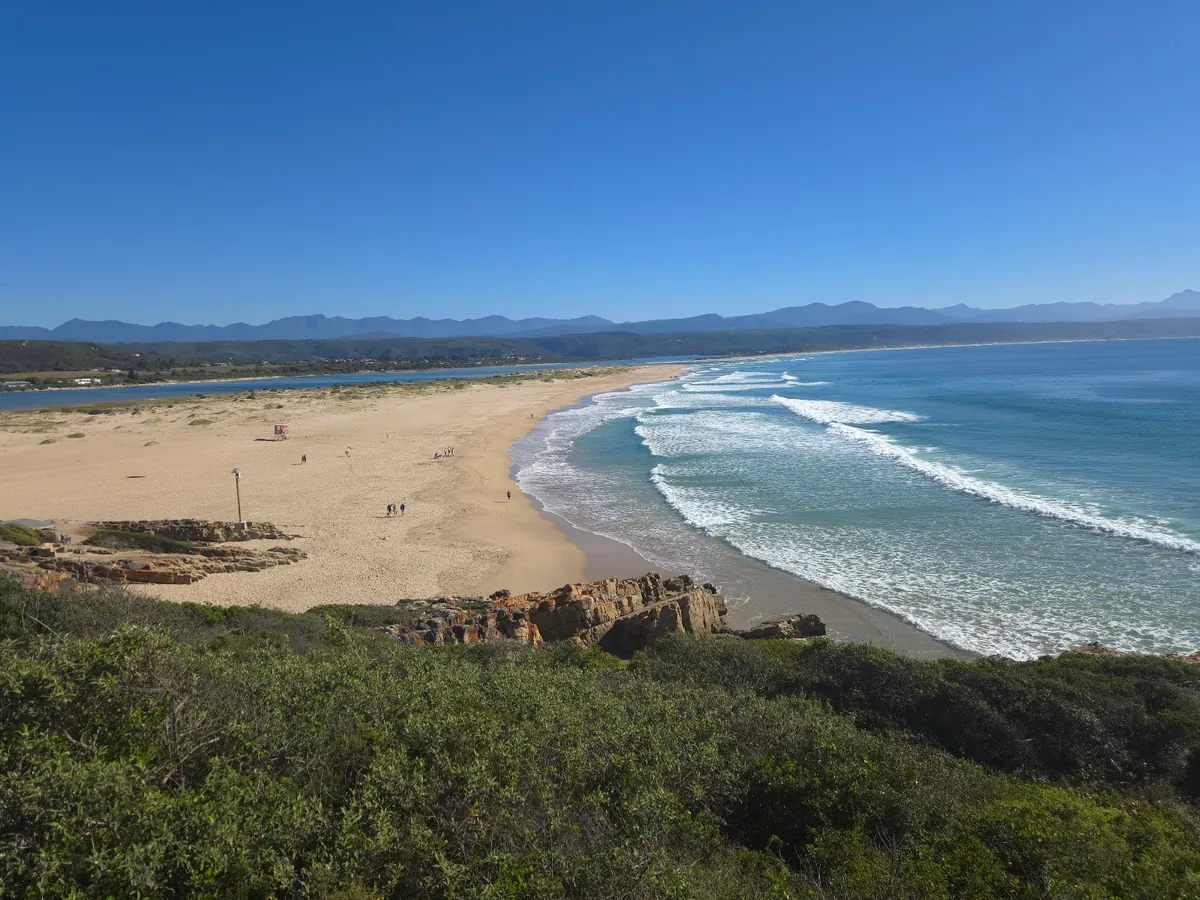
If beaches are the main thing pulling you to Plett, read the dedicated best beaches guide — it ranks every beach by what it's good for, covers dog rules (which have tightened since 2024), and compares swimming, surf, crowds and parking.
One quick safety note that nobody tells you: lifeguard patrols at most beaches only run 1 November to 30 April. Robberg 5 has lifeguards across the full peak season. The NSRI Station 14 at Central Beach is staffed year-round, but between May and October most beaches are unpatrolled. Don't swim at river mouths, don't swim alone, and if you get caught in a rip — swim parallel to the beach until it releases you.
Things to do in Plettenberg Bay beyond the beach
Plett punches far above its weight on things-to-do for a town of its size. You can easily fill 5–7 days without repeating. Below are the ones I send everyone to first; the full ranked things to do in Plettenberg Bay guide covers prices, booking windows and what's worth skipping.
Robberg Nature Reserve hike
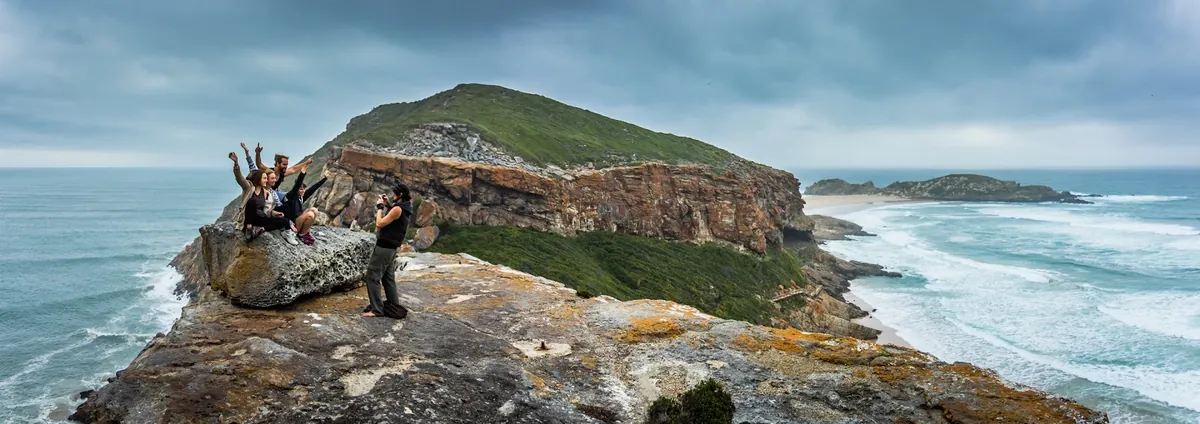
If you do one thing, do this. The CapeNature-managed reserve sits on the peninsula that forms the southern wall of the bay, and has three looped trails starting from the same car park:
- The Gap Circuit — 2.1 km, ~30 minutes. Short coastal loop, still gives you the drama.
- Witsand Circuit — 5.5 km, 2–3 hours. Passes the Cape fur seal colony and the big Witsand sand dune.
- Point Circuit — 9.2 km, 3–4 hours. The full peninsula circuit to The Island and back. The one to do if you have time.
It's not a gentle stroll — parts of the Point trail run along exposed cliff edges and the final descent to the isthmus is steep. Bring water, bring a jacket (the weather shifts), bring decent shoes. Entry fee at the gate (check CapeNature for current rates).
Wildlife sanctuaries
Three wildlife sanctuaries cluster along a 10-minute drive east of town, all on the way to or back from Keurbooms:
- Monkeyland — free-roaming rescued primates in indigenous forest. Guided walks, solid ethics.
- Birds of Eden — the world's largest free-flight aviary, on the same estate. Buy a combined ticket.
- Jukani Wildlife Sanctuary — big cats and reptiles (rescued, not performing). The tigers and lions are the draw, but read the ethics pages first — SA has both genuine sanctuaries and captive-breeding operations, and Jukani is the former.
Add the Plett Elephant Sanctuary if travelling with kids — close interactions with rescued African elephants. Bookings usually needed in peak.
For an actual open-vehicle safari rather than a sanctuary walk, the malaria-free game reserve at Wittedrift sits 15 minutes inland and runs two-hour game drives — rhino, giraffe, zebra and hippo. It's not Big Five, but it's the closest thing to a proper game drive on this stretch of coast.
On the water
Sea kayaking launches from Central Beach — ~R400 per person, 9 am / 12 pm / 2 pm departures, 1.5–2 hours on the water with frequent bottlenose-dolphin sightings in calm conditions. SUP and kite-surfing are the things to do on the Keurbooms lagoon behind Lookout when the afternoon southeaster kicks in. Swim-with-seals trips visit the Robberg colony — check the operator's rabies-precaution policy (there's been a seal rabies outbreak since 2024).
Old Nick Village
An artisan shops + gallery + coffee complex in a converted farmhouse on the N2 just north-east of town. Good browsing on a rainy afternoon, real coffee, decent lunch, and one of the few places to buy genuinely local ceramics and textiles.
Bloukrans Bungee
40 minutes east of Plett, on the border with the Eastern Cape. 216 metres off the Bloukrans Bridge — the world's highest commercial bridge bungee (Macau Tower is higher overall, as a tower). Not cheap, not for the faint-hearted, but the video footage is the kind of thing you remember.
Plett Tourism keeps current events and activity listings.
Plettenberg Bay whale and dolphin season
Plett was designated a Whale Heritage Site by the World Cetacean Alliance in May 2023 — one of only seven in the world at the time. It's earned, not branded.
Southern Right Whales arrive from the Antarctic from June, peak through September and October when they calve in the bay, and start heading home through November. Mothers and calves sit close to shore — often within 100 metres of the Robberg headland or Beacon Isle cliffs. Bring binoculars.
Humpback Whales migrate through Plett on both directions: southbound in November–February, northbound again later in the year. They're the acrobats — breaching and tail-slapping visible from land on a good day.
Bryde's Whales are resident year-round and move in small pods along the coast. Less showy, but if you're here outside main whale season they're the reason you still see blows from the cliff paths.
Bottlenose and Humpback Dolphins are resident year-round. Pods of 50–200 are common from most beaches, especially first thing in the morning.
Boat-based whale safaris run from Central Beach with Ocean Safaris and Ocean Blue Adventures. Roughly 2-hour trips. Rates vary with season — check their booking pages; peak-season weekends sell out.
Land-based viewing — the best free option: walk the clifftop path from Beacon Isle toward Signal Hill or stand on the Robberg headland at Cape Seal. June–November is the window. Go at 8–9 am when the light is clean and the wind hasn't yet come up.
For the species-by-species field guide, month-by-month probability table, and all four clifftop viewpoints in detail, see our whale watching in Plettenberg Bay guide.
Where to stay in Plettenberg Bay — neighbourhoods at a glance
Plett is small on a map but the neighbourhoods feel different. Pick the area before you pick the property — it matters more than the kitchen countertops.
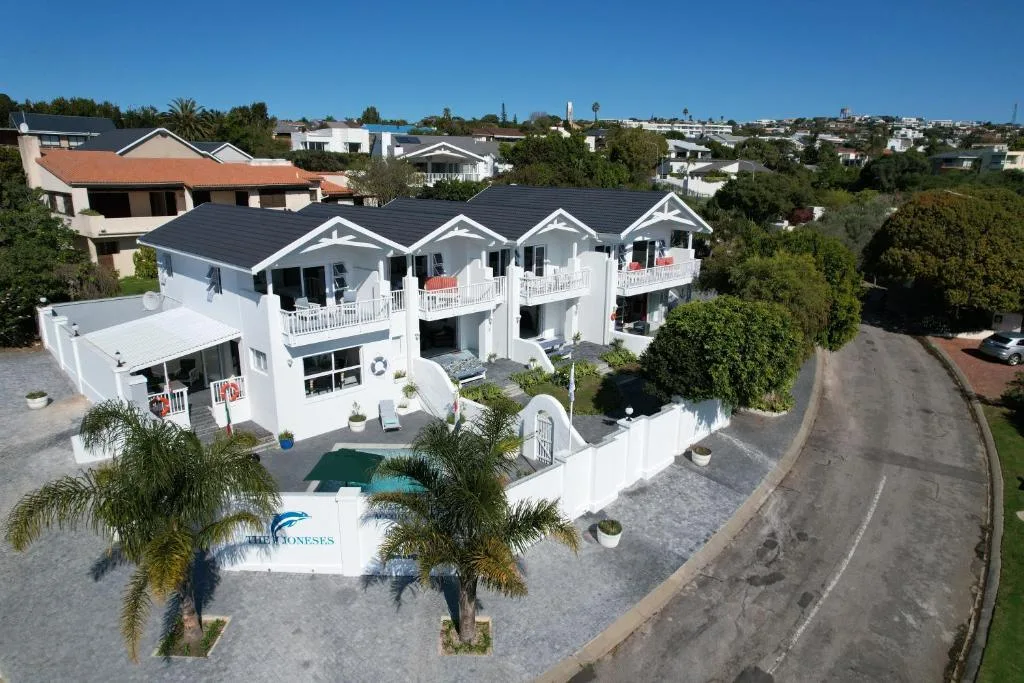
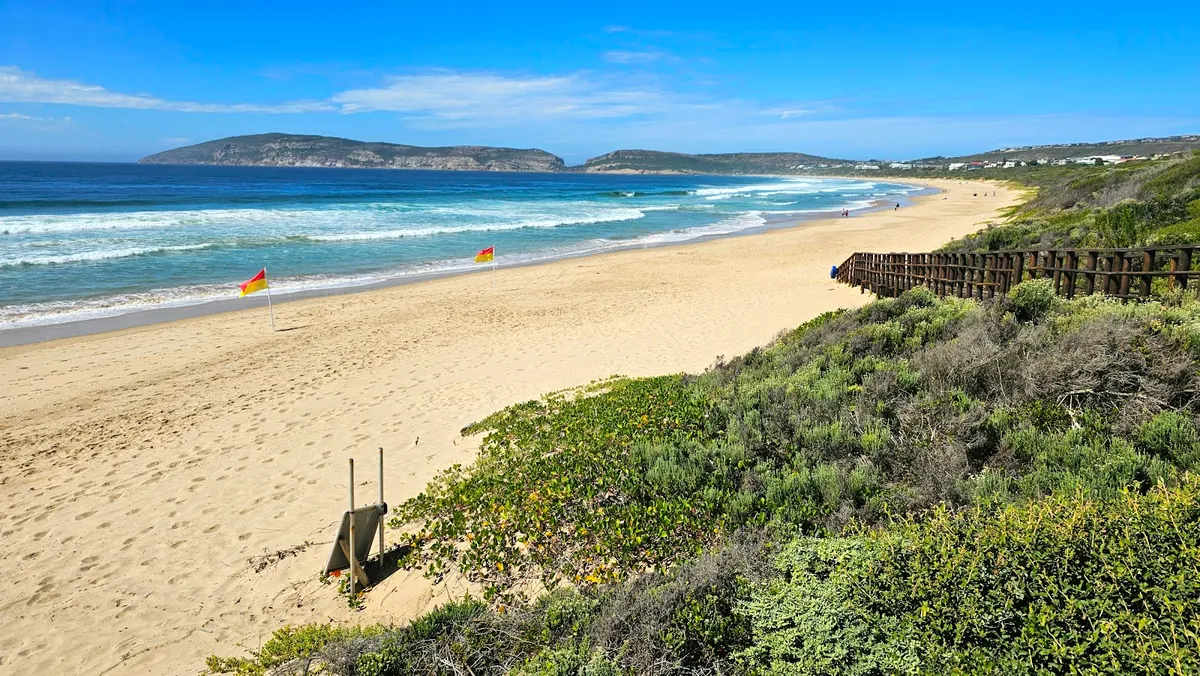
- Central Beach / Main Beach — walkable to restaurants and the main swimming beach. Best for car-free stays and 2–3 night visits. Most of the Plett apartments sit here.
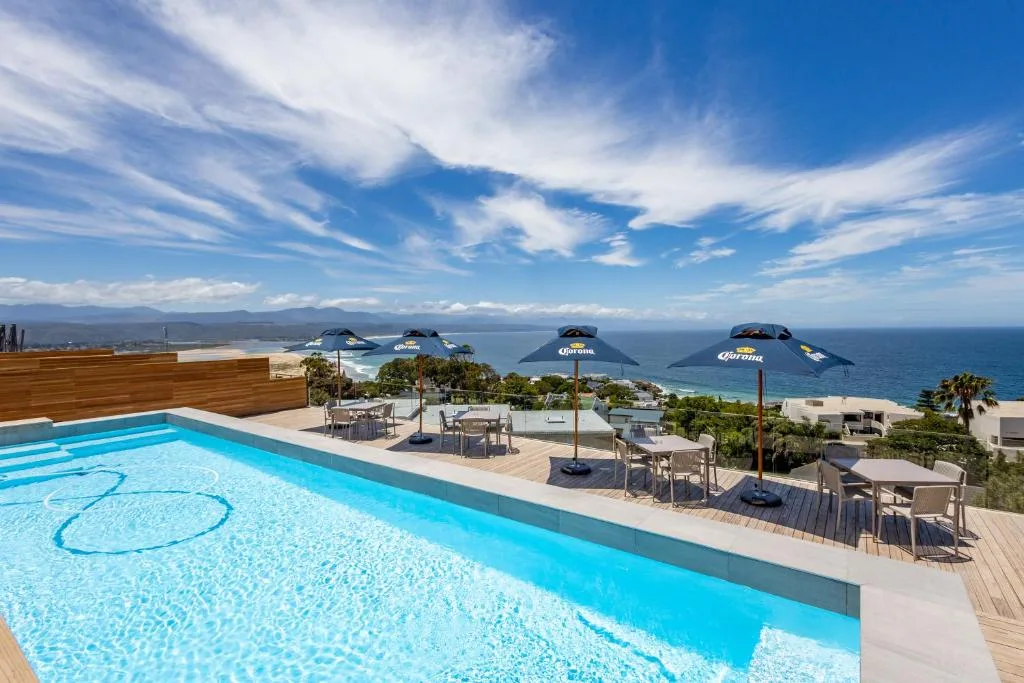
- Beachy Head / Robberg — elevated homes overlooking the peninsula. Quieter, more upmarket, short drive to town. Best for couples and small families who prioritise views over walkability. The best Plett villas are along this strip.
- The Hill / Plett Central — residential grid above town. 5 minutes down to the beach. More house for your money.
- Keurbooms — 10–15 minutes east. Long empty beach, lagoon, family vibe. See Plett family holiday homes.
- Lookout Beach — apartments and villas with dune access on the long eastern beach. Great for walkers and runners.
- Piesang Valley — residential inland pocket, 10 minutes from the beach. One of Plett's best-value areas — real houses at prices that don't punish longer stays.
- Brackenridge / Whale Rock Ridge / Goose Valley — secure estates with shared facilities. Best for 2-week stays and multi-generation family holidays.
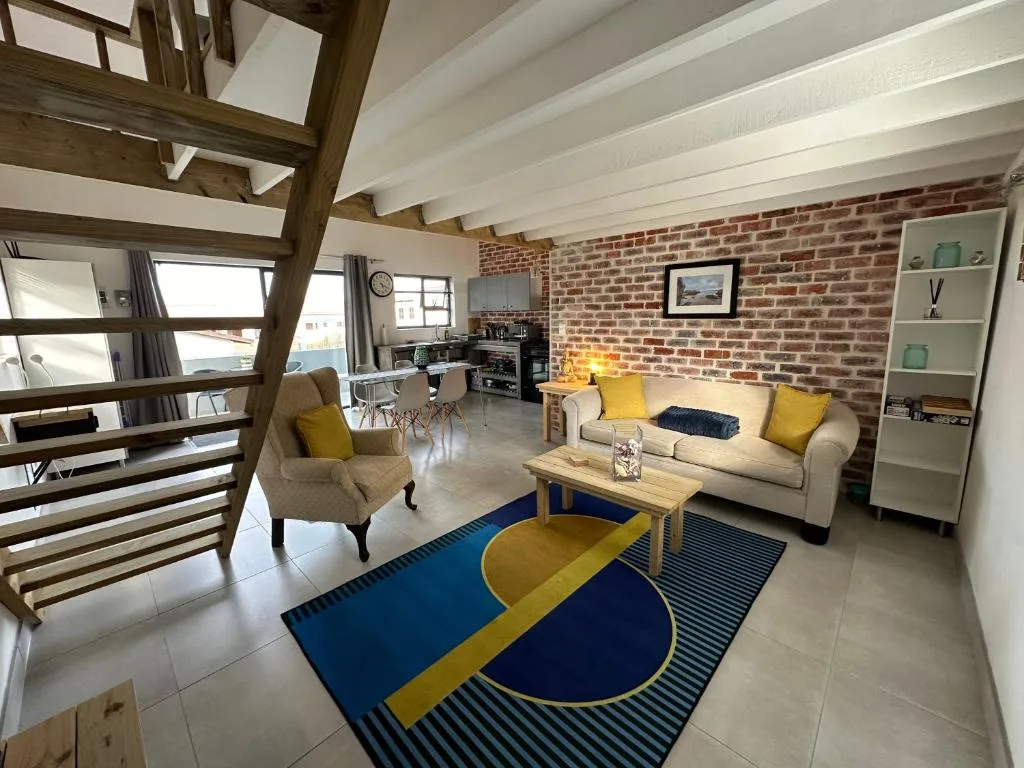
Booking discipline matters more in Plett than in most SA holiday towns. Peak (mid-Dec to mid-Jan) wants 6+ months lead time. Easter, 3 months. Winter (June whale season + SA school holidays), 6–8 weeks. For the full neighbourhood breakdown, booking timeline, what's included, load-shedding notes and cleaning fee ranges, the Plett self-catering guide goes deep — including six hand-picked stays across the main neighbourhoods.
The short version: if you want the walk-to-everything option, pick Central. If you want the view-from-the-deck option, pick Beachy Head. If you want the calm-family-beach option, pick Keurbooms. If you want value, pick The Hill or Piesang.
Plettenberg Bay food and drink
Plett punches above its weight here too — tiny town, disproportionate number of genuinely good kitchens.
The restaurant strip on Main Street has been my first-night default since I was a teenager. It's changed hands a dozen times but there's almost always something good. Current anchors:
- The Fat Fish — seafood, usually busy, solid for a first dinner.
- The Lookout Deck — over the water at Lookout Beach, sunset views, casual.
- Emily Moon River Lodge — 15 minutes' drive out of town, on the Bitou River. Worth the drive for a long lunch.
- Enrico's at Keurboomstrand — beachfront, seafood, the boardwalk walk afterward.
- Lemongrass / Sal e Limone / Cornuti al Mare — the pizza-and-Italian end of the strip (names rotate, quality stays).
Coffee and breakfast:
- The Table at the Robberg end of Main Street
- Le Fournil de Plett (French bakery, go early, everything's gone by 10)
- Zinful (locals' breakfast)
Wineries nearby are genuinely worth a morning — the Plettenberg Bay wine route has 8+ estates in the hills behind town. Wines of South Africa lists the open-to-public estates. Newstead and Bramon are the easy first picks.
Honest caveat: restaurant scenes in SA towns change fast. Before you commit to a long-planned booking, check current Google/Tripadvisor reviews — the half-life of a good Plett restaurant is about three years.
Day trips from Plett
Plett makes a good base for 2–3 day trips during a week-long stay.
Nature's Valley
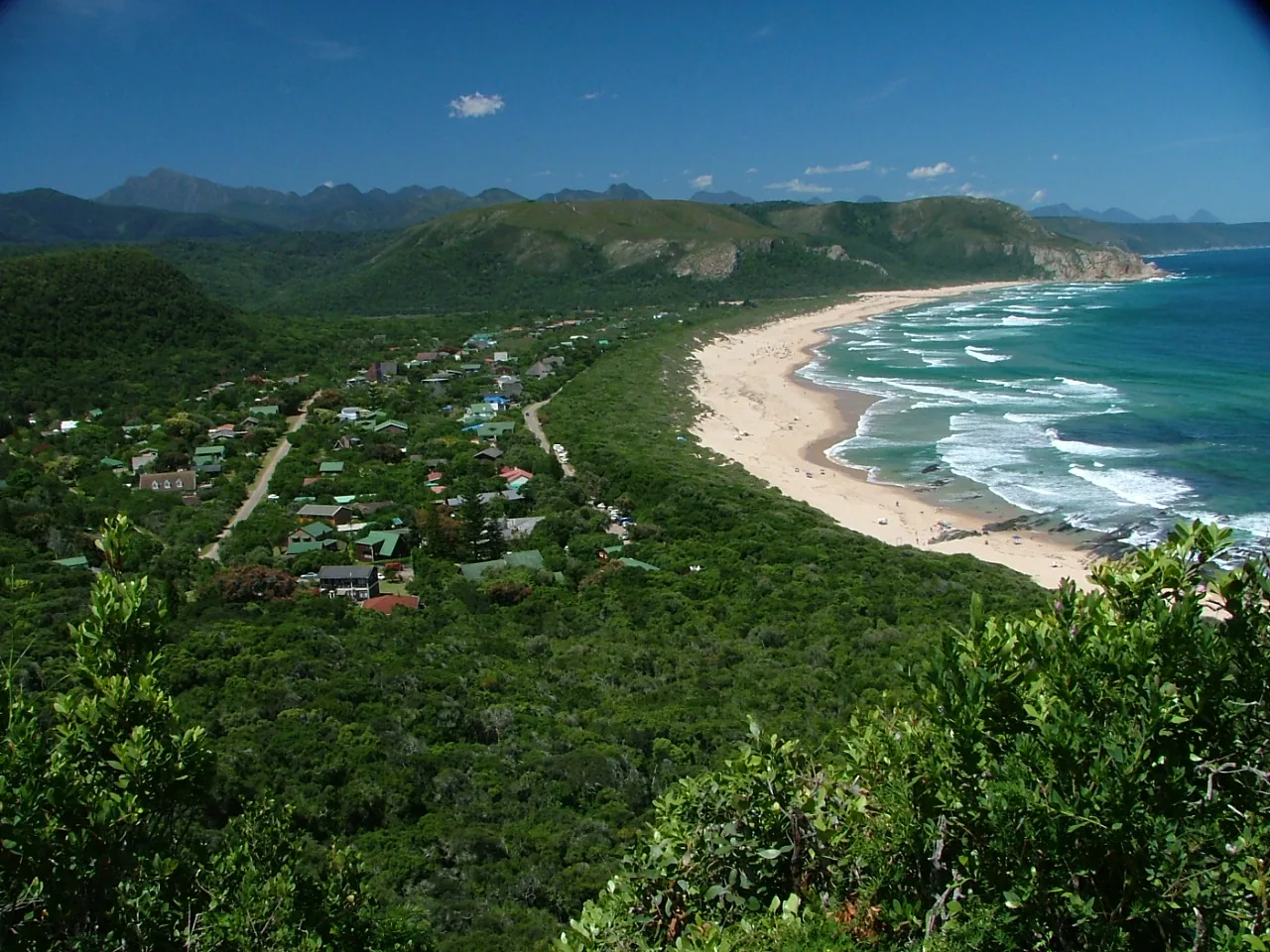
45 minutes east via the Grootrivier Pass, inside the Garden Route National Park. Tiny village, indigenous forest, a curving white beach hemmed in by cliffs, and a flat sheltered lagoon for kids. No cellphone signal in the village (a feature, not a bug). Day trip or stay overnight.
Tsitsikamma section of Garden Route National Park
The eastern end of the Garden Route — Storms River Mouth suspension footbridges, the Otter Trail start, forest walks, and some of the best land-based shark spotting on the coast. 60 minutes east. SANParks runs it; pay at the gate.
Knysna
30 minutes west on the N2. Lagoon town, the Knysna Heads drive, forest hikes, oyster tasting, the houseboat scene. Different vibe from Plett — slower, less beach-focused, cheaper. Worth at least one afternoon. If your trip is beach-first, Plett wins; if it's lagoon-and-forest-first, do both (there's a full head-to-head further down).
Keurbooms River
15 minutes east. Rent a canoe at Keurbooms River Nature Reserve and paddle upstream into the forest. A calm-autumn-morning activity that gets you properly away from the beach scene.
Kranshoek Viewpoint + Waterfall Walk
15 minutes west toward Harkerville. Not a swimming beach — a cliff-top picnic site with one of the best coastal views on this stretch, plus a 9 km circular hike down to a waterfall and sea cave. Do it on a clear day.
Getting to Plettenberg Bay
Flying:
- George Airport (GRJ) is the nearest — 45 minutes west on the N2. Carriers are Airlink, CemAir and FlySafair with direct flights from Johannesburg and Cape Town. Durban requires a connection via JNB or CPT. (Flights from GRJ)
- Port Elizabeth / Gqeberha is an alternative, 2.5 hours east, with more domestic frequencies.
- Cape Town International is ~5 hours' drive — only makes sense if you're combining Plett with a Cape Town stay.
Driving:
- N2 is the spine. Well-maintained toll road from George (a single toll gate near Nature's Valley heading east).
- Hire cars from GRJ — all the big agencies. Book ahead in peak.
Buses:
- Intercape and Greyhound run the Cape Town–PE route and stop in Plett. Slow, cheap, fine if you're on a budget and don't mind committing to town-only time.
Plettenberg Bay practical tips — load-shedding, water, safety, cash
The SA travel stuff nobody warns you about.
Load-shedding
Plett is on Eskom's rotational schedule (via Bitou Municipality). During active load-shedding, expect 2–3 windows per day of around 2.5 hours each. Download Eskom Se Push or Beurtkrag before you arrive — both give local times and push notifications. Most newer self-catering listings advertise "load-shedding ready" or "solar/inverter" — take that seriously and ask what it actually powers (lights and plugs is standard; fridge and stove is better; whole-house is gold). A gas hob is the cheapest universal backup.
Water
Level 4 water restrictions were in place from January 2026 after Roodefontein Dam levels dropped. Check current status via Bitou Municipality before you travel — restrictions shift with rainfall. Most impact on visitors is mild: shorter showers, no baths, don't wash the hire car. Properties with a JoJo tank or borehole are largely unaffected — worth asking the host.
Safety
Plett is among the safer SA coastal towns. Standard precautions apply — don't leave valuables visible in the car, don't walk deserted beaches alone at night, lock up at night. Central, Lookout and Robberg are lifeguard-patrolled in season (1 Nov–30 Apr at most; Robberg 5 across the full peak season). Emergency numbers:
- NSRI Station 14 (sea rescue): 082 990 5975
- Bitou Customer Care: 044 501 3174/5 (toll-free 0800 212 797)
- Universal emergency: 112 from any mobile
Cash, cards, tipping
- Cards are accepted everywhere, including small beach-shack vendors. Tap-to-pay standard.
- Keep some cash for car-guards (R5–R20 at secure parking lots).
- Tipping: 10–15% at restaurants, round up at coffee shops, R20–R50 for the car guard who's watched your car at the beach for a few hours.
Sun and wind
SA summer UV is brutal — factor 50+, long sleeves for kids, reapply after every swim. The afternoon southeaster ("the Cape Doctor") can turn a glass-calm morning into a sand-blasting 3 pm. If the wind's up, move to a sheltered beach (Central) or head inland.
How long to stay in Plett?
- 3 nights — the minimum to not feel rushed. One beach day, one Robberg hike, one long-lunch day.
- 5 nights — the sweet spot. Adds a wildlife-sanctuary morning, a Nature's Valley day trip, and a flex day.
- 7 nights — right for families or remote workers. Time to settle, repeat favourite beaches, work a morning, swim an afternoon.
- 10–14 nights — the lock-and-go holiday rhythm. Pick a villa or estate, commit, don't touch the car every day. Works best in shoulder seasons when beaches aren't packed.
Most first-timers end up adding a night or two once they're here. Build in buffer.
Plett vs Knysna — the honest comparison
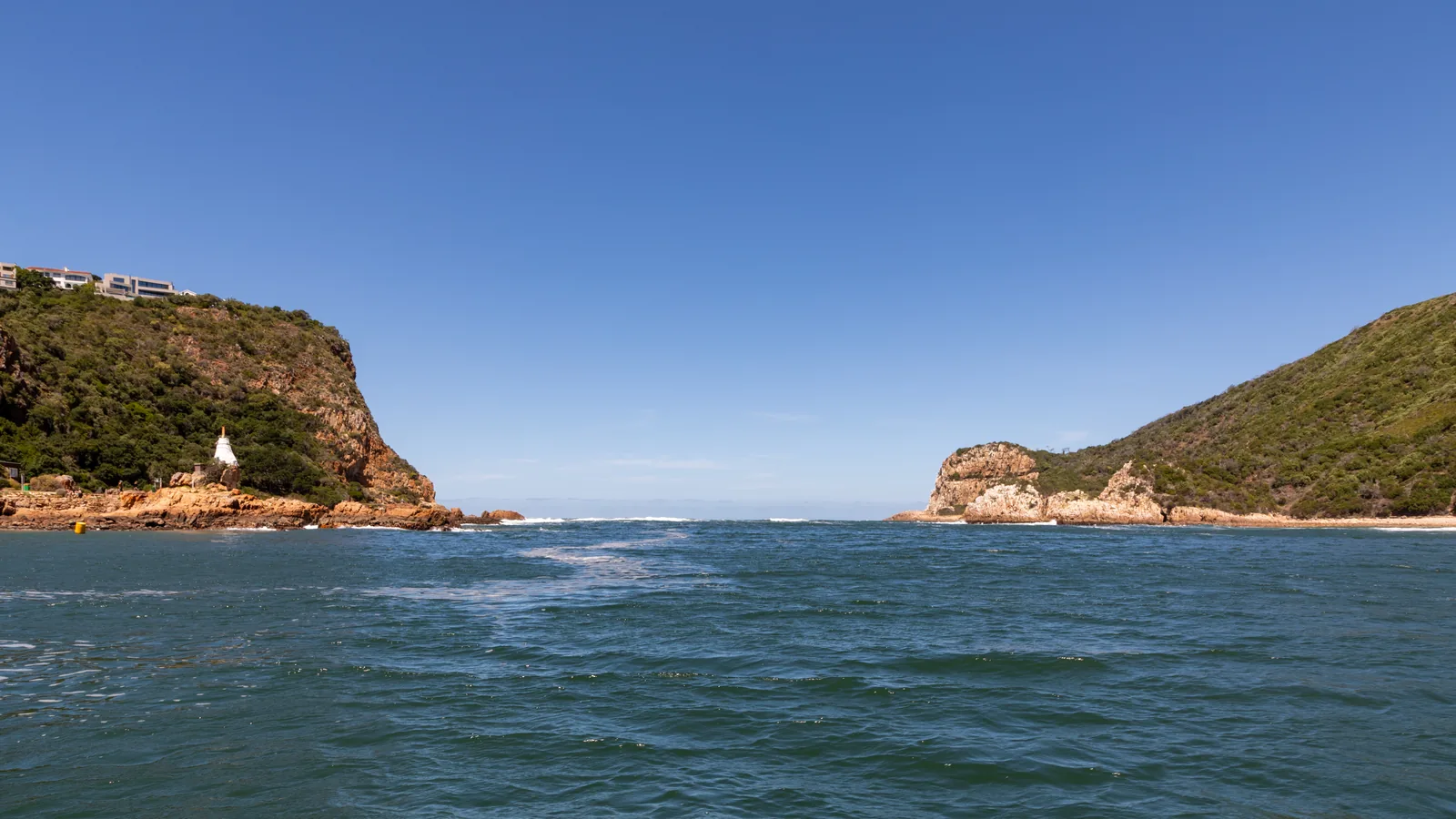
The most-asked question by first-timers. They're different, not better-or-worse:
- Plett wins on beaches, beachfront stays, dolphins, whale-watching, the premium end of accommodation, and general "holiday feel."
- Knysna wins on the estuary, the forest, the Heads drive, the oyster-and-lagoon scene, and value on self-catering.
If your trip is beach-first, stay in Plett. If it's lagoon-and-forest-first, stay in Knysna. If you have a week and can split — 4 nights Plett + 3 nights Knysna is the classic.
For the full head-to-head, see my Plett vs Knysna comparison — beaches, airports, stays and the honest "who should pick which" call.
Plett by season — a one-line calendar
- January: peak summer, packed, hot, expensive. Book 6+ months ahead.
- February: still summery, crowds thinning mid-month. Great value if you can time it.
- March: classic shoulder — warm water, quiet beaches, autumn light. My favourite month.
- April: cooler evenings, Easter crowds, then quiet. Whales starting to appear.
- May: chilly but clear. Whale watching builds.
- June: winter begins. Whales here in force. Good walking weather.
- July: peak whale-calving season. SA school holidays bring domestic tourists but rarely as heavy as December.
- August: quiet shoulder. Whales still here. Light starts stretching again.
- September: whale peak, spring warmth arriving. Excellent.
- October: classic spring — warm days, flowering fynbos, whales. Second-favourite month after March.
- November: last of the whales, water warming, pre-peak quiet. Book ahead for December if you haven't.
- December: peak season, packed. Holiday energy is fun if that's what you want. Book a year ahead for villas.
Planning your Plett stay
The best Plett trip I can recommend: 5 nights in March or October, a 3-bedroom villa on Beachy Head or The Hill, a hire car from George, and a loose plan. Book the accommodation first — everything else falls into place around it.
Start with all Plettenberg Bay self-catering to browse the full range, then filter by apartments, villas or family holiday homes (all linked in the "Where to stay" section above). The self-catering guide covers what you'll pay, what's usually included, and six featured stays across the main neighbourhoods.
Plett sits about a third of the way along the Garden Route between Mossel Bay and Storms River — the wider N2 stretch is mapped in the Garden Route overview linked at the top of this guide.
This is the hub of the Plett cluster: each section above points to a deeper companion guide — beaches, things to do, whale watching, wildlife sanctuaries, the Keurbooms River, self-catering, and the Plett-vs-Knysna call. Open whichever matches the trip you're planning, and let the accommodation date decide the rest.
Sources
- Plett Tourism — Official Visitor Info
- Blue Flag South Africa (WESSA)
- CapeNature — Robberg Nature Reserve
- SANParks — Garden Route National Park
- World Cetacean Alliance — Plett Whale Heritage Site designation
- Bitou Municipality — Water restrictions, load-shedding, local notices
- NSRI Station 14 Plettenberg Bay
- Wines of South Africa — Plettenberg Bay Wine Route
- Flights from George Airport (GRJ)
Where Plettenberg Bay stays sit
Every listing plotted, with attractions dotted around it. Tap a navy pill to see the stays in that cluster.
Frequently asked questions
When is the best time to visit Plettenberg Bay?
Late February to April and September to November — the shoulder seasons. Warm enough to swim, quiet enough to get a Wednesday-night restaurant table, and accommodation is 30–50% cheaper than peak summer. For whale watching, June to November, with September–October the sweet spot.
How many days do you need in Plettenberg Bay?
Three nights minimum to not feel rushed. Five is the sweet spot — enough for a Robberg hike, a Nature's Valley day trip, and a few long beach days. Seven is right for families or anyone combining Plett with Knysna.
Can you see whales in Plettenberg Bay?
Yes — June to November is the main season. Southern Right whales calve in the bay from July to October, visible from the Robberg headland and Beacon Isle cliffs. Humpbacks pass through November to February. Bryde's whales are resident year-round.
Where is better to stay, Knysna or Plettenberg Bay?
They're different. Plett wins on beaches, beachfront villas and the premium end of accommodation. Knysna wins on the estuary, the forest, the Heads and better self-catering value. Most first-timers do 3–4 nights in Plett and 2–3 in Knysna.
Is it safe to walk in Plettenberg at night?
Plett is among the safer SA coastal towns, but standard precautions apply at night — stick to well-lit, busy streets, avoid isolated areas, and don't walk deserted beaches alone. Lock up at night. NSRI Station 14 at Central Beach is staffed year-round.
Does Plettenberg Bay have a rainy season?
Rain falls throughout the year — Plett averages around 700 mm annually with no pronounced dry season. Winters tend to be clearer than you'd expect; summer afternoon showers are common but brief. The afternoon southeaster can be more disruptive than the rain itself.
What is the best month for whale watching in Plettenberg Bay?
September and October. Southern Right mothers and calves sit close to shore during calving, and the weather has warmed without summer crowds arriving. Go at 8–9 am when the light is clean and the wind hasn't yet come up.