
Whale watching in Plettenberg Bay isn't just a coastal-town bonus — it's one of the best shore-based whale encounters on the South African coast. In May 2023 the World Cetacean Alliance designated Plett a Whale Heritage Site, one of only a handful worldwide. That status is audited — it covers cultural recognition, responsible operators, protection of habitat, and research. In practical terms: the whales come here in numbers, the operators aren't cowboys, and you can have a world-class encounter from a boat, a clifftop, or a beach-side coffee. This guide is the version I send friends.
I've written the broader Plettenberg Bay travel guide as the overview — what to do, when to come, where to stay. This piece is the deep-dive on whales specifically: species, seasonality, where to actually stand, and how to pick a boat trip if you want one.
Why Plett is a genuine whale destination
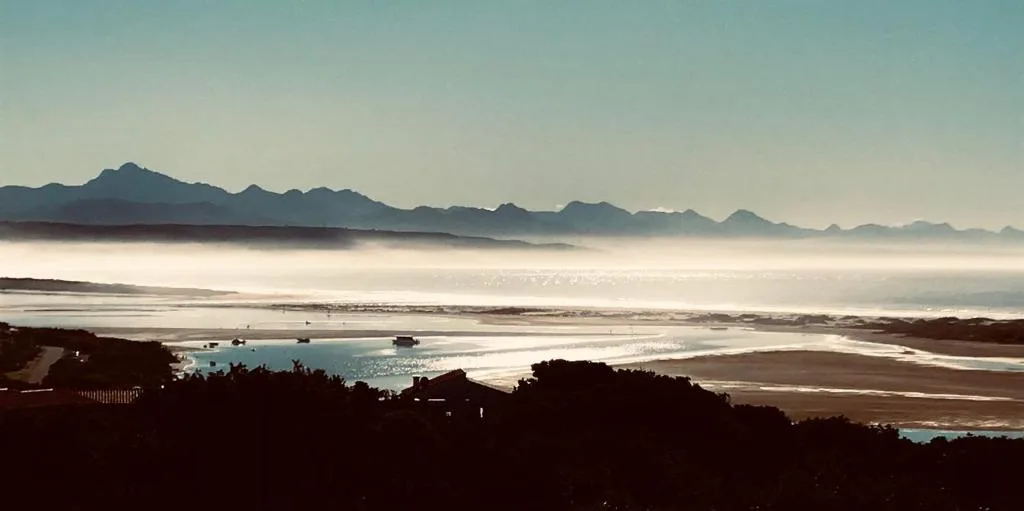
A calm, shallow bay with a deep drop-off a couple of kilometres offshore, sheltered by the Robberg Peninsula to the west and the Keurbooms headland to the east. The water stays comparatively warm even in winter (roughly 16–17°C at its coldest), plankton-rich, and the bay is sheltered enough that Southern Right mothers can give birth and nurse calves without needing to fight swell. For the whales, it's a creche. For a visitor with a pair of binoculars, it's the rare thing in wildlife watching — easy.
The Whale Heritage Site designation is the external validator. The World Cetacean Alliance doesn't hand the status out — Plett was assessed against four pillars (cultural recognition, responsible tourism, environmental protection, and research/education) before it was granted. The Bluff near Durban was South Africa's first Whale Heritage Site, designated in October 2019 alongside Hervey Bay in Australia as the world's first two. Plett became South Africa's second — and the seventh globally — in May 2023.
The species you'll actually see
Four cetaceans dominate Plett's bay calendar. Knowing which is which changes what you're looking for.
Southern Right Whale (Eubalaena australis) — the main event
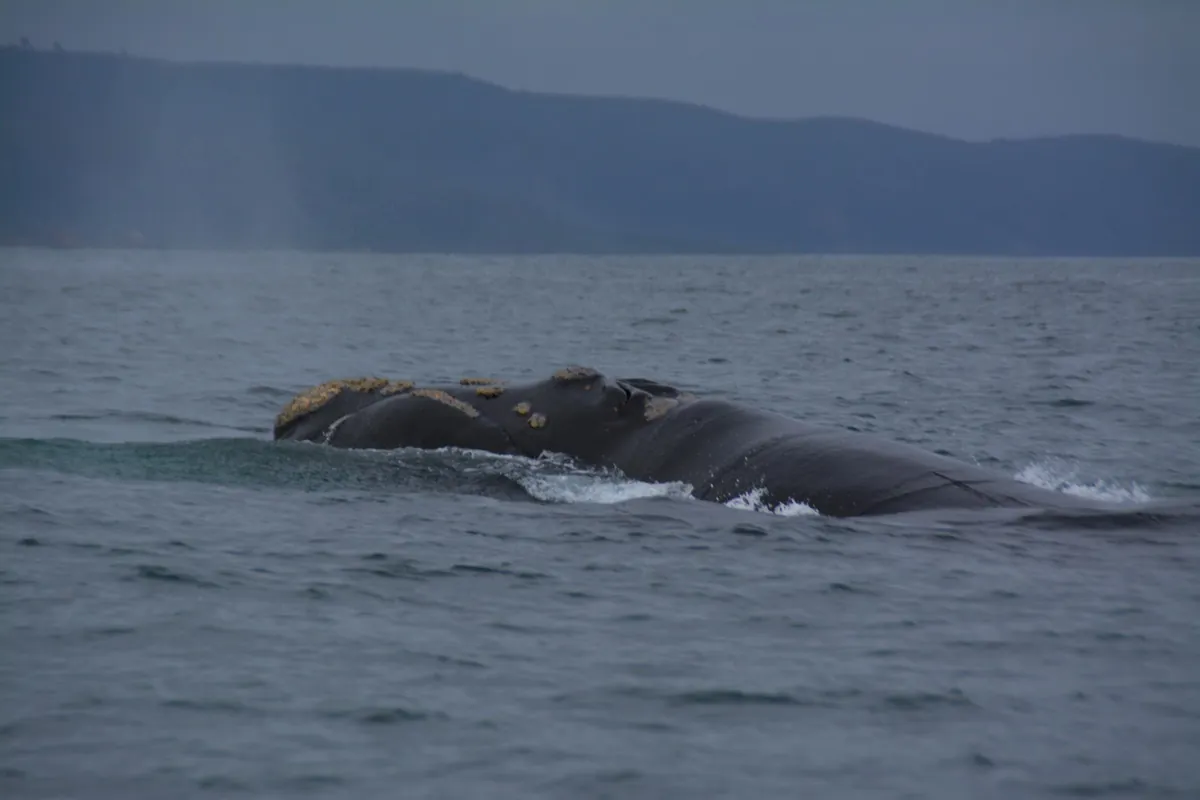
Huge, black, no dorsal fin, and covered in callosities — rough light-coloured patches on the head that each whale wears like a fingerprint. Adults are 13–15 m long and can weigh 45–60 tonnes. They migrate north from sub-Antarctic feeding grounds each winter to calve in South African coastal bays, and Plett's protected waters are one of their preferred nurseries. SANBI's cetacean research group and the Mammal Research Institute Whale Unit at Pretoria University have tracked Plett's calving cohort for decades.
What you'll see: mothers parked within 100–300 m of the shore with newborn calves, often visible from Robberg's cliff paths and from Beacon Isle. Lobtailing (slapping the tail on the water), spyhopping (holding the head vertically out of the water to look around) and the occasional full breach are routine in August–September.
Humpback Whale (Megaptera novaeangliae)
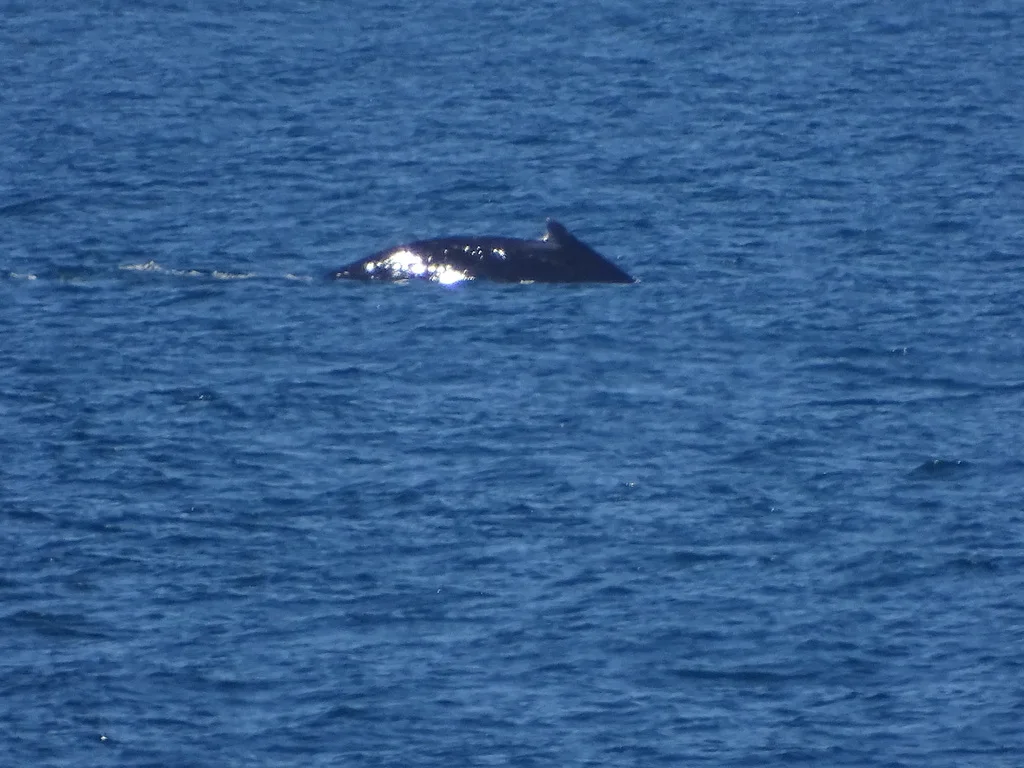
Long flippers (almost a third of their body length), acrobatic. Plett sees humpbacks on their northward migration from May and on the southern return from around September to December. They're faster movers than Southern Rights — a humpback will typically transit the bay rather than loiter — but they breach more, and breaching humpbacks are the photograph most visitors chase.
Bryde's Whale (Balaenoptera edeni) — the year-round resident
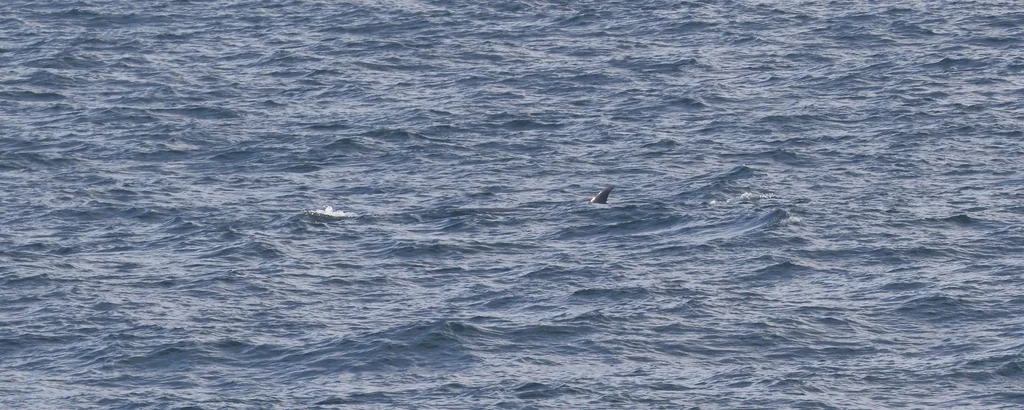
Smaller (11–12 m), sleek, with three parallel ridges on top of the head. Bryde's are not strongly migratory; a coastal population lives off South Africa year-round and regularly forages in Plett Bay. Less showy than the other two, but they're the reason you still see blows from the cliffs in February and March when the Southern Rights are back in the Southern Ocean. Taxonomy of the Bryde's complex is still debated — the IUCN currently lists Balaenoptera edeni as Least Concern globally, but population-level research on the South African inshore form is ongoing.
Dolphins — bottlenose and humpback
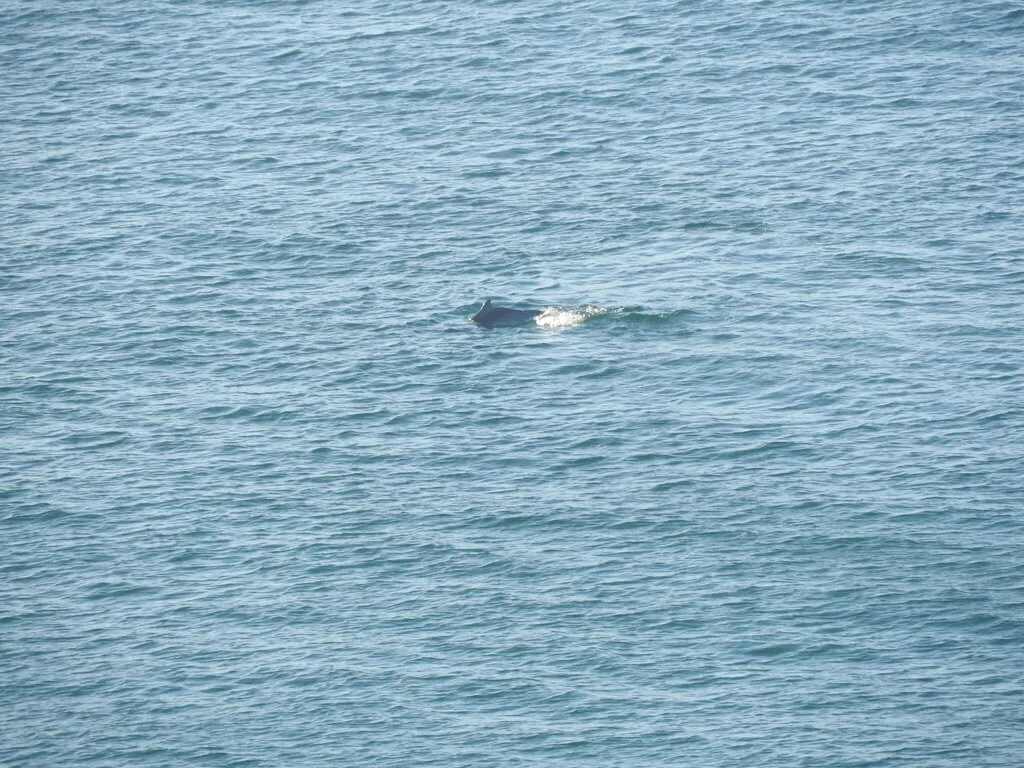
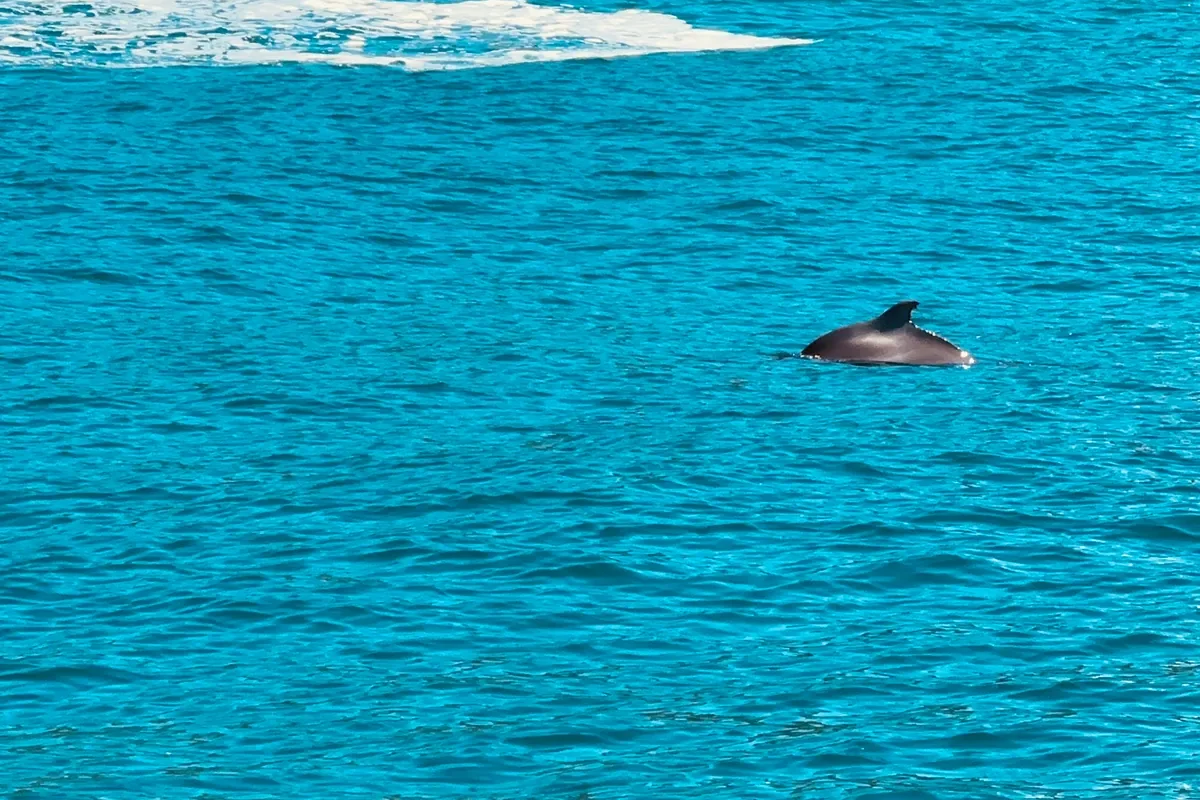
Common year-round. Bottlenose pods of 20–100+ regularly cruise the surf line. The smaller, more reclusive Indian Ocean humpback dolphin is present in lower numbers — it's listed as Endangered, and seeing one is a proper naturalist's tick. Boat trips that go "whale-free" in the shoulder months almost always encounter dolphins.
Month-by-month whale probability
This is the question I'm asked most. The honest month-by-month for Plett:
- May — first Southern Rights arriving, humpbacks starting their northward transit. Sightings sporadic, numbers low.
- June — numbers building. Southern Rights settling in. Good from land by late month.
- July — calving underway. Mothers with newborns visible from Robberg and Beacon Isle most days.
- August — peak mother-and-calf period. Quiet water, clear light. The month I'd pick if flexibility allowed.
- September — still peak. Spring air warming. Some calves starting to test the water. One of the best all-round months for whale watching plus everything else.
- October — excellent. Mothers and calves preparing for the southern migration. Acrobatics tend to pick up.
- November — last of the Southern Rights departing, humpbacks beginning to return southward. Shoulder for land-based, still decent for boats.
- December–April — Southern Rights gone. Bryde's year-round. Dolphin pods reliable. Boat trips pivot to "dolphin and seal" with a whale bonus.
If you're building a trip specifically for whales, late August to mid-October is the safest window. If you're here anyway and whales are a bonus, June, July or November will still deliver — mostly.
Land-based whale watching — the best free option
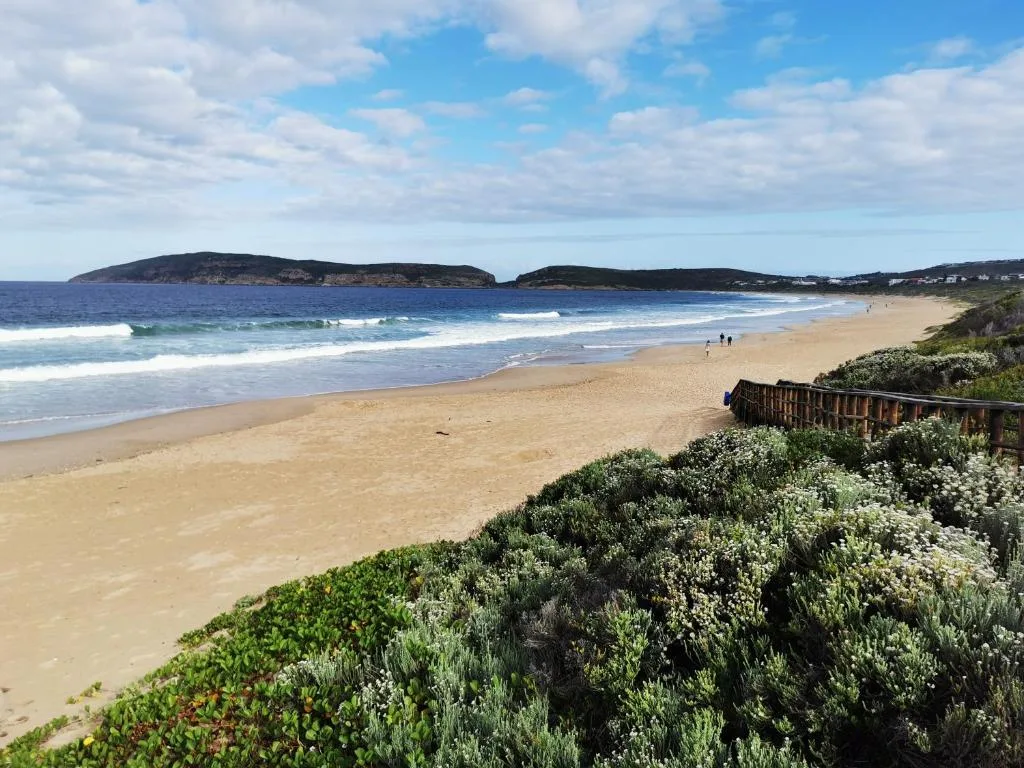
Boat safaris get the Instagram, but Plett's land-based whale watching is genuinely world-class. Southern Right mothers with calves often stay within 100 m of the shore for weeks, which means a clifftop with binoculars can put you as close to a 45-tonne animal as a boat trip would — for the price of a coffee.
The four viewpoints I rotate through:
Robberg Nature Reserve — the best vantage
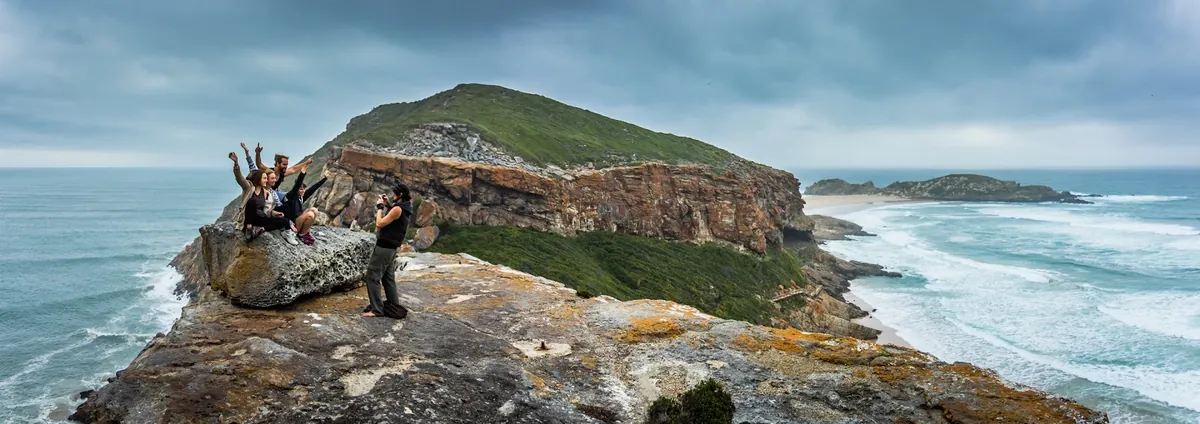
The clifftop path on Robberg's northern side looks directly down into the calving bay. A 20-minute walk from the first car park gets you to the initial viewpoint. Go earlier in the morning — the southeaster typically rises by 10 am and chop makes whales harder to spot. SANParks manages the reserve; there's a modest entry fee, and boardwalks keep you safe from the cliff edge. Robberg also happens to border one of Plett's Blue Flag beaches — pair a sunrise whale scan with a late-morning swim at Robberg 5 and you've had a perfect Plett morning.
Beacon Isle — easiest with kids
The open cliff walk on the eastern side of the Beacon Isle Hotel (the hotel doesn't mind public access on the perimeter path) gives you a straight-down-into-the-bay view. Flat, short, suits pushchairs and older parents. Pair with breakfast on Main Street afterwards.
Signal Hill — for the wide-angle
Higher up, behind Central Beach, with a panorama across the entire bay. Good for spotting multiple pods at once and tracking boat trips as they move.
Central Beach point and the whale sculpture
The bronze tail sculpture at Central Beach isn't only photo bait — the point above it is a genuine viewpoint and the closest to Plett's restaurants. Works for a 30-minute pre-dinner scan.
What you need: 8×32 or 10×42 binoculars (anything less and the calves are just specks), a windbreaker even in summer, and — honestly — 20 minutes of patience. Whales blow, then disappear for 8–15 minutes, then surface. If you look for 5 minutes and see nothing, it doesn't mean nothing is there.
Boat-based whale safaris — the detail worth knowing
If you want the close encounter, go by boat. Plett has two Department of Forestry, Fisheries and the Environment (DFFE) permitted whale-watching operators. Both launch from Central Beach. It's one of Plett's signature experiences — we've ranked it in our full list of things to do in Plett alongside Robberg, the wildlife sanctuaries, and the rest.
Ocean Safaris and Ocean Blue Adventures run broadly comparable 2-hour trips on semi-rigid inflatables that hold 12–20 passengers. Both are responsible operators in good standing with the permit system. Both brief you on the approach-distance rules before departure.
What the 2 hours actually look like
Check-in at the Central Beach operator kiosk 30 minutes before departure. You'll be issued a life jacket and given a short safety briefing. The boat is launched directly off the sand by tractor — it's a memorable start. First 20 minutes get you offshore to the main search zone. The skipper spots blows by eye and radio (operators share sightings). You'll typically spend 40–60 minutes with the first pod found, maybe more if it's calm and the animals are settled. The return loop usually passes the Robberg seal colony (a bonus stop, not guaranteed) before beaching back at Central around the 2-hour mark.
Pricing, seasickness, and what to wear
Pricing — both operators price trips on a seasonal tier; rates are published on their own booking pages. Peak-season weekends sell out — book 1–2 weeks ahead for July–October.
Seasickness — Plett's bay is sheltered enough that most visitors are fine, but the 2 km run out is exposed. If you're prone, take a pill 45 minutes before departure and sit low in the boat.
What to wear — synthetic layers, a windbreaker (even on a sunny day), a hat with a chin strap, sunglasses, and shoes you don't mind getting wet. The operators supply an over-suit at no cost in winter. Leave loose items, cameras without straps, and anything precious at your accommodation.
How to tell a responsible operator
South African whale-watching regulations (administered by DFFE) set a 300 m minimum approach distance to Southern Rights; this tightens to 50 m only inside a small number of designated areas where the operator holds a specific permit. Humpbacks and Bryde's have similar rules. A responsible operator:
- Cuts engines on approach and lets the whale choose the distance
- Never chases, positions, or blocks an animal's path
- Limits time with a pod (typically 20 minutes maximum per boat)
- Keeps you briefed on why they're manoeuvring the way they are
Both Plett operators pass these tests. If you ever see a boat (anywhere on the SA coast) cutting across a whale's path or crowding a mother and calf, report it to DFFE's marine compliance line — the permit system only works with public enforcement.
Whale behaviour in Plett — a short field glossary
A quick field glossary so you know what you're watching:
- Blow — the exhaled spout, visible as a V-shape for Southern Rights, a single column for humpbacks
- Fluking — raising the tail before a deep dive
- Lobtailing — slapping the tail on the surface, sometimes repeatedly. Common in Plett's calving bay.
- Spyhopping — head-and-eyes vertical above the water. Whales looking at you.
- Pec slap — slapping a pectoral fin on the water
- Breach — full body launch. Humpbacks do this more than Southern Rights. If you get one on camera, that's the trip.
Photographing whales in Plett — what actually works
A 70–200 mm zoom on a full-frame, shutter at 1/1000 or faster, continuous autofocus, and give up on composition — fire bursts, choose on the laptop. Morning light is cleaner. From land, brace on the cliff railing; from a boat, don't change lenses at sea unless you want salt water in your sensor. Phones struggle unless the whale is within 50 m — they will be occasionally from a boat, almost never from shore.
Watching from your own deck
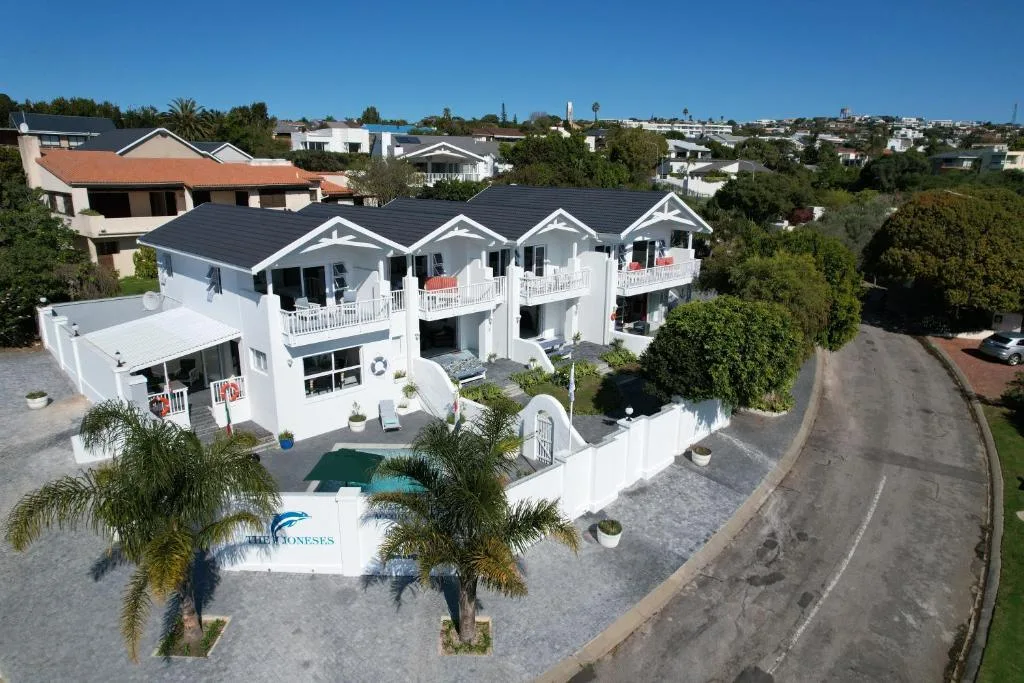
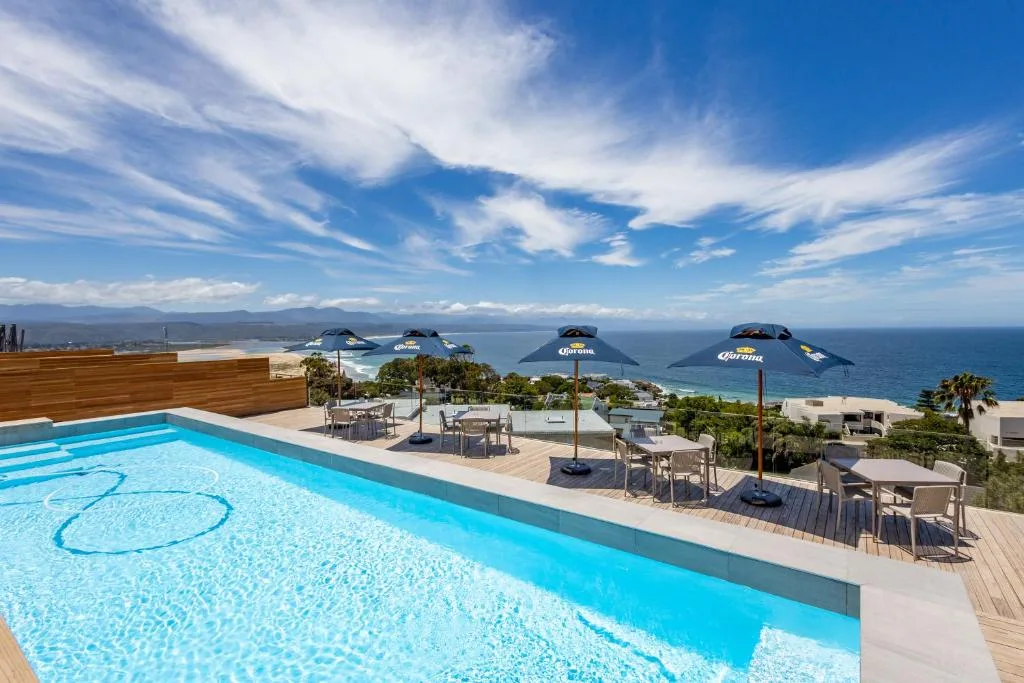
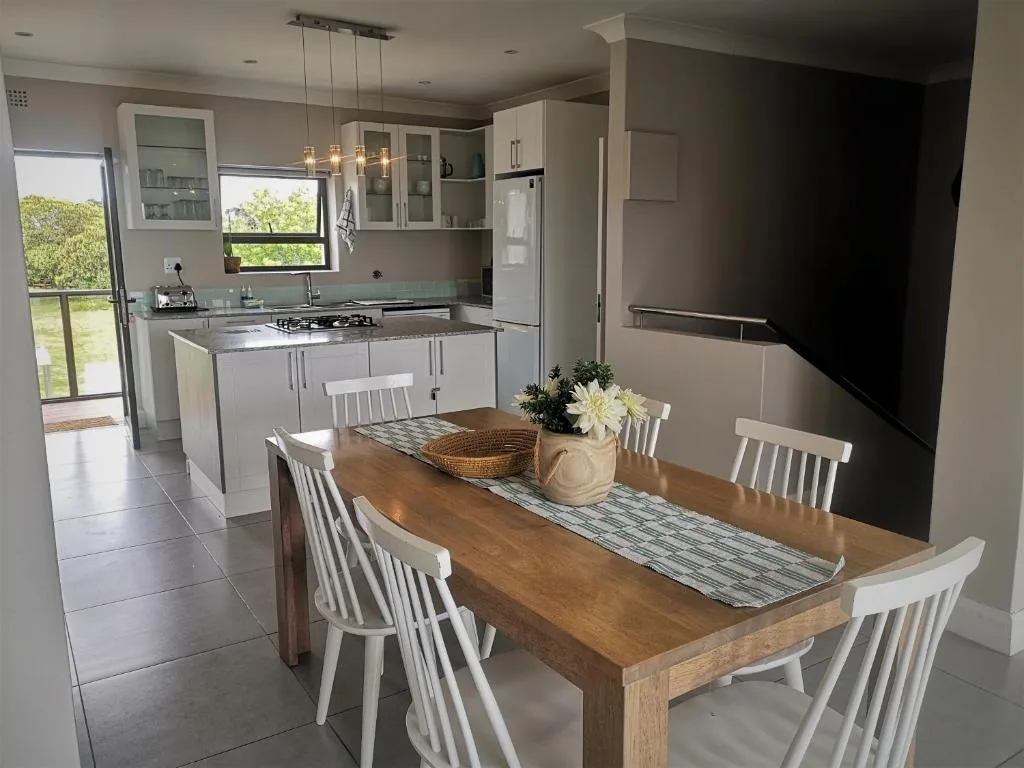
The best accommodation tip for whale season is simple: pick a stay with a deck or balcony that looks over the bay. You'll catch morning blows before breakfast, spot movement through the day without having to drive anywhere, and — in peak calving weeks — watch mothers and calves for hours at a stretch with binoculars and a coffee.
Use the map to find a stay inside walking distance of a clifftop viewpoint. Filter by stay type, toggle attractions on or off, and tap any pin for ratings and the link to book.
The full Plett self-catering guide covers neighbourhood trade-offs and booking timing if you want the bigger picture.
Sources and further reading
- World Cetacean Alliance — Plettenberg Bay Whale Heritage Site designation (2023)
- World Cetacean Alliance — World's First Whale Heritage Sites (2019)
- DFFE — Boat-based whale watching permit regulations
- SANParks — Garden Route National Park (Robberg Section)
- Ocean Safaris — operator booking page
- Ocean Blue Adventures — operator booking page
Where Plettenberg Bay stays sit
Every listing plotted, with attractions dotted around it. Tap a navy pill to see the stays in that cluster.
Frequently asked questions
When is the best time for whale watching in Plettenberg Bay?
Late August to mid-October is the peak window, when Southern Right mothers and calves are resident inside the calving bay. July and November are strong shoulder months; Bryde's whales stay year-round, so even December to April still delivers sightings.
What is the best month for whale watching in Plettenberg Bay?
August and September are the best single months in Plett — peak mother-and-calf density, the calmest water, and the clearest light. October edges ahead if you specifically want breaching calves.
Is whale watching better in the morning or at night in Plett?
Morning. Plett's south-easter wind typically picks up by 10am and chops up the bay, so a 7–9am clifftop scan at Robberg or Beacon Isle gives you the flattest water and the clearest blows.
Where can I see Southern Right Whales in South Africa?
Southern Rights calve along the southern Cape coast between June and December. Hermanus, Plettenberg Bay, De Hoop and Algoa Bay are the four best-known sites. Plett is the only Whale Heritage Site on the Garden Route, designated by the World Cetacean Alliance in May 2023.
Why do Southern Right Whales come to Plettenberg Bay?
They migrate north from sub-Antarctic feeding grounds each winter to mate and calve in warm, shallow, sheltered bays. Plett's Robberg-sheltered calving bay and 16–17°C winter water make it one of the preferred nurseries on the South African coast.
What is unique about the Southern Right Whale?
No dorsal fin, a distinctive V-shaped double blow, and callosities — rough light patches on the head that work as fingerprint IDs. Adults reach 13–15m and weigh 45–60 tonnes; Plett's cohort is tracked by the University of Pretoria's Mammal Research Institute Whale Unit.
What is the Marine Big Five in South Africa?
Great white shark, Southern Right whale, bottlenose dolphin, Cape fur seal and African penguin. A 2-hour Plett boat safari routinely ticks three of the five (whale, dolphin, seal) in a single trip.