Knysna or Plettenberg Bay? It's the question I get asked most by first-timers planning a Garden Route trip. The two towns sit 32 km apart on the N2, they both appear in every "top of South Africa" list, and from a distance they look interchangeable — two coastal towns on the same stretch of Western Cape. They're not interchangeable. I've been visiting both since childhood, and the honest answer is that they sell different holidays. Plett is beach-and-bay. Knysna is lagoon-and-forest. Picking badly isn't a disaster — they're half an hour apart, you can course-correct — but picking well means a better week. This is the guide I'd hand a friend.
How far is Knysna from Plettenberg Bay?
Plettenberg Bay and Knysna are about 32 km apart — roughly a 30-minute drive on the N2. The road runs west out of Plett, past the turn-offs for Brenton-on-Sea and the Heads, and drops you at the Knysna Waterfront. It's a short, scenic hop either way: you can have breakfast in one town and lunch in the other without it eating your day.
| Plett ↔ Knysna | |
|---|---|
| Distance | ~32 km (20 miles) |
| Drive time | ~30 minutes |
| Route | N2 highway, direct |
Because the drive is so short, this whole "versus" question is lower-stakes than it looks — plenty of visitors base themselves in one town and day-trip the other. The rest of this guide is about which town to make your base.
The rest of this piece is the detail — what each town is actually like to stay in, how the beaches and activities compare, where to eat, which suits families versus couples, and the practical "how many nights" maths. If you want the pillar context, I've written the full Plettenberg Bay travel guide as a companion.
Plettenberg Bay vs Knysna — two different coastal holidays
The mistake most visitors make is assuming Plett and Knysna are variations on the same theme. They're not. They sit on opposite sides of the same geological fact: the Keurbooms River and Knysna Estuary both cut inland here, but where Knysna's opened into a giant tidal lagoon with the Heads as its mouth, Plett's stayed a gentler bay with beaches.
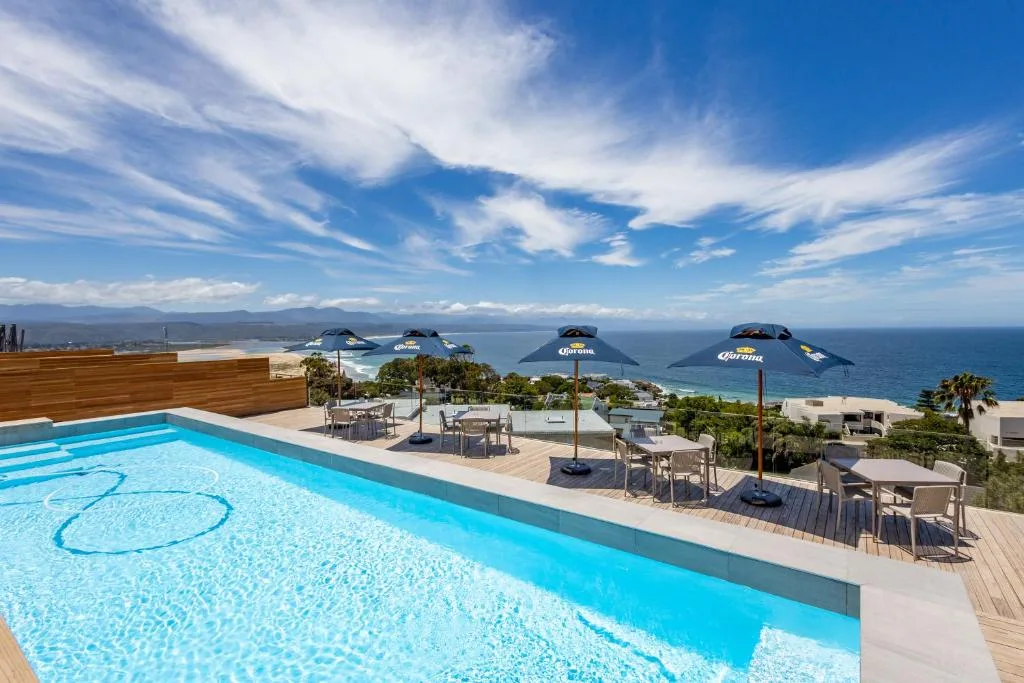
Plett is outward-facing. You stand on Central Beach and look at open ocean. The town climbs up a hill, the Tsitsikamma mountains sit behind you, and everything points at the water. Accommodation clusters on the slope above the bay — most of the premium self-catering has a sea view because the geography makes it hard not to. In summer, water temperatures sit around 20–22°C, which is warm by South African standards (Cape Town is 14–17°C), and the bay is sheltered enough to swim without fighting the southeaster.
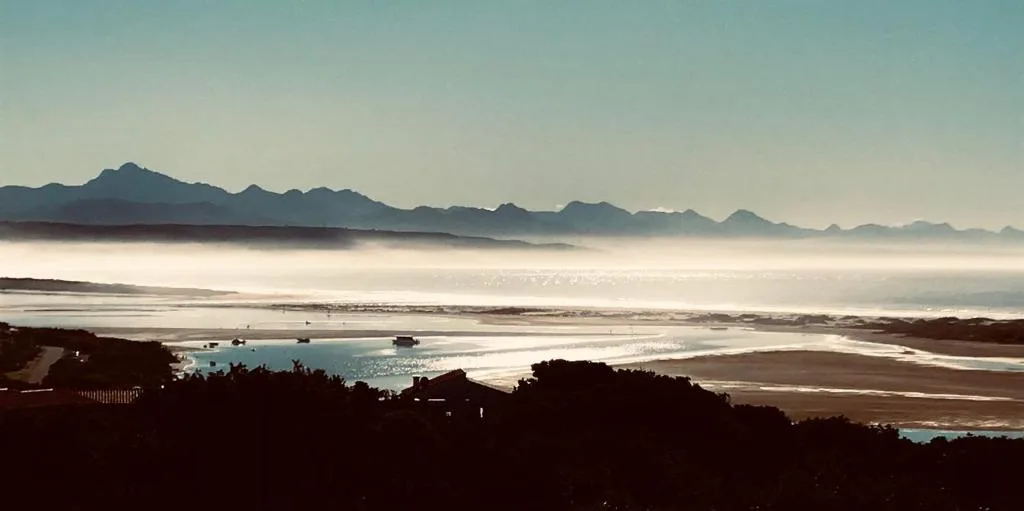
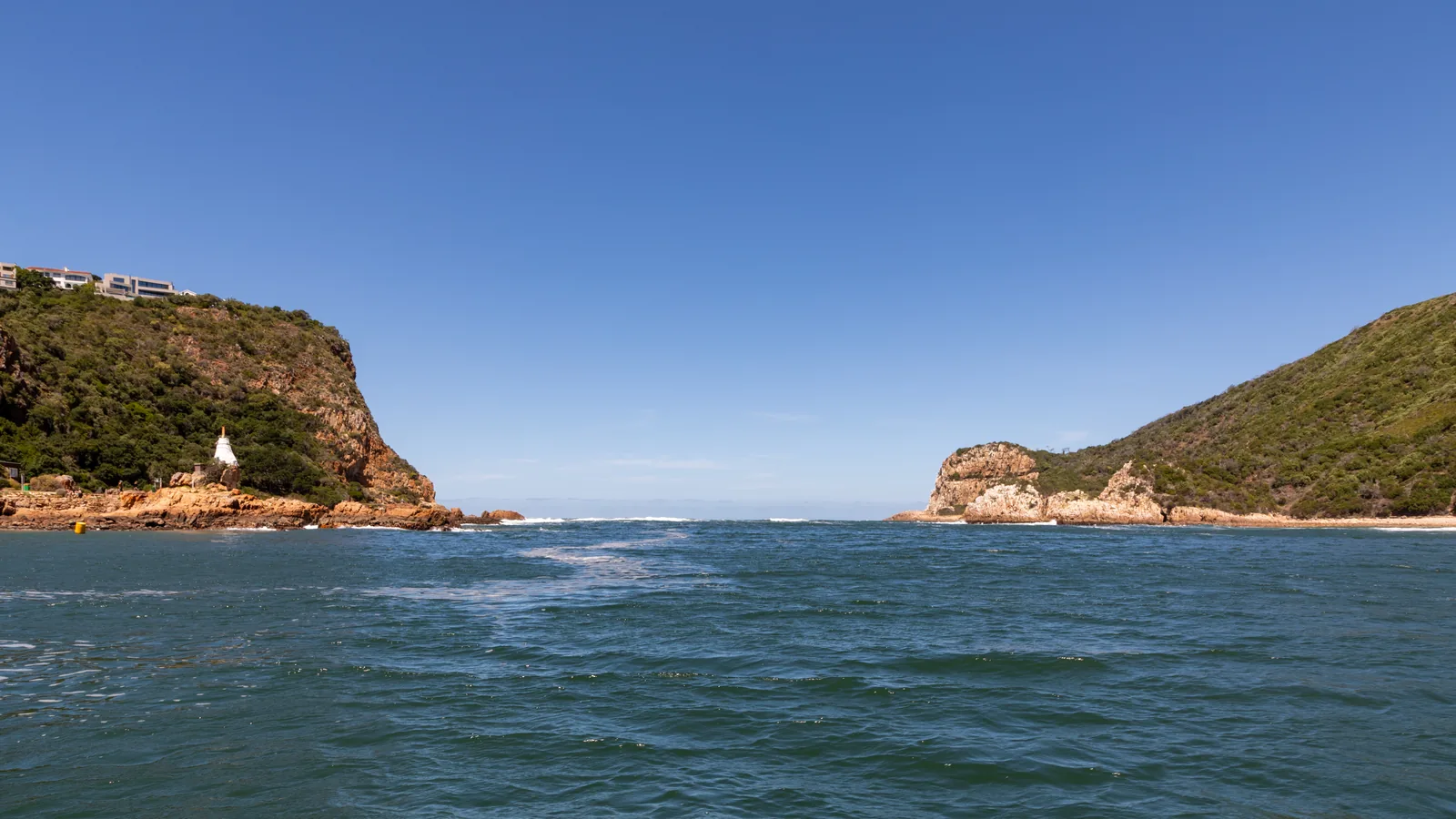
Knysna is inward-facing. The town wraps around its lagoon — a 19 km² tidal estuary fed by the Knysna River and protected by the Heads. You drive into Knysna, cross the N2, and arrive at the Waterfront at water level. The houses rise on the hills behind. The indigenous Knysna Forest (Diepwalle, Goudveld) starts five minutes north, which means you can be under giant yellowwoods inside 15 minutes. The Waterfront is the town centre in all but name — restaurants, shops, the ferry to Featherbed — and most things happen within walking distance of it.
The practical read: Plett feels like a holiday. You go to the beach, you come back, you have drinks on a deck, you do it again. Knysna feels like a town you're staying in. You wander the Waterfront, you drive to the Heads, you walk in the forest, you take the ferry across the lagoon. Both can fill a week. Both do it differently.
Beaches compared — where Plettenberg pulls ahead
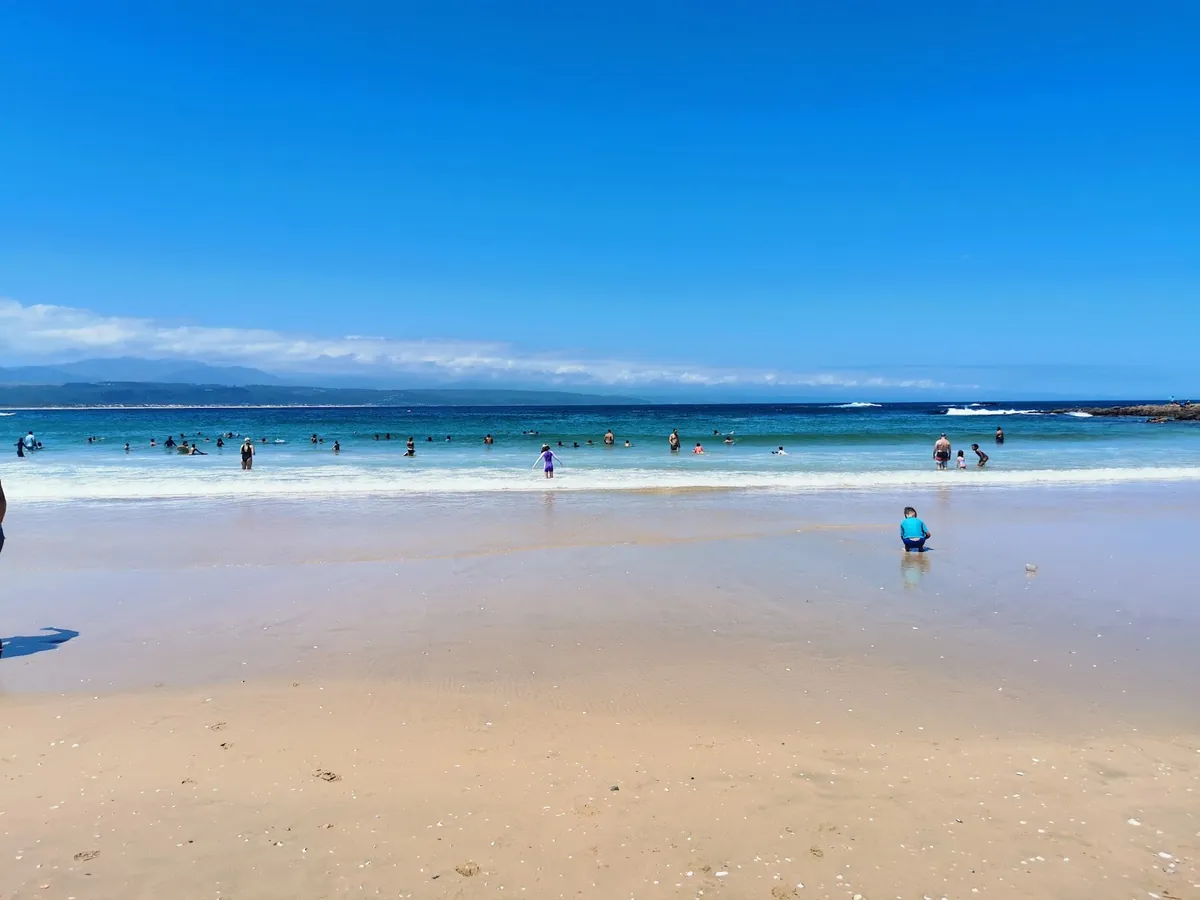
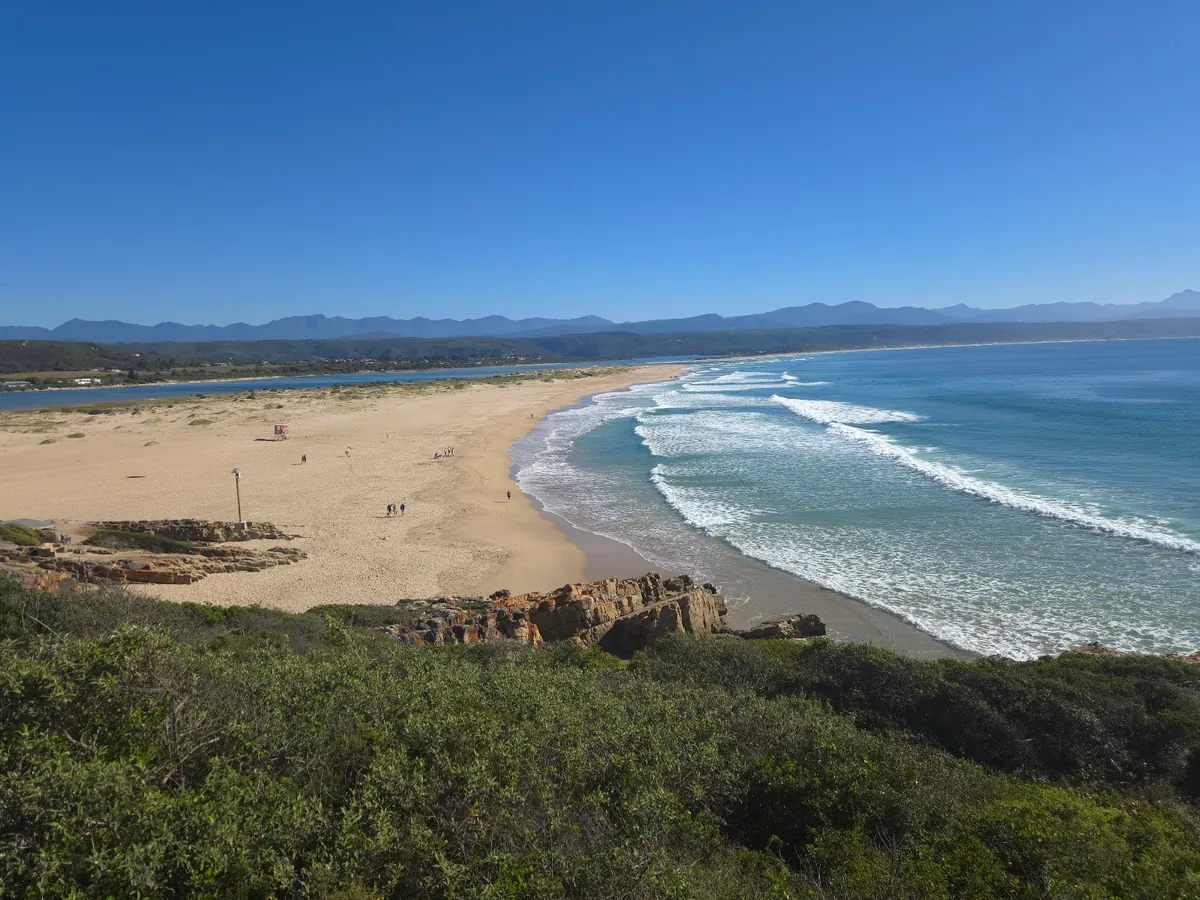
This is the first-order reason most people choose Plett over Knysna: Plett has beaches, plural, and Knysna doesn't, not really. The lagoon has beach-like flats at low tide, but if you want surf and sand, Knysna sends you 22 km out to Brenton-on-Sea or 18 km to Buffalo Bay. In Plett, the beaches are the town.
Plett's six Blue Flag beaches (2025/26 season):
- Robberg 5 — the long sandy arc at the base of the peninsula. My pick for a walk-and-swim morning.
- Lookout Beach — sweeping east from the Keurbooms River mouth. Broad, photogenic, good swimming at mid-tide.
- The Dunes — north of Keurbooms, backed by big dunes, quieter than Lookout
- The Waves — further east toward Natures Valley, good for teenagers with boards
- Singing Kettle — small, wind-protected, works well in a southeaster
- Nature's Valley — 30 km east, technically Plett territory, surrounded by Tsitsikamma forest
Plus Central Beach (which isn't Blue Flag but is the working town beach — shallow, sheltered, lifeguards, and the best beach in Plett for under-10s) and Robberg Beach proper (the unsheltered long sand beside the peninsula — good for distance walks).
Knysna's beaches — the honest list:
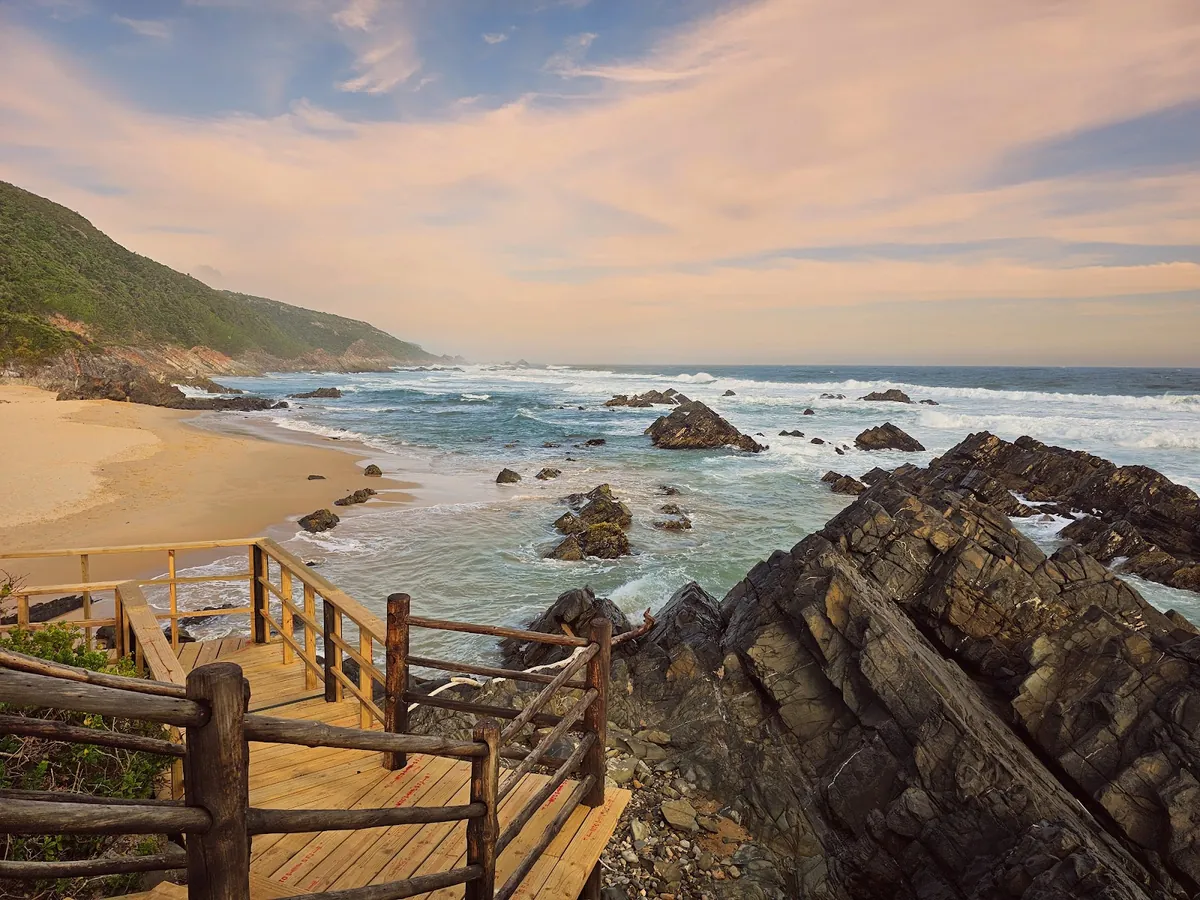
- Brenton-on-Sea — 22 km south-west, long white-sand beach, open ocean, good swimming
- Buffalo Bay — 18 km west, a favourite surfers' spot, Blue Flag historically
- Noetzie — 13 km east, famous for the private castle houses, accessible by a steep track
- Coney Glen — tiny sand cove right at the Heads, walkable from the Eastern Head car park
If I'm ranking purely on "walk out of your stay onto a beach," Plett wins 8:1. Knysna's lagoon is beautiful — genuinely one of the best estuaries in southern Africa — but it's not a swim-every-afternoon proposition for most visitors. Walking is better than wading.
Where to stay — Plettenberg Bay vs Knysna accommodation
This is where we have direct data on both towns, and it's worth leaning on. We list 167 self-catering properties in Plett and 167 in Knysna — a dead heat on inventory. What differs is the price spread and the kind of stay.
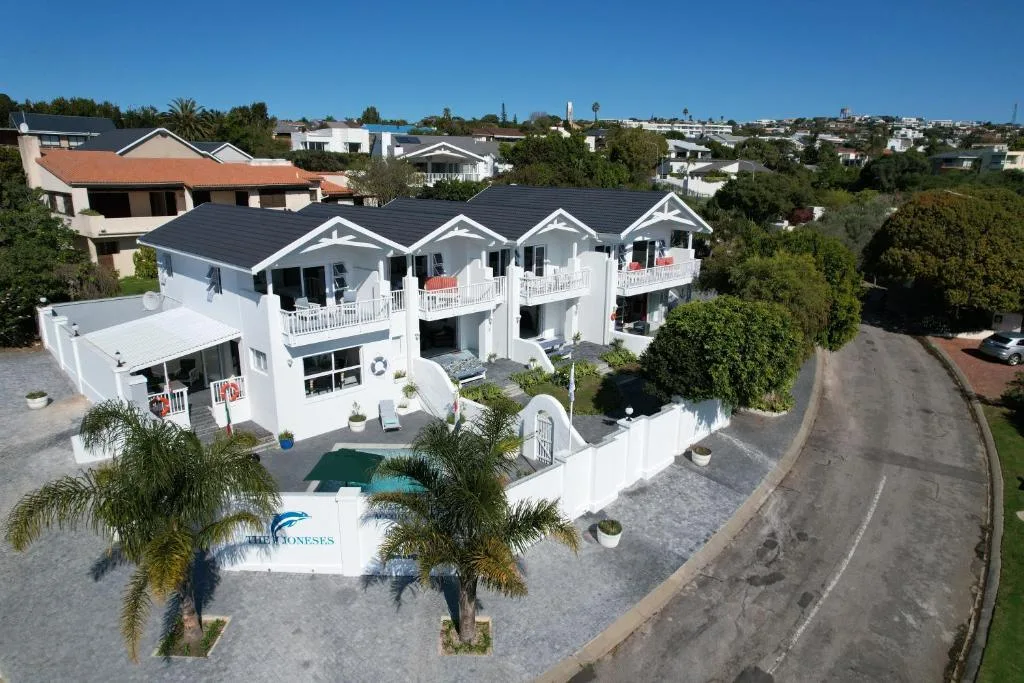
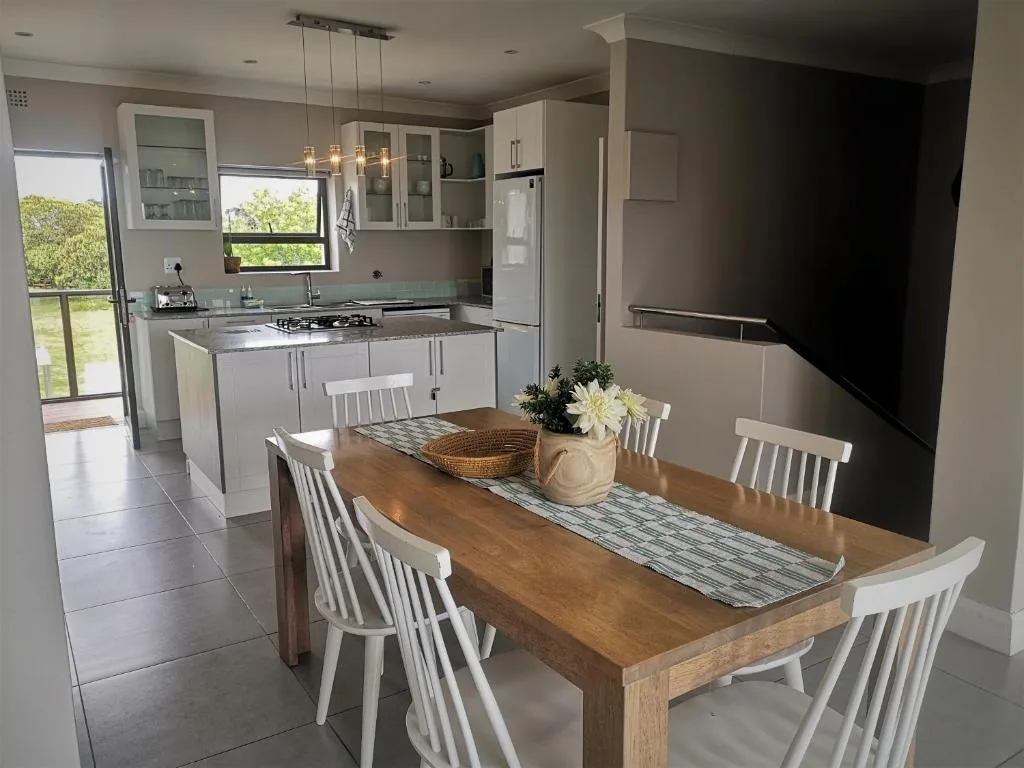
Plett skews beachfront and premium. A lot of the self-catering stock is in apartment blocks climbing the hill above Central and Lookout beaches, or in estates on the Robberg side. Sea views are common. Peak-season rates (mid-December, Easter) push high because everything is beach-adjacent. Shoulder-season rates (March, April, September, October) drop 30–50%.
Knysna skews lagoon-view and mid-market. The Waterfront side has studios and one-beds with lagoon frontage. The Eastern Head and Paradise ridge hold the premium lagoon-view houses. Thesen Islands and Leisure Isle add marina-style modern stays. Peak-season rates are 10–20% lower than Plett for equivalent sleeps — Knysna is, on the whole, better value.
Three Plett stays worth a look
Use the Plett map to see where each sits relative to the beaches and whether the walk-to-water maths works for your trip.
Three Knysna stays worth a look
And the Knysna map — the Waterfront, Eastern Head and Thesen Islands clusters are the three neighbourhoods to shortlist from.
Getting there — airports and the N2
The transport question shapes more trips than it should.
Plettenberg Bay Airport (FAPG) — a small regional airfield 10 minutes from the town centre. CemAir flies a limited schedule from Johannesburg (Lanseria) and occasionally Cape Town. Seats are few, fares aren't always cheap, and weather cancellations are more common than you'd expect (coastal fog, strong crosswinds). If you can get a seat, landing in Plett directly saves you 90 minutes each way versus flying into George. It's a real option, especially for 3–4 night Plett-only trips.
George Airport (GRJ) — the regional hub, 1 hour west of Knysna on the N2, 1 hour 45 minutes west of Plett. SAA, FlySafair, Lift and CemAir all fly into George from Johannesburg and Cape Town. Schedule is denser, fares are lower, and hire-car availability is vastly better. If you're staying in Knysna, George is your only sensible option. If you're splitting between both towns, fly into George and drive east.
Driving the N2 between them — 32 km, usually 30 minutes. The road climbs slightly out of Knysna, winds past the turn-offs for the Heads and Brenton-on-Sea, skirts the Diepwalle forest on your left, drops through a couple of passes, and rolls into Plett from the west. It's a pleasant drive on its own merits. Avoid 5–6 pm in peak season if you hate tourist traffic.
Seasonality in Plettenberg Bay and Knysna
A gotcha most first-timers miss: Plett is summer-weighted, Knysna is all-year.
Plett's whole pitch is the beach, and the beach is best from late October to April. Winter water sits at 16–17°C, which is cold enough that most visitors won't swim. The town is quieter in winter — most of the premium stock only half-fills, whale-watching is genuinely world-class (Plett is a World Cetacean Alliance Whale Heritage Site) but you're not on the sand.
Knysna carries through the winter better because its core offering — the lagoon, the Heads, Featherbed, the forest, the Waterfront, the oysters — doesn't need warm water to deliver. A winter week in Knysna can feel genuinely rich in a way that a winter week in Plett doesn't for most people. If I had to pick one town for a July visit, I'd pick Knysna.
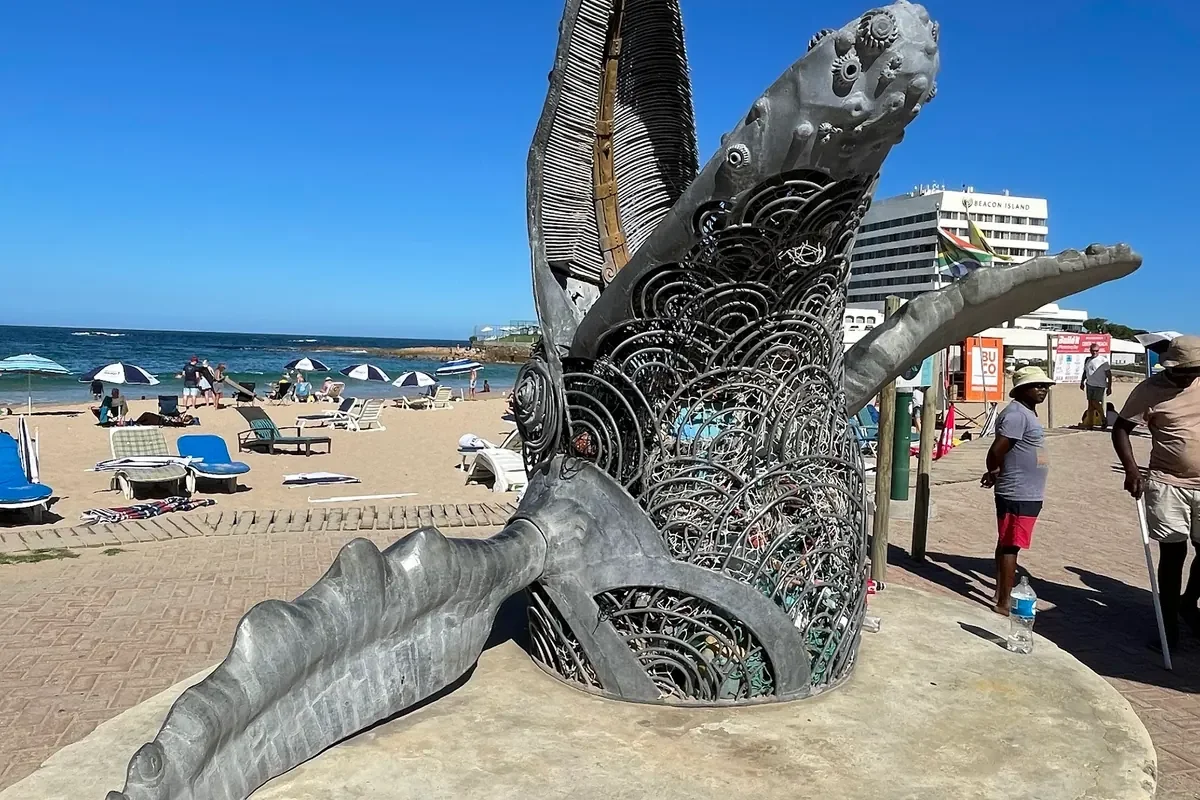
The shoulder windows — late February to April, and September to November — are peak Garden Route for both towns. Warm water, quiet beaches, lower rates, whale season overlap. If you can flex your dates, aim for these.
Activities — the Plettenberg vs Knysna split
The activity spread is where the two-different-holidays point becomes unarguable.
Plett's headline activities:
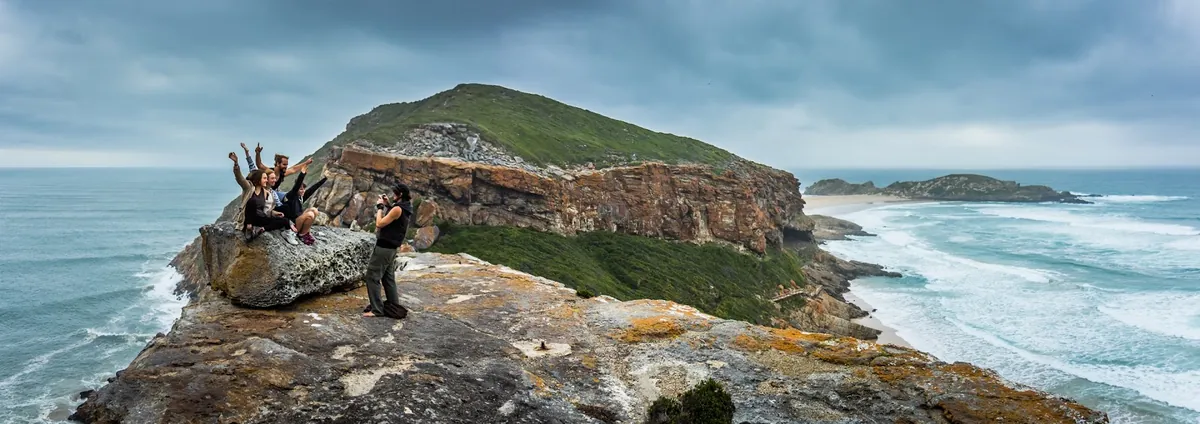
- Robberg Nature Reserve — the 4-hour peninsular hike plus the shorter circuits. Cape fur seal colony, Point viewpoint, whale-calving bay below
- Whale watching — land-based from the Robberg cliffs and Beacon Isle, or 2-hour boat safaris from Central Beach
- Wildlife sanctuaries — Birds of Eden, Monkeyland, Jukani, Tenikwa. Probably the densest cluster of ethical sanctuaries in South Africa
- Surf and SUP — Central, Lookout, Robberg Beach; operators on Central run lessons
- Nature's Valley day trip — Groot River Estuary, forest walks, the old village
Knysna's headline activities:
- The Knysna Heads — drive the Eastern Head, the Western Head is a private estate. Coney Glen at the base
- Featherbed Nature Reserve — ferry-only access from the Waterfront, 4-hour guided experience with a buffet lunch
- Knysna Forest (Diepwalle, Goudveld) — SANParks trails through 1000-year-old yellowwoods, the Elephant Trail, Big Tree circuit
- Lagoon trips — paddle-cruisers, ferries, stand-up paddle, kayaking
- Thesen Islands — the canal-network residential estate, walkable, restaurants and shops
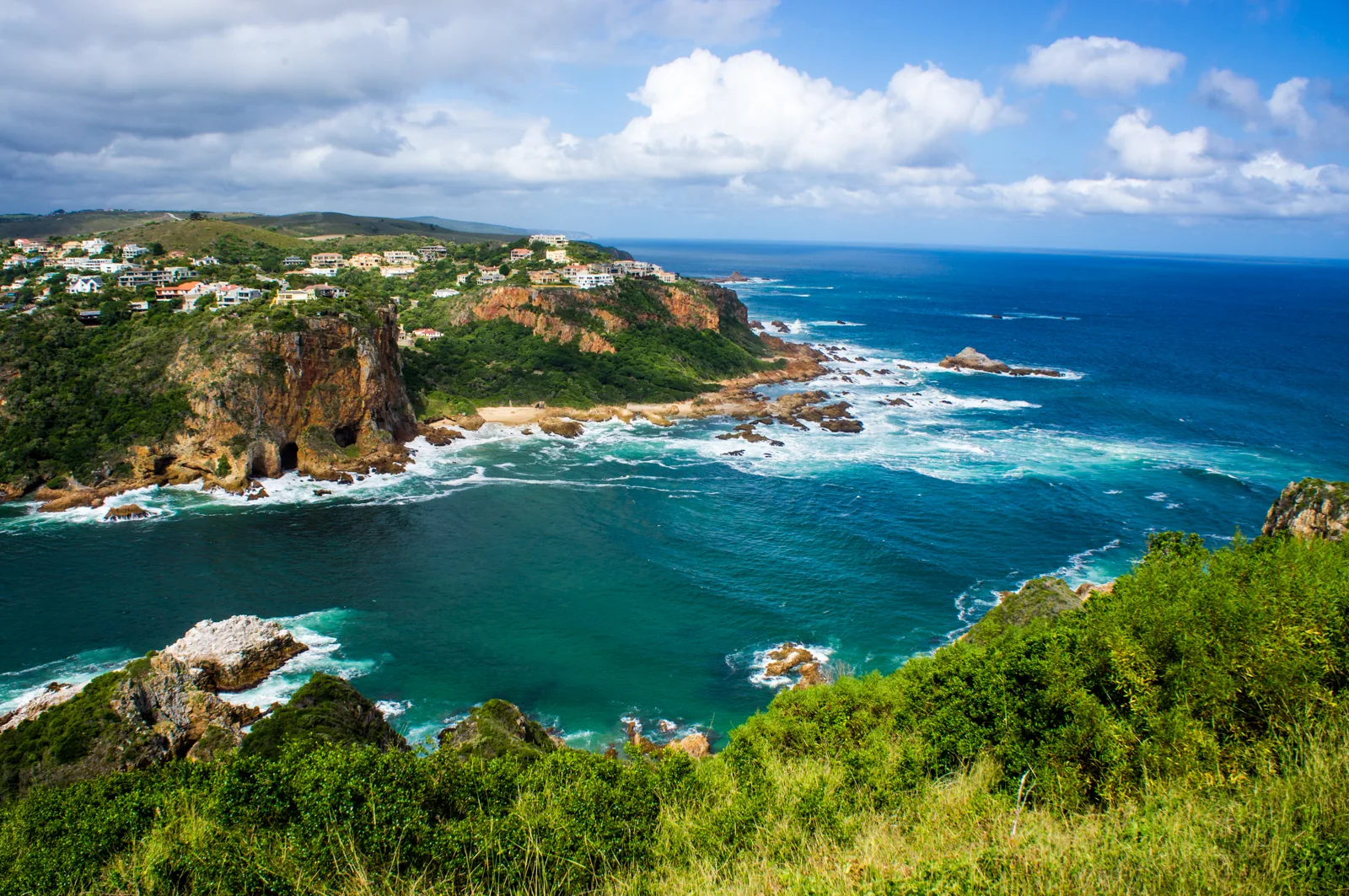
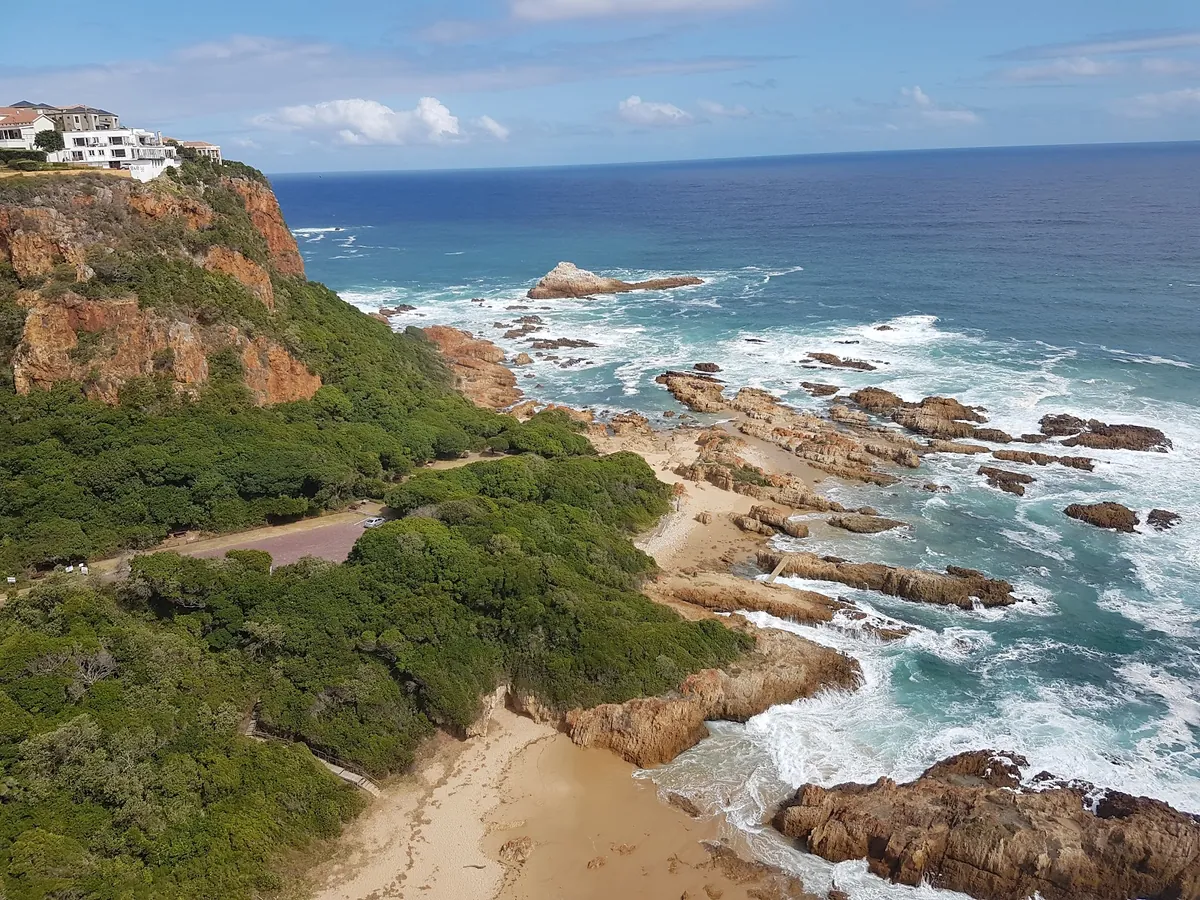
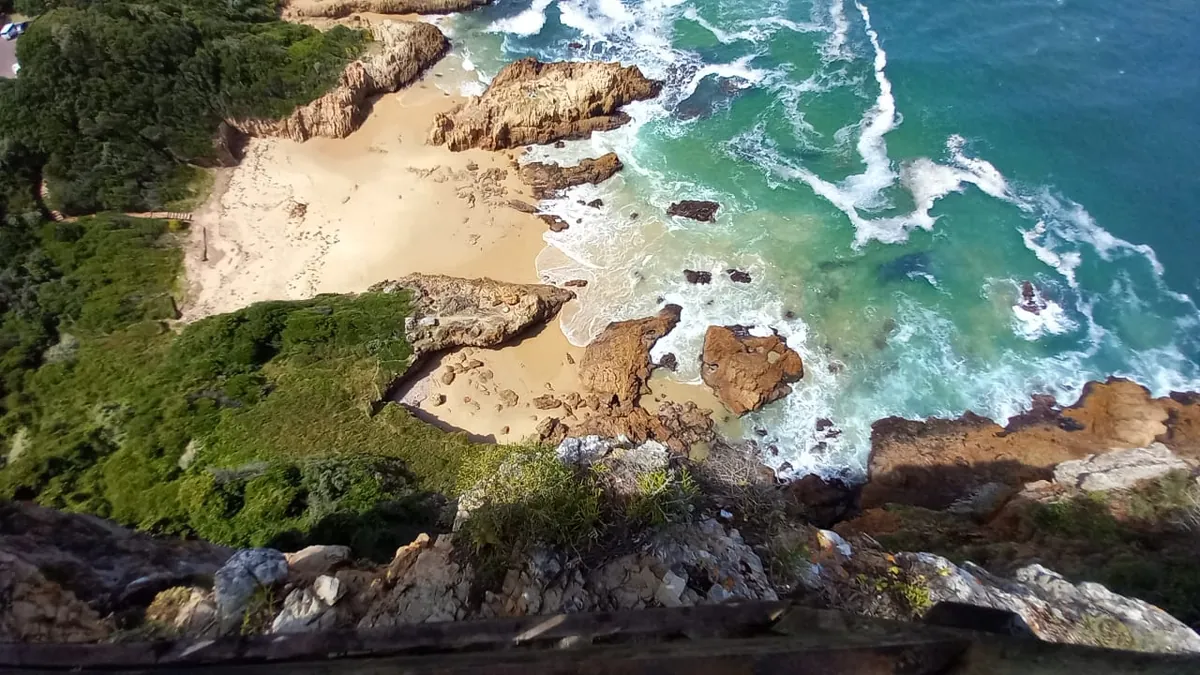
The two towns don't overlap much. Robberg has no equivalent in Knysna. The forest has no equivalent in Plett (the Tsitsikamma is a 40-minute drive east). The Heads have no equivalent in Plett — it's a genuinely unique feature. If you value the beach-hike-wildlife triangle, Plett is your town. If you value lagoon-forest-estuary, it's Knysna.
Food and nightlife in Plettenberg Bay and Knysna
Knysna's food scene is denser and more walkable. The Waterfront has 15-odd restaurants within 5 minutes of each other, Thesen Islands adds a cluster of upmarket options, and Knysna-grown oysters are genuinely famous (the annual Knysna Oyster Festival runs every July). If you want a trip where you walk to dinner, Knysna makes it easy.
Plett's food scene is more spread out and beach-oriented. Main Street has the core of the sit-down restaurants; Lookout Deck is the beachfront institution (Central Beach, burgers and seafood with a toe-in-the-sand lunch); Old Nick Village east of town adds a few country-style options. You'll drive or uber between most meals.
Nightlife is thin in both towns — this is the Garden Route, not Cape Town. Expect restaurants to wrap by 10 pm on a weeknight, and the "late" places to mean 11 pm. Plett in peak season (mid-December) has the most bar energy; the rest of the year, both towns sleep early.
Families, couples, solo — who each town suits
Families with young kids (under 6): Knysna edges ahead. Flatter walks, easier parking, safer shallow water on the lagoon edge, and the Waterfront lets you park once and spend a day without driving. Plett's beaches are magnificent but the cliffs, currents and distances are a lot to manage with toddlers.
Families with school-age kids (6–14): Plett wins. Real beach days, surf lessons, wildlife sanctuaries that genuinely entertain kids, and Robberg as a half-day family hike. The drive out to Monkeyland or Birds of Eden fills a day when the beach wind turns.
Couples on a romantic week: Knysna. Lagoon-view stays, a ferry across to Featherbed, oysters and wine on the Waterfront, a morning walk in the Diepwalle forest. It feels grown-up in a way Plett, with its kids-on-the-beach energy, sometimes doesn't.
Solo travellers and workers from home: Either works. Plett is better for the surfer or hiker who wants to live at the beach; Knysna is better for someone who wants a walkable town, cafés to work from, and easy access to hikes without driving.
Older visitors and grandparents: Knysna. Less walking, less driving, flatter terrain, everything within 5 minutes of the Waterfront.
How many nights in Plettenberg Bay and Knysna?
The worst decision a first-timer makes is splitting too thin. If your whole Garden Route trip is 4 nights, don't split between Plett and Knysna. You lose half a day to the move (pack up, drive, check in, unpack), and the 32 km drive is too pretty to rush through. Pick one town, stay put, day-trip to the other.
If you have 5 nights: 3 nights Plett + 2 nights Knysna (or the reverse). Plett first makes sense if the weather is better at the start of your window; Knysna first if you want the town-energy landing before the beach wind-down.
If you have 7 nights: 4 nights Plett + 3 nights Knysna is the classic split. You get two full beach days in Plett, a Robberg hike, a whale morning, a Nature's Valley drive — then the move east, a Heads evening, a Featherbed day, a forest morning, and a last lazy Waterfront lunch.
If you have 10+ nights: split 5-and-5, or anchor in one town and day-trip the other. Knysna makes a better base for day-tripping (it's 30 minutes to Plett, 45 minutes to George, 60 minutes to Tsitsikamma); Plett is more self-contained but less central.
The through-line: the 32 km between them is an asset, not a friction. Treat the drive as part of the trip, not a travel day.
Sources
- Plett Tourism — Blue Flag beaches
- Visit Knysna — official tourism site
- SANParks — Garden Route National Park
- CemAir — Plettenberg Bay flights
- World Cetacean Alliance — Plett Whale Heritage Site designation
Where Plettenberg Bay stays sit
Every listing plotted, with attractions dotted around it. Tap a navy pill to see the stays in that cluster.
Frequently asked questions
Is Knysna or Plettenberg Bay better?
Neither, honestly — they sell different holidays. Plett wins if you're beach-first: six Blue Flag beaches, warmer water, whale-watching from the cliffs. Knysna wins if you're lagoon-and-forest-first: the Heads, Featherbed, the Outeniqua forest on the doorstep, and a walkable waterfront. If you're undecided, start in Plett for the beach days and move to Knysna for the second half.
How far is Knysna from Plettenberg Bay?
32 km on the N2 — about a 30-minute drive. The road winds through the Tsitsikamma foothills and skirts the forest; it's one of the prettier stretches of the N2. You can have breakfast in Knysna and lunch in Plett without feeling rushed.
Is Plettenberg Bay worth visiting?
Yes — especially if you like warm-water swimming, long beaches, and land-based whale watching. Plett has six Blue Flag beaches, the Robberg Peninsula hike, and (since May 2023) Whale Heritage Site status from the World Cetacean Alliance. The town feels smaller and beachier than Knysna and works particularly well for 3–5 night stays.
Is Knysna or Plett better for families?
Knysna edges it for families with toddlers or grandparents — the Waterfront is flat, walkable and full of safe, shallow water. Plett wins for families with school-age kids who want actual surf, sandcastle beaches, and day-trips to the elephant and monkey sanctuaries. Both have self-catering stays with pools and secure parking; both are load-shedding-hit in winter.
How many nights do you need in Plett and Knysna?
Minimum 4 nights if you're splitting between both towns — anything less and you're spending a day packing for every two days exploring. The sweet spot is 3 nights Plett + 3 nights Knysna, or 5 nights in one town with a day trip to the other. Fewer than 4 nights total: pick one and stay put.
Which has a closer airport, Plett or Knysna?
Plett has its own airfield (Plettenberg Bay Airport, FAPG) with CemAir flights from Johannesburg — a 10-minute drive from the town centre. Knysna has no airport; the nearest is George (GRJ), a 60-minute drive west on the N2. If you're flying into Plett directly, factor in the limited schedule and fewer seats compared to George.
What's the difference between Plettenberg Bay and Knysna?
Plett is beach and bay — a sun-drenched crescent of white sand, surf, dolphins and whales, with self-catering on or near the water. Knysna is lagoon and forest — a working harbour town on a tidal estuary, wrapped by the Outeniqua indigenous forest, with the Heads as its signature view. Plett feels holiday-polished; Knysna feels lived-in.
Can you do Plett and Knysna in one trip?
Yes, and most first-timers do. The classic split is 3–4 nights in one town and 2–3 in the other, with the half-hour drive between them treated as a lunch stop rather than a travel day. If you have fewer than 4 nights total, don't split — you'll lose half a day to the move each way.